
ORANGE PEEL


- Botanical name
- Citrus aurantium Dulcis (sweet orange) — also Citrus × sinensis
- Also known as
- Sweet orange peel, Bigarade peel (bitter), Seville orange peel (bitter)
- Main flavour compound
- Limonene
- Part used
- Dried peel (sweet and/or bitter variety)
- Method of cultivation
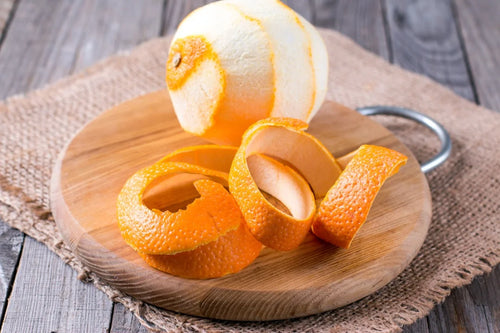
- Small evergreen tree of the Rutaceae family. **Sweet orange** (*Citrus × sinensis*) is the everyday eating orange, native to southern China and now cultivated worldwide. **Bitter orange** (*Citrus aurantium*) is the Mediterranean variety used for marmalade, Cointreau and gin botanicals. The two are different species but both are typically called "Orange Peel" in the gin trade, with bitter being preferred for its more aromatic, less sweet peel oil. Cultivation centres: Florida, Brazil, China, Mediterranean (Spain, Italy, Morocco), with bitter orange particularly important in Andalusia (Seville).
- Commercial preparation
- Fruit is hand- or mechanically-picked, the peel removed (avoiding the bitter white pith), and dried at low temperature. Bitter orange peel ferments slowly during traditional drying to develop complex aromatic compounds.
- Non-culinary uses
- Marmalade production (Seville bitter oranges are the canonical English marmalade fruit); Cointreau, Grand Marnier and Curaçao (all made with bitter orange peel); perfumery; cosmetics; sweet orange peel as a foundational European candied-peel ingredient.
"Orange Peel" in the gin trade typically refers to one of two species: sweet orange (Citrus × sinensis, the everyday eating orange) or bitter orange (Citrus aurantium, the marmalade and gin specialist). Both are small evergreen trees of the Rutaceae family. The sweet orange originated in southern China and has been cultivated for at least 4,000 years; the bitter orange is a hybrid that arose in the Mediterranean and became foundational to European citrus cultivation through the medieval period. Brazil is now the world's largest commercial producer of sweet orange; bitter orange is especially associated with Seville in Andalusia, Spain, where the Seville orange has Protected Designation of Origin status for marmalade. [source]
Dried peel chips
The standard form — adds clean sweet citrus character.
Powdered
Faster extraction; loses character within months.
Region of cultivation

Orange Peel is primarily cultivated in Brazil (largest sweet orange producer), USA (Florida, California), China, Spain (Seville), with secondary growing regions in Italy, Morocco, South Africa, Mexico, Australia.
Spice Story
Orange peel is one of the most foundational gin botanicals worldwide. Sweet orange peel provides a brighter, fruitier citrus aromatic; bitter orange peel provides a more complex, slightly bitter, more aromatic character that distillers tend to prefer. The classic London Dry tradition typically uses bitter orange peel (often Seville) alongside lemon for the citrus axis. Bitter orange is also the foundational citrus of Cointreau, Grand Marnier, Curaçao and many other liqueurs. The peel itself is where almost all the aromatic compounds concentrate — the flesh and juice contribute relatively little to the aromatic profile of a gin.
Gin Creativity
Orange peel is the foundational sweet-citrus axis of gin. A full sachet pushes a gin into clearly orange-led territory; a half-sachet provides bright citrus depth that integrates with juniper. Pair with literally anything — orange peel is the universal citrus companion, working with floral, herbal, warm-spice and woody botanicals alike.
Blending Science
Main flavour compounds
 Limoneneclean citrus lift
 Beta-Pinenefresh pine, top note
 Linaloolfloral, soft
 Citrallemon-bright
Pairs well with
Limonene dominates at over 70% of orange peel oil — the highest concentration of any common citrus, which is why orange smells so universally "citrus" to the human nose. Beta-pinene layers a pine-resinous backbone. Linalool contributes a soft floral lift familiar from coriander seed. Citral adds a lemon-bright top note. Cool extraction preserves the bright citrus; warm extraction develops a deeper sweet body.
Food Partners
- Christmas baking — orange-peel cake, mince pies, Stollen.
- Marmalades and citrus jams — Seville orange marmalade.
- Roast duck with orange — canard à l'orange.
- Slow-braised pork — Cantonese orange-glazed pork.
- Chocolate-orange desserts — the textbook pairing.
Cocktails To Try

- Negroni — orange peel is the essential garnish.
- Orange Old Fashioned — orange peel as primary aromatic.
- Mai Tai (with gin) — orange peel, lime, sugar, orgeat.
Release The Flavour
- Cool extraction — preserves the bright top.
- Peel only — avoid the bitter white pith (unless you specifically want it).
- Brief contact — 2–6 hours captures the brightness.
- Source matters — Seville bitter orange peel is the gold standard for gin distilling.
Discover more
From the same region

Pairs well with
Same flavour family
Surprise me

Sources & Citations
- scientific_names (Citrus sinensis sweet, Citrus aurantium bitter):www.theginguild.com/ginopedia/gin-botanicals/orange-bitter/
- sweet_orange_chinese_origin:tropical.theferns.info/viewtropical.php?id=Citrus+sinensis
- bitter_orange_seville_marmalade_tradition:herbalconnection.com.au/blog/citrus-aurantium-the-complet...
- foundational_gin_botanical:www.craftginclub.co.uk/ginnedmagazine/2016/3/16/know-your...
- main_flavour_compounds (CSV-sourced):inputs/source.csv — Orange Peel row
