
CINNAMON


- Botanical name
- Cinnamomum verum
- Also known as
- Ceylon cinnamon, True cinnamon, Sweet cinnamon
- Main flavour compound
- Cinnamaldehyde
- Part used
- Dried inner bark (rolled into quills/sticks)
- Method of cultivation
- Small evergreen tree of the Lauraceae family (the laurel family, which also includes bay leaf and avocado), endemic to Sri Lanka. The genuine Cinnamomum verum is the "true" cinnamon, distinct from the closely related but coarser cassia (Cinnamomum cassia, C. burmannii, C. loureiroi). Trees are coppiced at 18–24 months and the stems harvested for their inner bark; production is mainly done by smallholders, with peeling and rolling done by hand using techniques unique to Sri Lanka.
- Commercial preparation
- Stems are harvested, the rough outer bark scraped off, and the inner bark stripped in long strips that curl naturally into quills as they dry. Smaller fragments are inserted into the centre to form a tight quill. Drying takes several days in shaded, well-ventilated conditions. Quality is graded by length, thickness and oil content.
- Non-culinary uses
- Perfumery (a foundational warm-spice base note); traditional medicine across Ayurvedic, Chinese, and Middle Eastern systems for digestion, blood sugar regulation, and circulation; the leaves are used in cinnamon-leaf oil production for industrial flavouring.
Cinnamon — Cinnamomum verum — is a small evergreen tree of the Lauraceae family, native to Sri Lanka, where it is still grown almost exclusively. The Latin epithet verum — "true" — distinguishes this species from its three closely related "false" cinnamons: C. cassia, C. burmannii and C. loureiroi, collectively called cassia. The differences are real and significant: Ceylon cinnamon's quills are made of multiple thin paper-like layers, gentle, sweet, and pale tan; cassia is a single thick curling bark layer, harsher, redder, and much higher in coumarin (a compound that can damage the liver in large quantities — cassia contains roughly 250 times more coumarin than Ceylon cinnamon). [source]
Whole quill (stick)
The standard form — holds character for years if kept airtight.
Ground powder
Convenient but loses brightness within months; pre-ground "cinnamon" sold cheaply is usually cassia.
Region of cultivation
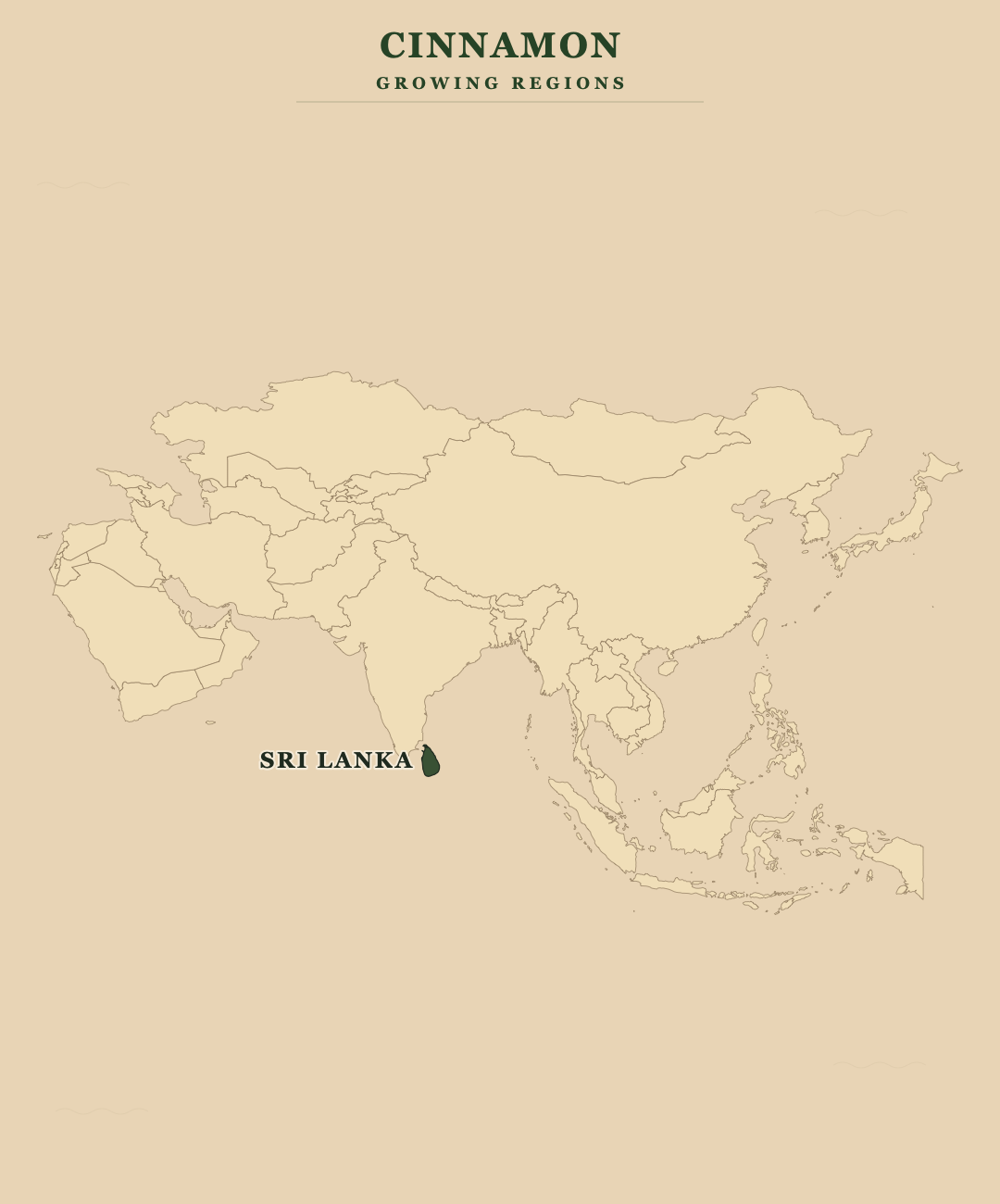
Cinnamon is primarily cultivated in Sri Lanka (Ceylon cinnamon — Cinnamomum verum, the "true" species), with secondary growing regions in Madagascar, Seychelles, Tanzania (limited production).
Spice Story
Cinnamon has been one of the world's most economically important spices for over 4,000 years. The earliest documented use traces to ancient Egypt, where cinnamon was an essential embalming spice and a luxury import worth more than gold by weight; the Egyptians had no idea where it actually came from, and Arab traders who dominated the supply chain were happy to obscure the route via increasingly fanciful stories about cinnamon being harvested from giant nests of mythical birds. The real source — Sri Lanka — was a closely guarded secret until Portuguese, Dutch and finally British colonial powers took the island through the 16th–19th centuries, each fighting over the cinnamon monopoly. True Ceylon cinnamon now accounts for only 5–10% of global "cinnamon" production; most of what is sold simply as "cinnamon" in supermarkets is cassia. [source] In gin, cinnamon is foundational to almost every warming-spice profile — used across mulled gins, Christmas-style gins, and contemporary spice-route expressions worldwide.
Gin Creativity
Cinnamon is a powerful, distinctive warming botanical. A full sachet pushes a gin firmly into spiced-winter territory and pairs naturally with clove, nutmeg and orange peel for a Christmas-style blend; a half-sachet adds a warm sweet-aromatic background that integrates with juniper for contemporary warmth without dominating. Use only Ceylon cinnamon (Cinnamomum verum) for genuine sweet-floral character — cassia tastes harsher and sharper, which can work but is a different style. Avoid pairing cinnamon with very subtle florals — the warmth buries them.
Blending Science
Main flavour compounds
 Cinnamaldehydesweet warm spice
 Eugenolclove-like, warming
 Linaloolfloral, soft
 Caryophyllenewarm woody, peppery
Pairs well with
The dominant compound is cinnamaldehyde — typically 50–63% of Ceylon cinnamon's essential oil (notably lower than cassia at 69%), responsible for the sweet-warm spice character. [source] Eugenol layers a clove-like depth on the finish (around 7–10% of the oil in Ceylon cinnamon, higher than in cassia), which is part of why Ceylon tastes rounder and more complex. Linalool contributes a soft floral lift. Caryophyllene adds woody depth. Cinnamaldehyde is heat-stable, fat- and alcohol-soluble, and survives both vapour infusion and traditional maceration cleanly. The sweet-floral lift of Ceylon cinnamon (vs the sharper character of cassia) makes it the preferable choice for gin where balance and roundness matter more than dominant heat.
Food Partners
- Apple desserts: The universal pairing — every apple dish is improved by cinnamon.
- Slow-cooked lamb tagines: Moroccan and Levantine tradition — cinnamon with lamb is foundational.
- Christmas pudding and gingerbread: Cinnamon defines the warming-spice palette of European Christmas baking.
- Hot chocolate: Mexican tradition — cinnamon in chocolate predates Spanish contact.
- Mulled wine: The classical mulling spice alongside clove and orange.
Cocktails To Try

- Cinnamon Old Fashioned: Cinnamon-gin, demerara syrup, orange bitters, large ice.
- Hot Spiced Gin: Cinnamon-clove gin with hot apple juice and honey.
- Cinnamon Negroni: Cinnamon-leaning gin, Campari, sweet vermouth — warm bitter base.
Release The Flavour
- Break the quill: A whole stick is slow; a broken stick releases oils across an extraction.
- Heat-friendly: Both vapour and warm maceration work well.
- Time: 24–48 hours for full development.
- Use Ceylon, not cassia: The quality difference is real and tastes different.
Discover more
From the same region
Pairs well with
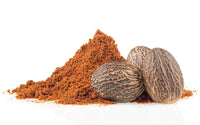
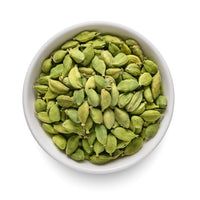
Same flavour family
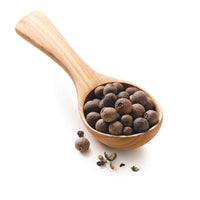
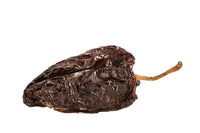
Surprise me

Sources & Citations
- scientific_name (Cinnamomum verum vs Cassia species):www.healthline.com/nutrition/ceylon-vs-cassia-cinnamon
- cinnamaldehyde_content (50-63% in Ceylon; 69% in cassia):www.healthline.com/nutrition/ceylon-vs-cassia-cinnamon
- coumarin_difference (cassia 250x more coumarin):www.healthline.com/nutrition/ceylon-vs-cassia-cinnamon
- Sri_Lanka_cultivation_smallholder_handwork:www.srilankabusiness.com/blog/difference-between-cassia-a...
- Ceylon_5-10_percent_global_production:www.healthline.com/nutrition/ceylon-vs-cassia-cinnamon
- main_flavour_compounds (CSV-sourced):inputs/source.csv — Cinnamon row
