
GERANIUM LEAF

- Botanical name
- Pelargonium graveolens
- Also known as
- Rose geranium, Sweet-scented geranium, Rose-scent geranium
- Main flavour compound
- Citronellol
- Part used
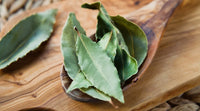
- Dried leaf
- Method of cultivation
- Aromatic perennial subshrub of the Geraniaceae family, native to the Cape provinces of South Africa, plus Zimbabwe and Mozambique. The plant grows to about 1.5 metres, with deeply-lobed soft-textured leaves that release the distinctive rose-citrus aroma at the slightest brush. Commercial cultivation centres on China and Egypt today, though South African material is still considered the "reference" grade. Hybrids are male-sterile and propagated entirely from cuttings.
- Commercial preparation
- Leaves are harvested by cutting the upper bushy growth several times a year, gently dried, and either sold whole/cracked for the herbal trade or steam-distilled for essential oil. Egypt and China dominate commercial oil production; South Africa, Madagascar and Réunion produce smaller premium volumes.
- Non-culinary uses
- Perfumery (foundational rose-substitute in many fragrances — much cheaper than true rose essential oil and chemically related); cosmetics; aromatherapy; ornamental garden plant in temperate climates.
"Geranium Leaf" in the spice trade almost always refers to rose geranium — Pelargonium graveolens — and not to the true geraniums (Geranium genus). The confusion is one of botanical history: when 18th-century European botanists first classified South African Pelargoniums, they were initially lumped together with the European Geraniums, and the common name stuck even after the genera were separated. Pelargonium graveolens is an aromatic subshrub native to South Africa's Cape Provinces, with deeply-lobed leaves that release a distinctive rose-and-lemon aroma at the slightest brush. [source]
Whole dried leaf
The standard form — crumble lightly to release the rose-citrus oils.
Cracked
Faster extraction; loses character within months.
Region of cultivation
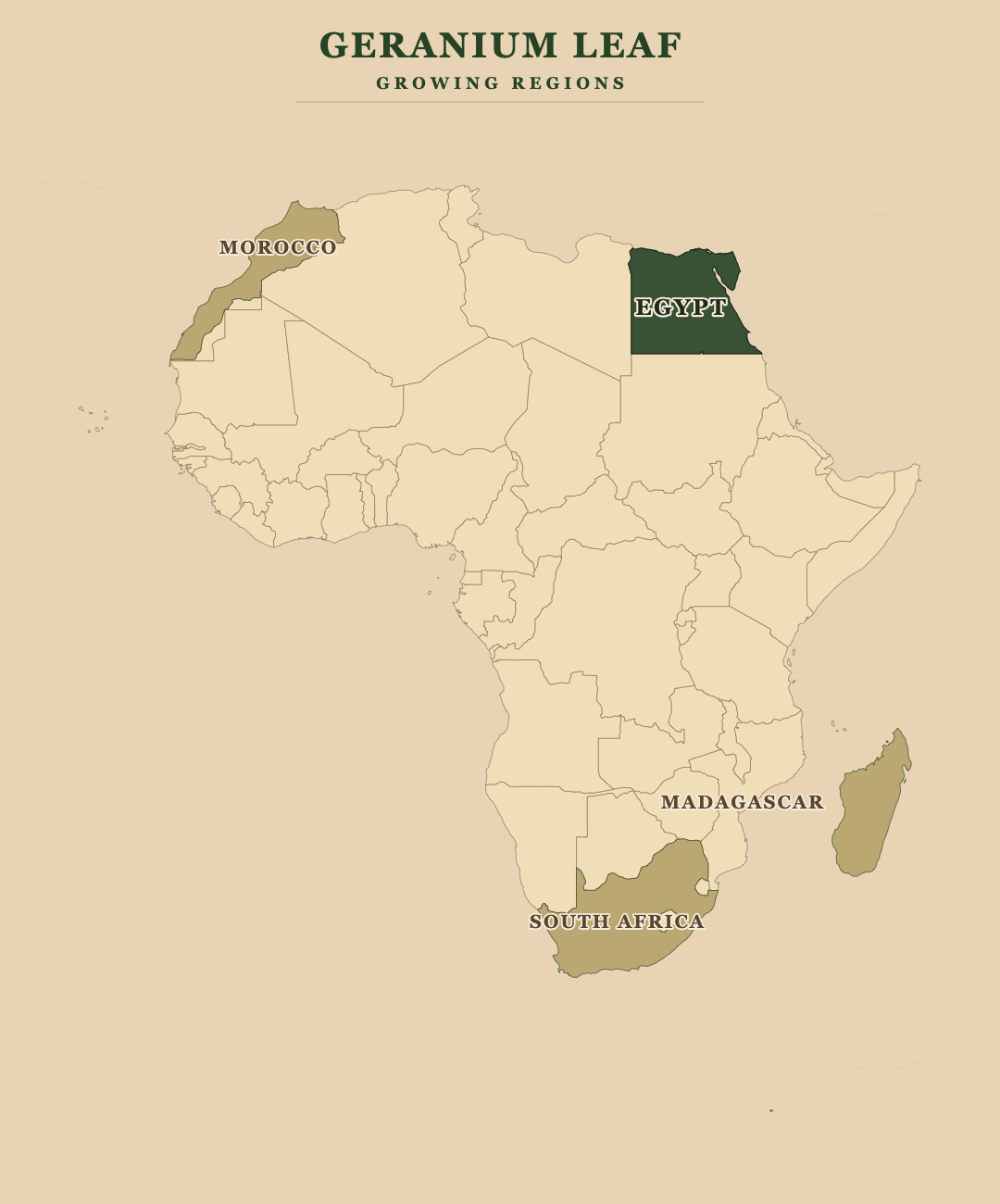
Geranium Leaf is primarily cultivated in China, Egypt (main commercial oil producers), with secondary growing regions in South Africa, Madagascar, Réunion, Morocco, India.
Spice Story
Rose geranium has been a perfumery staple since the 19th century, when European explorers brought back South African Pelargoniums and quickly recognised the leaf's commercial value as a rose-substitute. True rose absolute is extremely expensive; rose geranium produces a closely-related aromatic profile (sharing the major compounds citronellol and geraniol) at a fraction of the cost — and is now the foundational "rose accord" in most affordable rose-fragrance perfumery. China and Egypt now dominate commercial oil production. In gin, rose geranium leaf provides clear floral character with citrus brightness — a foundational botanical for Hendrick's-style florals and contemporary garden-gin profiles.
Gin Creativity
Geranium leaf brings rose-floral character with citrus brightness. A full sachet pushes a gin firmly into floral territory; a half-sachet adds a quiet rose lift that integrates with juniper. Pair with rose petal for a doubled floral, or with bergamot and lavender for a Mediterranean garden profile.
Blending Science
Main flavour compounds
 Citronellollemon-rosy
 Geraniolrose, soft floral
 Linaloolfloral, soft
 Citronellyl Formate—
Pairs well with
Citronellol is the dominant compound (around 34% of the oil) — the same compound that defines lemon-scented citronella and contributes the rose-lemon brightness. Geraniol (around 27%) layers a sweeter rose-floral note (the same compound that defines true rose oil). Linalool (around 10%) adds the soft floral lift familiar from coriander and lavender. Citronellyl formate contributes a fresh-fruit edge. [source] Cool extraction preserves the bright top; warm extraction develops the deeper rose body.
Food Partners
- Rose-water desserts — geranium-and-rose-water cream is a Middle Eastern classic.
- Stone-fruit jams and jellies — rose-geranium jelly is a Cape Province tradition.
- Cucumber and rose salads — Middle Eastern summer dishes.
- Soft white cheese — chèvre with rose-geranium honey.
- Mediterranean lamb dishes — rose-geranium in a lamb tagine.
Cocktails To Try

- Floral Gin & Tonic — rose-geranium gin with floral tonic.
- Geranium Spritz — rose-geranium gin, prosecco, fresh geranium leaf garnish.
- Pink Negroni — rose-geranium gin, Aperol, Lillet Rosé.
Release The Flavour
- Cool extraction — preserves the bright rose-citrus top.
- Brief contact — 1–4 hours; longer extractions go bitter.
- Crumble gently — bruising opens up the oils without harshness.
- Source matters — South African and Egyptian oils are notably different chemotypes.
Discover more
From the same region
Pairs well with
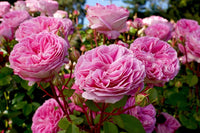
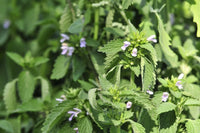
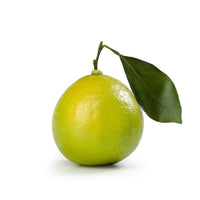
Same flavour family
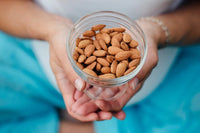
Surprise me

Sources & Citations
- scientific_name (Pelargonium graveolens; Geraniaceae):en.wikipedia.org/wiki/Pelargonium_graveolens
- native_range (Cape Provinces, Zimbabwe, Mozambique):en.wikipedia.org/wiki/Pelargonium_graveolens
- main_compounds (citronellol 33.6%, geraniol 26.8%, linalool 10.5%):www.sciencedirect.com/science/article/abs/pii/S0962456203...
- china_egypt_main_producers:link.springer.com/article/10.1007/s11101-015-9441-1
- rose_substitute_in_perfumery:en.wikipedia.org/wiki/Pelargonium_graveolens
- main_flavour_compounds (CSV-sourced):inputs/source.csv — Geranium Leaf row
