
BLOOD ORANGE


- Botanical name
- Citrus × sinensis
- Also known as
- Arancia rossa, Sanguinello (Spanish), Tarocco / Moro / Sanguinello (Italian cultivars)
- Main flavour compound
- Limonene
- Part used
- Dried peel (zest), occasionally the dried whole fruit
- Method of cultivation
- Orchard-cultivated on grafted citrus rootstock. The crimson colour is not in the genes alone — it develops only when night temperatures drop low enough for the fruit to accumulate anthocyanin pigment in the peel and flesh.
- Commercial preparation
- Ripe fruit is harvested in winter, the coloured zest is peeled away from the pith, and the peel is air- or kiln-dried until brittle. Quality producers avoid the bitter white pith and grade by colour intensity.
- Non-culinary uses
- Perfumery (the peel oil is prized for fresh, slightly floral citrus notes); confectionery and liqueur production; natural food colouring from the anthocyanin pigment.
Blood oranges are not their own species — they are Citrus × sinensis, the same sweet orange you'd find anywhere, but with a quiet genetic willingness to turn red. Whether they actually do depends on the weather. The pigment, an anthocyanin called cyanidin-3-O-glucoside, only forms when night temperatures drop low enough during ripening — which is why the Sicilian foothills around Mount Etna, with their volcanic soils and cold winter nights, produce the deepest, most reliably crimson fruit in the world. [source] In a warm climate, the same tree will simply make ordinary orange oranges.
Dried peel chips
The most common form for distilling — add to your botanical bill in the last stage to keep the citrus bright.
Dried whole peel coil
Holds its oils longer in storage. Snap off a piece and use as you would the chips.
Region of cultivation
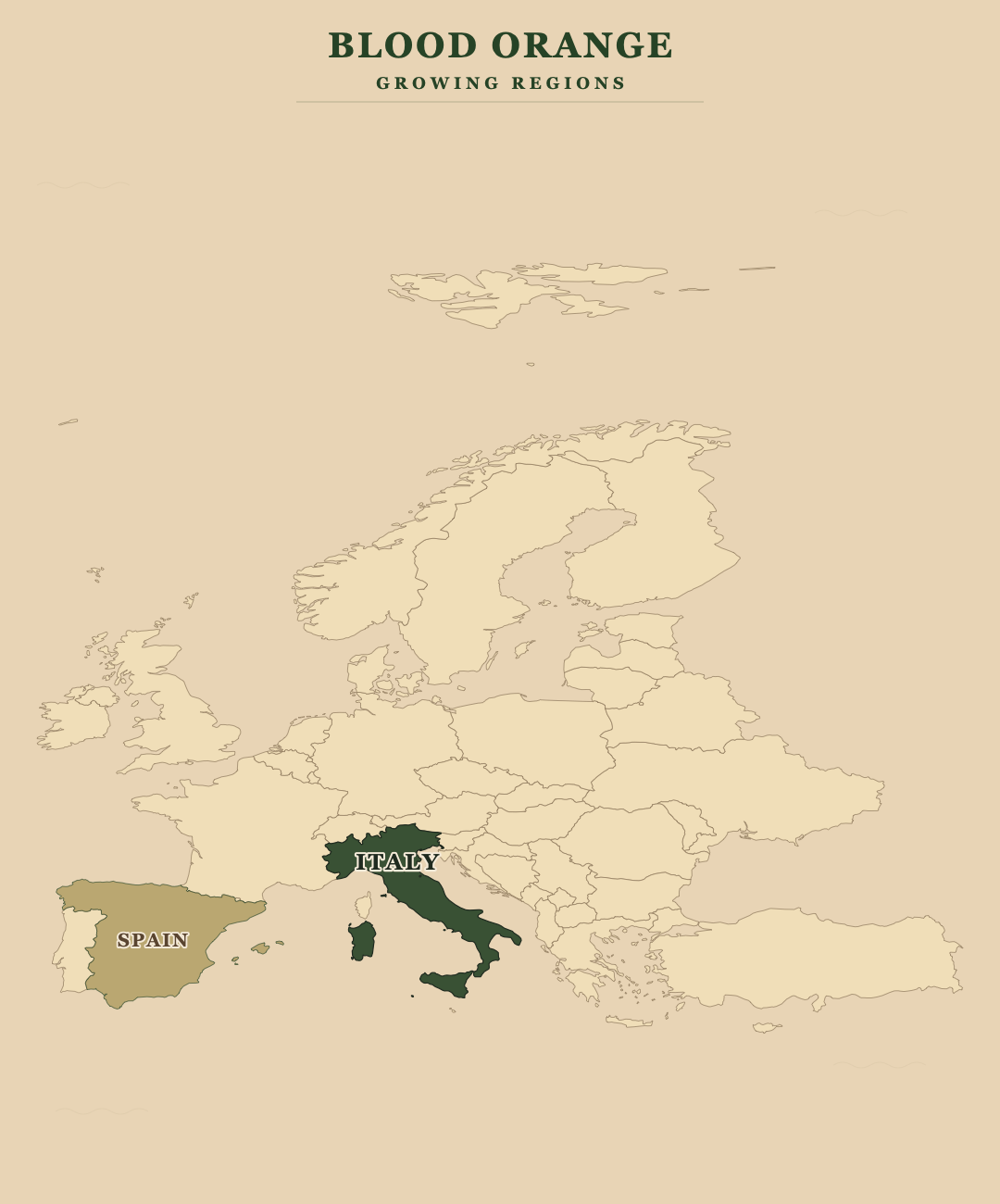
Blood Orange is primarily cultivated in Sicily (Catania, Syracuse, Enna), with secondary growing regions in Spain (Valencia), California, Australia (Riverina, Sunraysia).
Spice Story
Three cultivars carry the modern blood orange tradition, and all three trace to the 18th and 19th centuries in Italy and Spain. The Moro appeared as a spontaneous bud mutation near Lentini in Sicily's Syracuse province around 1800; the Tarocco descends from the older Sanguinello and is now the most-grown table orange in Italy, ripening on the volcanic slopes around Catania; the Spanish Sanguinello was identified in 1929. [source] Sicilian production is now protected under the Arancia Rossa di Sicilia PGI — only thirty-two municipalities across Syracuse, Catania and Enna can call their fruit by the name. The peel has always doubled as a flavouring agent: into liqueurs, into perfumes, into confectionery, and now firmly into gin, where its slightly berry-tinged citrus reads as something both more luxurious and more unexpected than common orange.
Gin Creativity
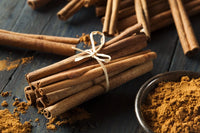
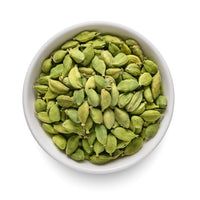
Blood orange is the easiest way to push a contemporary gin into winter territory. A full sachet gives you a sweet, almost wine-like citrus core; a half-sachet does its best work as a supporting layer behind juniper, sharpening the brightness without flattening it. Pair it with cardamom and cinnamon for a Christmas-spirit profile, or with pink peppercorn and a touch of clove for something more confident and modern. Avoid heavy oak finishes — they'll bury the floral top notes that make blood orange feel different from common orange peel.
Blending Science
Main flavour compounds
 Limoneneclean citrus lift
 Myrcenegreen, hoppy body
 Alpha-Pinenefresh pine, top note
 Citrallemon-bright
Pairs well with
Four compounds carry the character. Limonene dominates by volume — it's the bright, immediate citrus you smell when you scratch the peel. Citral layers a sharper, more lemon-leaning brightness on top. Myrcene brings a soft herbaceous body that prevents the citrus from reading thin. Alpha-pinene adds a quiet evergreen edge that bridges blood orange comfortably to juniper. The anthocyanin pigment itself is not volatile and so contributes colour to a macerated gin but no aroma; the distinctive berry note often described in tasting comes from minor differences in the volatile profile of pigmented versus blond oranges. [source] Vapour infusion preserves the top notes; heated maceration trades brightness for depth.
Food Partners
- Fennel and olive-oil salad: The classic Sicilian winter dish — anise-sweet fennel against the slightly bitter, slightly berry citrus. [source]
- Dark chocolate: Anthocyanin sweetness and cocoa bitterness lock together. Look for 70% or higher.
- Roast duck: Fat-rich game bird, sharp citrus. A canard à l'orange with blood orange instead of common orange is a revelation.
- Bitter chicory and radicchio: The bitter-sweet contrast lets each side push the other forward.
- Ricotta and honey: A dessert pairing — the cheese rounds, the honey lifts, the orange anchors.
Cocktails To Try

- Negroni Sbagliato (blood orange variant): Swap a wedge of blood orange for the standard orange peel and prosecco for the gin — the result is a winter Sbagliato with depth.
- Aperol Spritz, upgraded: Add a strip of dried blood orange peel to the glass; the aroma changes the drink entirely.
- Gin & blood orange tonic: Treat the fruit as a primary garnish, not a wedge. Express the peel oil over the drink and drop it in.
- Blood Orange Sour: Egg white, blood orange syrup, gin, lemon. The colour alone is worth the work.
Release The Flavour
- Cold: Anthocyanins are stable in cool conditions and continue to develop in cold storage. Cool extraction preserves both colour and aroma.
- Avoid pith: White pith is bitter and overwhelms the delicate floral top notes. Use only the coloured zest.
- Time: Citrus oils evaporate fast — add peel toward the end of any extraction, not the beginning.
- Heat sparingly: Vapour infusion is more forgiving than full maceration. If you must heat, do it briefly.
Discover more
From the same region
Pairs well with
Same flavour family
Surprise me

Sources & Citations
- scientific_name:en.wikipedia.org/wiki/Blood_orange
- cultivars (Tarocco, Moro, Sanguinello — origins and regions):specialtyproduce.com/produce/Sicilian_Blood_Oranges_24612...
- cultivar (Moro origin in Lentini, Syracuse, early 19th c.):en.wikipedia.org/wiki/Blood_orange
- PGI protection (Arancia Rossa di Sicilia):specialtyproduce.com/produce/Sicilian_Blood_Oranges_24612...
- anthocyanin pigment (cold nights trigger):en.wikipedia.org/wiki/Blood_orange
- anthocyanin chemistry (cyanidin-3-O-glucoside primary pigment):www.sciencedirect.com/science/article/pii/S0963996924012699
- main_flavour_compounds (CSV-sourced):inputs/source.csv — Blood Orange row
- food_partners (Sicilian fennel salad):en.wikipedia.org/wiki/Blood_orange
- non_culinary_uses (perfumery, confectionery, liqueurs):en.wikipedia.org/wiki/Blood_orange
