
DESERT LIME

- Botanical name
- Citrus glauca
- Also known as
- Australian desert lime, Wild lime, Sour lime
- Main flavour compound
- Limonene
- Part used
- Dried whole fruit or dried peel
- Method of cultivation
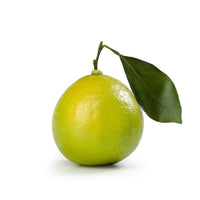
- Thorny shrub or small tree of the Rutaceae family (the true citrus family), native to Queensland, New South Wales and South Australia. The plant is one of the most resilient citrus species on Earth — drought-tolerant, frost-hardy (down to -24°C in winter dormancy) and heat-tolerant up to 45°C. The fruit are small, pale-yellow-green, marble-sized, with a thin peel and a sharp lime character that's brighter and more aromatic than common Tahitian or Persian lime.
- Commercial preparation
- Traditionally wild-harvested from rangeland bushland; commercial plantation cultivation has grown rapidly in the last twenty years, particularly in Queensland and inland NSW. Desert lime grafts readily onto common citrus rootstock and is the fastest-fruiting citrus species in the world — flowering in late August and fruit ripe by early November. Fruit is hand-picked, sometimes pressed for juice and oil, sometimes dried whole or as peel for the spice trade.
- Non-culinary uses
- Marmalades, sauces, pickles, chutneys; modern Australian craft confectionery and ice cream; the resilient rootstock is increasingly used for grafting commercial citrus in dryland areas; ornamental landscaping in arid Australian gardens.
Desert Lime — Citrus glauca — is a small, thorny tree of the true citrus family, endemic to the semi-arid country of inland eastern Australia. The plant grows 4–10 metres tall in good conditions, smaller in harsher country, with small grey-green leaves and sharp thorns adapted to drought. The fruit are small — about the size of a green marble, pale yellow-green — with thin oil-rich peel and intensely sharp acid flesh that tastes brighter and more aromatic than any imported lime. It is the most resilient citrus species on Earth: surviving Australian summer heat up to 45°C and winter dormancy at -24°C, both extremes that would kill any common Mediterranean or tropical citrus. [source]
Dried whole fruit
The standard form for distilling — releases citrus character across a slow cool maceration.
Dried peel chips
Concentrated peel-oil version; faster extraction.
Region of cultivation
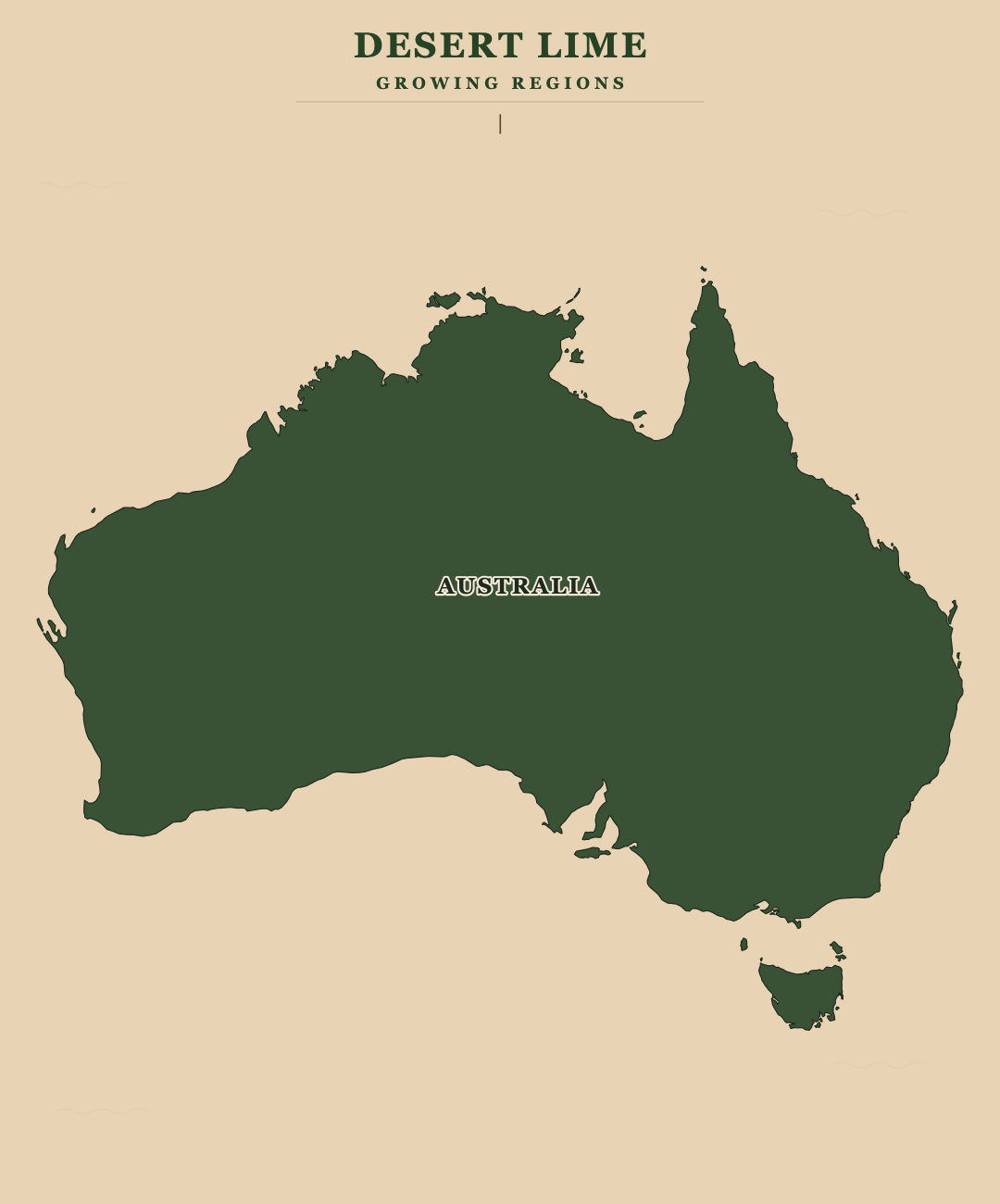
Desert Lime is native to Australia, Australia — inland Queensland, NSW and South Australia rangelands, with secondary growing regions in Plantation cultivation across inland eastern Australia. |
Spice Story
Desert Lime has been a traditional food for First Nations peoples across its inland Australian range for tens of thousands of years — eaten fresh or used in cooking. Commercial cultivation only began in earnest in the late 20th century, when growers in Queensland and inland New South Wales began producing it as a bushfood crop alongside more famous natives like finger lime and lemon myrtle. [source] The plant has two unusual commercial features: it grafts readily onto common citrus rootstock, and it is the fastest-fruiting citrus species in the world (flowering to ripe fruit in roughly 10 weeks). Both characteristics have helped scale up production rapidly, and Desert Lime now appears in everything from craft marmalades and ice cream to contemporary Australian gin — where its sharp, distinctive lime character provides a clearly native alternative to common citrus.
Gin Creativity
Desert Lime brings a sharper, more aromatic lime character than common citrus — closer to fresh kaffir lime than to Tahitian. A full sachet pushes a gin firmly into native-citrus territory and pairs naturally with lemon myrtle for a bright "native garden" gin profile; a half-sachet adds a clean citrus background that integrates with juniper for a contemporary London Dry with Australian character. It works particularly well alongside pepperberry and wattle seed for a fully bush-spice botanical bill. Avoid combining with very heavy warming spices — the sharp citrus brightness gets buried.
Blending Science
Main flavour compounds
 Limoneneclean citrus lift
 Citrallemon-bright
 Linaloolfloral, soft
 Beta-Pinenefresh pine, top note
Pairs well with
Desert Lime's chemistry follows the broad citrus pattern but with some specifically Australian intensity. Limonene dominates as in all citrus, but Desert Lime carries it at very high concentration relative to fruit size, which is what gives the small fruit its outsized brightness. Citral (the aldehyde isomers neral and geranial) provides the sharp lemon-leaning top note that distinguishes Desert Lime from common Persian lime. Linalool adds a quietly floral lift. Beta-pinene layers a resinous backbone that bridges Desert Lime naturally to juniper. The oil is concentrated in the peel; for dried whole-fruit use, cool extraction preserves the bright top notes best, while a brief warm steep develops the floral background.
Food Partners
- Native bush rubs: Desert Lime peel in a bush-spice rub for grilled red meat.
- Mango and tropical fruit salsas: Citrus brightness across summer fruit.
- Native fish marinades: Pair with lemon myrtle and finger lime caviar.
- Desert-lime marmalades and chutneys: The classic culinary use.
- Ice cream and dessert glazes: Desert Lime sorbet is exceptional.
Cocktails To Try

- Australian Gin & Tonic: Desert Lime gin, fresh Desert Lime garnish (if you can get fresh), tonic.
- Native Gimlet: Desert Lime gin, lime cordial, lime peel.
- Outback Margarita: Desert Lime gin, agave, lime, salt rim — Mexican structure, Australian top notes.
Release The Flavour
- Cool extraction: Preserves the bright citrus top notes.
- Brief contact: 2–6 hours captures the brightness; longer extractions go bitter as oil compounds break down.
- Peel matters: Most of the oil is in the peel — whole-fruit infusion releases peel oils gradually.
- Source matters: Look for genuine Citrus glauca — some commercial "Australian lime" products blend in cheaper imported lime.
Discover more
Pairs well with
Same flavour family
Surprise me

Sources & Citations
- scientific_name (Citrus glauca, Rutaceae):en.wikipedia.org/wiki/Citrus_glauca
- native_range (Qld, NSW, SA):en.wikipedia.org/wiki/Citrus_glauca
- drought_and_temperature_resilience:www.australiandesertlimes.com.au/desert-lime-trees
- fastest_fruiting_citrus_species:www.australiandesertlimes.com.au/desert-lime-trees
- traditional_bushfood_use:tuckerbush.com.au/desert-lime-citrus-glauca/
- main_flavour_compounds (CSV-sourced):inputs/source.csv — Desert Lime row
