
TASMANIAN NATIVE PEPPER

- Botanical name
- Tasmannia lanceolata
- Also known as
- Pepperberry, Mountain Pepper, Tasmanian Pepperberry, Native Pepper
- Main flavour compound
- Polygodial
- Part used
- Dried berries (the dark maroon-to-black fruits — leaf is a separate product)
- Method of cultivation
- Same species as Mountain Pepper Leaf (see Mountain Pepper Leaf entry) — *Tasmannia lanceolata*, endemic to south-eastern Australia from the Blue Mountains south through Victoria's high country to Tasmania, at altitudes of 300–1,400 m. This entry specifically refers to the **berry** — the dark maroon-to-black fruits produced only on female plants of this dioecious species. The Tasmanian Native Pepper berry is the most intensely-flavoured part, sharper and more pungent than the leaf.
- Commercial preparation
- Berries are hand-picked when fully ripe (dark maroon-to-black), gently dried, and either sold whole or cracked. Most production comes from Tasmania (giving the spice its modern brand identity as "Tasmanian Pepperberry") and the Victorian alpine country, with both wild-harvest and small-scale plantation cultivation supplying the modern bushfood trade.
- Non-culinary uses
- Bushfood spice market (alongside Mountain Pepper Leaf); the berries are sometimes used as a colourant (the anthocyanins produce a deep red colour in cool maceration); traditional Indigenous Tasmanian use; the same plant material is sold as "Pepperberry" — same species, same product.
Tasmanian Native Pepper is the same species as Mountain Pepper Leaf (Tasmannia lanceolata) — see the Mountain Pepper Leaf entry for the fuller plant description. This entry refers specifically to the berry: dark maroon-to-black fruits produced only on female plants of this dioecious species, intensely pungent with the characteristic slow-building bush-pepper warmth that defines the genus. [source] Tasmania has built a regional bush-spice identity around this species, and "Tasmanian Pepperberry" is the most common modern brand name.
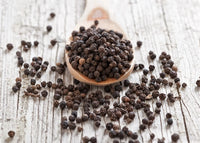
Whole dried berry
The standard form — crush gently before use.
Cracked
Faster extraction.
Region of cultivation
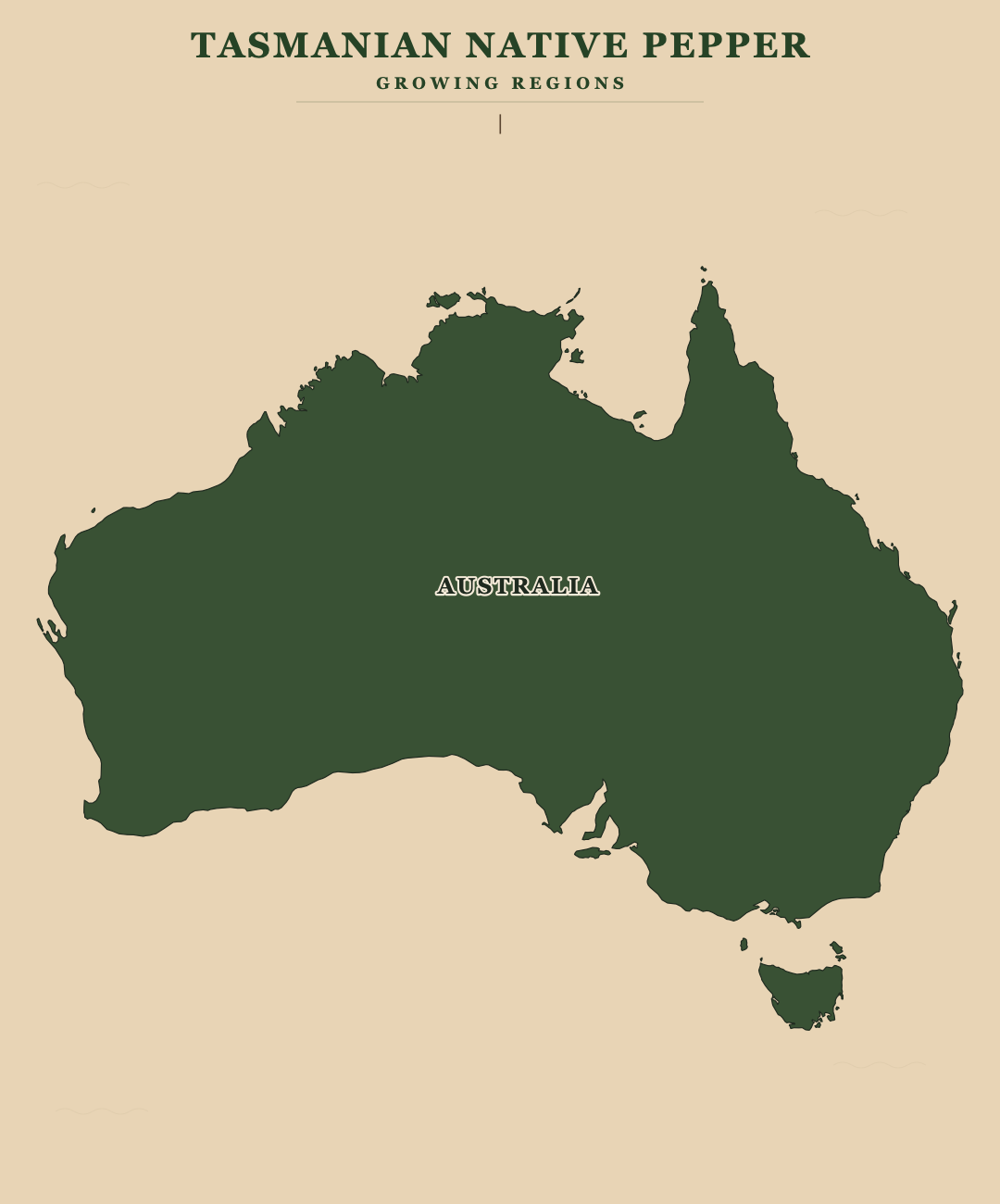
Tasmanian Native Pepper is native to Australia, Australia — Tasmania (especially the central highlands), Victorian Alps, Blue Mountains NSW, with secondary growing regions in Plantation cultivation in cool temperate eastern Australia. |
Spice Story
The Tasmanian Native Pepper berry is one of the most distinctive Australian native spices — sharper and more aromatic than imported black pepper, with a slow-building warmth that lasts. See Mountain Pepper Leaf entry for the fuller traditional-use and commercial-history treatment. The berry has been a foundational bushfood for First Nations Tasmanian and south-eastern Australian peoples for tens of thousands of years; commercial cultivation expanded through the 1980s–90s bushfood movement. In gin, Tasmanian Native Pepper has become one of the most signature native Australian botanicals — present in the great majority of Australian craft gins that lean into native character.
Gin Creativity
Tasmanian Native Pepper brings sharp peppery warmth with a slow-building tingling depth and a deep red colour in cool maceration. A full sachet pushes a gin firmly into clearly native-pepper territory; a half-sachet provides quiet peppery complexity that integrates with juniper. Pair with Mountain Pepper Leaf for layered effect (berry and leaf together), or with Lemon Myrtle for citrus-pepper contrast.
Blending Science
Main flavour compounds
 Polygodial—
 Anthocyanins (deep red colour)—
 Limoneneclean citrus lift
 Alpha-Pinenefresh pine, top note
Pairs well with
Polygodial is the defining compound — the sesquiterpene dialdehyde responsible for both the characteristic slow-building peppery warmth and (uniquely) for activating both heat and bitter receptors. Anthocyanins in the berry produce the deep red colour in cold maceration. Limonene layers citrus brightness. Alpha-pinene adds resinous backbone that bridges to juniper. Heat-stable but cool extraction preserves the brilliant red colour from anthocyanins.
Food Partners
- Native bush spice rubs — Tasmanian Native Pepper for red meat.
- Game-meat reductions — pepper berries in kangaroo or venison sauces.
- Smoked meats — Tasmanian Native Pepper deepens smoke.
- Bush honey desserts — leatherwood honey with pepperberry syrup.
- Aged hard cheese — pepperberry-honey reduction.
Cocktails To Try

- Tasmanian Negroni — pepperberry gin, Campari, vermouth.
- Native G&T — pepperberry gin, native tonic, fresh pepperberry garnish.
- Bush Old Fashioned — pepperberry gin, leatherwood honey, native bitters.
Release The Flavour
- Cool extraction — preserves the brilliant red anthocyanins.
- Crush gently — exposes the polygodial.
- Time — 24–48 hours for full development.
- Pair with juniper — pepperberry and juniper reinforce each other.
Discover more
From the same region
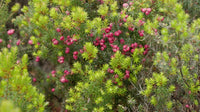
Pairs well with
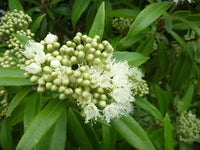
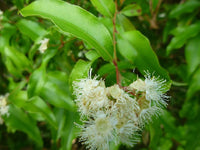
Same flavour family
Surprise me

Sources & Citations
- scientific_name (Tasmannia lanceolata, Winteraceae):en.wikipedia.org/wiki/Tasmannia_lanceolata
- see Mountain Pepper Leaf entry for fuller treatment:botanicals/mountain-pepper-leaf.md
- polygodial_active_compound:www.sciencedirect.com/topics/agricultural-and-biological-...
- berry_vs_leaf_intensity:tuckerbush.com.au/pepperberry-tasmannia-lanceolata/
- main_flavour_compounds (CSV-sourced):inputs/source.csv — Tasmanian Native Pepper row
