
ANISE MYRTLE

- Botanical name
- Syzygium anisatum
- Also known as
- Aniseed myrtle, Ringwood, Aniseed tree
- Main flavour compound
- Trans-anethole
- Part used
- Dried leaf
- Method of cultivation
- Rainforest tree of the Myrtaceae family, endemic to a tiny native range in subtropical northern New South Wales. In the wild it reaches up to 45 metres; in plantation it is hedged to 2–3 metres for ease of leaf harvest. The plant is propagated from cuttings and seed, planted out in subtropical and warm-temperate gardens across eastern Australia.
- Commercial preparation
- Leaves are picked from cultivated plantations, gently dried at low temperatures to preserve the volatile aniseed character, then sold whole, cracked or ground. The essential oil is also steam-distilled separately for food and fragrance industries.
- Non-culinary uses
- Essential oil for food flavouring, perfumery, and natural health products. Indigenous Bundjalung and Gumbaynggirr peoples of the Nambucca and Bellinger Valleys have long known the plant; commercial bushfood production from the 1990s onward built on that traditional knowledge.
Anise myrtle — Syzygium anisatum — is a rainforest tree of the myrtle family, endemic to a tiny pocket of subtropical New South Wales. Crush a single leaf between your fingers and the air fills with sweet aniseed and cool eucalypt at the same time — a combination so distinctive it feels almost designed. In the wild the tree can reach 45 metres; in plantation it's hedged to chest height so the leaves can be hand-picked. It is one of a handful of native Australian botanicals (alongside lemon myrtle and pepperberry) that have moved from bushfood obscurity into international culinary use over the last thirty years. [source]
Whole dried leaf
The classic form — crush gently just before use to release the trans-anethole.
Cracked or ground
Faster extraction; ground product loses character quickly so buy in small amounts.
Region of cultivation
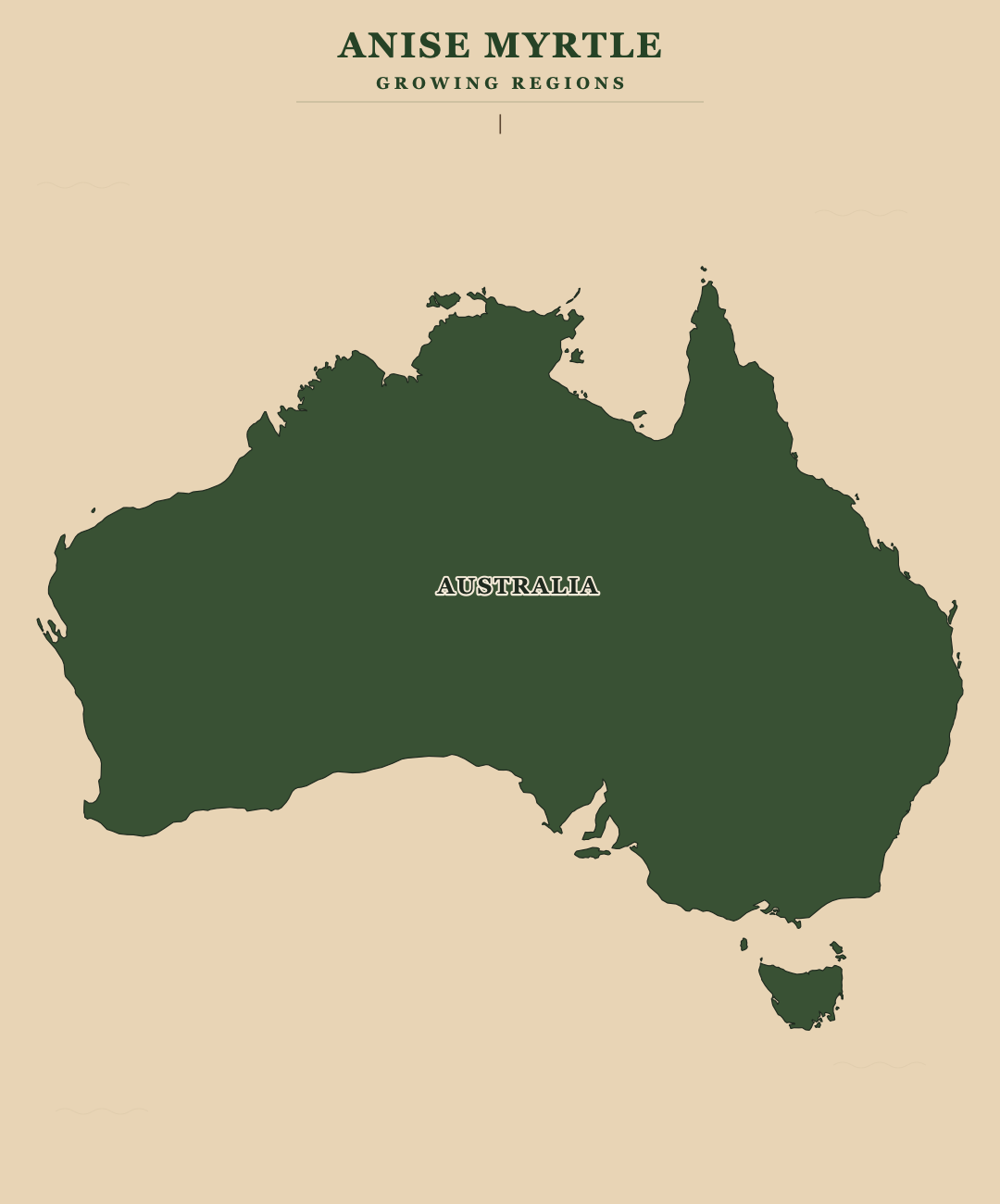
Anise Myrtle is native to Australia, Australia — northern NSW (Nambucca Valley, Bellinger Valley), with secondary growing regions in Plantations in subtropical QLD and northern NSW. |
Spice Story
The natural range of anise myrtle is astonishingly small — restricted to the Nambucca and Bellinger Valleys on the subtropical Mid-North Coast of NSW, on Gumbaynggirr country, where the wet rainforest of the Great Dividing Range meets the coast. [source] Traditional Indigenous use of the plant predates colonial knowledge by tens of thousands of years; the commercial bushfood trade only began in the early 1990s, with the first cultivated plantations established mid-decade to meet growing demand from restaurants and food manufacturers. Today the leaf is widely used in Australian native cuisine, and increasingly in craft gin and tonic syrups. Its dominant compound, trans-anethole, is the same molecule that defines anise, fennel and star anise — but anise myrtle delivers it alongside a cooler eucalypt note that no Mediterranean spice can match.
Gin Creativity
Anise myrtle is one of the most distinctively Australian botanicals you can put in a gin. A full sachet pushes a gin into clear native-Australian territory — sweet-aniseed lead, cool green back-palate. A half-sachet does its best work alongside lemon myrtle or pepperberry, anchoring a bush-food botanical bill. Avoid pairing with traditional anise (aniseed, fennel) — the result is muddy rather than additive. Pair instead with citrus, cinnamon, or wattle seed for contrast.
Blending Science
Main flavour compounds
 Trans-anetholeanise, sweet
 Methyl chavicolanise, herbal
 Eugenolclove-like, warming
Pairs well with
- Lemon Myrtle
- Strawberry Gum
- Pepperberry
- Cinnamon
- Wattleseed
Trans-anethole is the heavy lifter — the same compound responsible for the aniseed character in fennel, star anise and aniseed itself, but here in unusually high concentration (typically over 90% of the essential oil). [source] Methyl chavicol adds a slightly bitter, basil-adjacent note that gives the leaf its characteristic green edge. Eugenol, in smaller amounts, contributes a clove-like warmth on the finish. Trans-anethole is fat- and alcohol-soluble and survives heat well; vapour infusion preserves the brightest green top notes, while macerated extraction draws out the deeper anethole sweetness. The compound can crystallise in cold storage — a faint cloudiness is normal, not a fault.
Food Partners
- Sticky pork glazes: The sweet-anise character cuts through fat without competing with sweetness.
- Fennel and orange salad: Aniseed-on-aniseed sounds redundant but layers beautifully.
- Custards and panna cotta: Anise myrtle infused in cream gives a quietly exotic background note.
- Roast lamb: A traditional Australian native-spice pairing — rub the leaf into the fat before roasting.
- Spiced biscuits: Anzac biscuits with anise myrtle in the dry mix.
Cocktails To Try

- Anise Myrtle G&T: A whole leaf in the glass with the ice and citrus — let the aroma do the work.
- Native Negroni: A bush-spice Negroni with anise myrtle and pepperberry alongside the gin.
- Pastis-style highball: Anise myrtle gin, cold water, sugar syrup — a southern-hemisphere take on a Provençal classic.
Release The Flavour
- Bruise the leaf: Light pressure releases the oils; tearing the leaf is enough for short infusions.
- Heat: Trans-anethole survives heat well; long, warm extractions deepen the anise sweetness.
- Time: A short infusion (1–2 hours) captures the bright green top notes; longer extractions favour the sweet-anise body.
- Storage: Whole leaves hold flavour for 18+ months in airtight darkness; ground product fades within months.
Discover more
Pairs well with
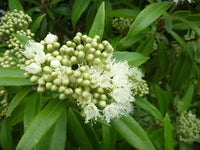
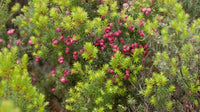
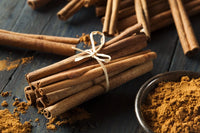
Same flavour family
Surprise me

Sources & Citations
- scientific_name and family:en.wikipedia.org/wiki/Syzygium_anisatum
- wild range (Nambucca/Bellinger Valleys):en.wikipedia.org/wiki/Syzygium_anisatum
- plantation history (commercial bushfood from early/mid 1990s):en.wikipedia.org/wiki/Syzygium_anisatum
- tree height (wild 45m vs cultivated 4-10m):aussiegreenthumb.com/aniseed-myrtle-growing-guide/
- trans-anethole as primary compound:en.wikipedia.org/wiki/Syzygium_anisatum
- main_flavour_compounds (CSV-sourced):inputs/source.csv — Anise Myrtle row
