
SPEARMINT LEAVES

- Botanical name
- Mentha spicata
- Also known as
- Garden mint, Mackerel mint, Lamb mint
- Main flavour compound
- R-(-)-Carvone (the cooling-mint enantiomer)
- Part used
- Dried leaf
- Method of cultivation
- Aromatic perennial herb of the Lamiaceae (mint) family, native to Europe and Asia and naturalised worldwide. The plant grows about 60 cm tall, with creeping stolons (which is why mint should always be planted in a container). Spearmint is one of the parents of peppermint (the other being water mint). Cultivated commercially worldwide; major producers include USA, Morocco, Egypt, India and China.
- Commercial preparation
- Leaves are harvested at peak season (just before flowering), gently dried, and either sold whole or cracked. Essential oil distillation produces commercial spearmint oil used in confectionery, dental products and pharmaceutical applications.
- Non-culinary uses
- Foundational ingredient in confectionery (gum, mints, sweets — particularly the bright "spearmint" flavoured gum); dental products; aromatherapy; Moroccan and Middle Eastern tea culture (mint tea is foundational across the Maghreb).
Spearmint — Mentha spicata — is a hardy perennial herb of the mint family, native to Europe and parts of Asia, naturalised worldwide. The plant grows about 60 cm tall, with bright green spear-shaped leaves (which is what the common name refers to) and small lavender-pink flowers in mid-summer. Spearmint is one of the parents of peppermint (Mentha × piperita) — the other parent being water mint. The defining feature of spearmint is its essential oil chemistry: dominated by R-(-)-carvone, the cooling-mint enantiomer that is the mirror image of S-(+)-carvone (the warm-anise compound that defines caraway). [source]
Whole dried leaf
The standard form — crumble lightly to release the oils.
Cracked
Faster extraction.
Region of cultivation
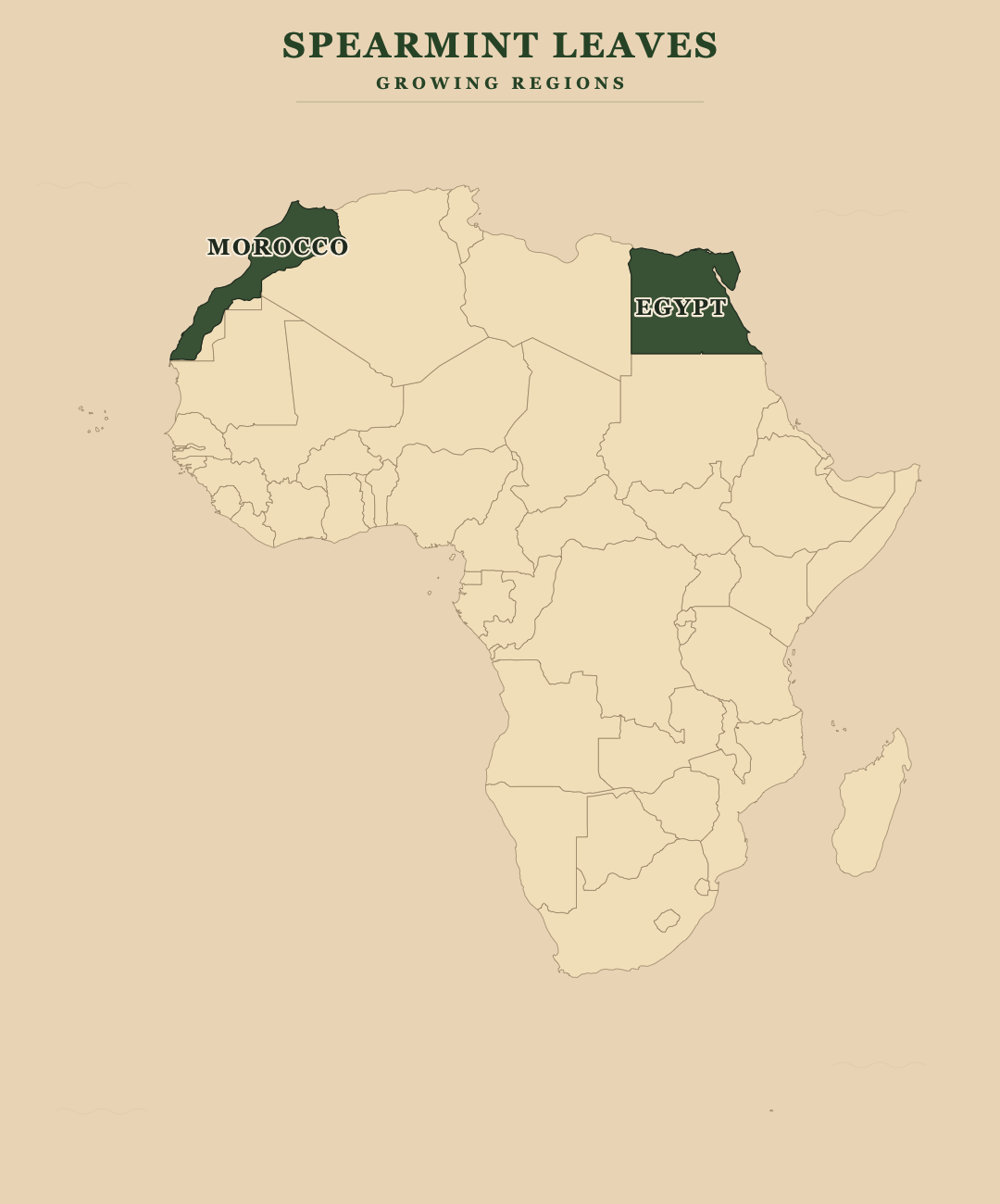
Spearmint Leaves is primarily cultivated in USA (Washington, Idaho), Morocco, Egypt, India, with secondary growing regions in China, Bulgaria, Australia.
Spice Story
Spearmint has been used as both a culinary and medicinal herb across Europe and the Mediterranean since classical times. The herb is foundational to Moroccan and broader Maghrebi cuisine — Moroccan mint tea (sweet green tea brewed with fresh spearmint) is the iconic North African drink and one of the most universal hospitality rituals in the region. Spearmint is also the dominant mint of British cooking (mint sauce for lamb), Cuban cocktails (mojito), and most American "mint" gum and confectionery. In gin, spearmint provides bright cool-mint character distinct from the more medicinal peppermint.
Gin Creativity
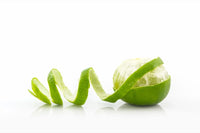
Spearmint brings bright cool-mint character with a sweeter, softer body than peppermint. A full sachet pushes a gin firmly into clearly minty territory; a half-sachet provides quiet cool depth that integrates with juniper. Pair with lime peel for a mojito-style profile, or with lemon balm and borage for a summer garden gin.
Blending Science
Main flavour compounds
 R-(-)-Carvone (the cooling-mint enantiomer)caraway, minty
 Limoneneclean citrus lift
 Dihydrocarvonecaraway, minty
 Menthone—
Pairs well with
R-(-)-Carvone is the defining compound — providing the cool fresh-mint character that distinguishes spearmint from peppermint (where menthol dominates). Limonene layers a citrus brightness. Dihydrocarvone is a related compound contributing depth. Menthone is present at much lower concentration than in peppermint. The R-(-) carvone vs S-(+)-carvone distinction is one of the most-cited examples of how molecular chirality changes perceived flavour. Cool extraction preserves the bright top.
Food Partners
- Moroccan mint tea — the canonical pairing.
- Mojitos and Cuban-style cocktails — spearmint is the cocktail mint.
- Pea-and-mint soup — English spring classic.
- Lamb with mint sauce — British tradition.
- Chocolate-mint desserts — but peppermint is usually preferred for confectionery.
Cocktails To Try

- Mojito (gin) — spearmint gin, lime, sugar, soda.
- Moroccan G&T — spearmint gin, light tonic, fresh spearmint sprig.
- Mint Julep (gin) — spearmint gin, demerara, fresh spearmint.
Release The Flavour
- Cool extraction — preserves the bright R-carvone.
- Crumble gently — releases volatile oils.
- Brief contact — 1–4 hours captures freshness.
- Spearmint vs peppermint — spearmint is softer and sweeter; choose based on intended profile.
Discover more
From the same region
Pairs well with
Same flavour family
Surprise me

Sources & Citations
- scientific_name (Mentha spicata, Lamiaceae):www.sciencedirect.com/topics/agricultural-and-biological-...
- R_minus_carvone_signature_compound:chempics.wordpress.com/2014/01/23/spearmint-mentha-spicata/
- parent_of_peppermint_hybrid:www.sciencedirect.com/topics/agricultural-and-biological-...
- main_flavour_compounds (CSV-sourced):inputs/source.csv — Spearmint Leaves row
