
MANUKA (AUSTRALIAN)

- Botanical name
- Leptospermum scoparium
- Also known as
- Tea Tree (historical), Mānuka (New Zealand spelling), New Zealand Tea Tree
- Main flavour compound
- Alpha-Pinene
- Part used
- Dried leaf and small twigs (sometimes including small flowers)
- Method of cultivation
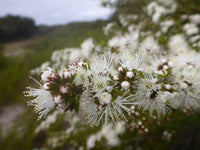
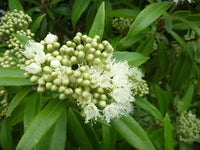
- Evergreen shrub or small tree of the Myrtaceae family, native to both New Zealand and parts of south-eastern Australia (especially Tasmania and Victoria). The plant grows 2–5 metres tall, with small needle-like leaves and white-to-pink five-petalled flowers. The "Australian" qualifier in this CSV entry is significant because there's a real chemical difference between New Zealand and Australian/Tasmanian manuka: New Zealand East Cape manuka contains substantial β-triketones (>20% of essential oil), while Australian and Tasmanian manuka has no β-triketones — making the two regional types chemically distinct.
- Commercial preparation
- Leaves and small twigs are harvested by coppicing, gently dried, and either sold whole or steam-distilled for essential oil. Australian manuka oil is significantly cheaper than New Zealand East Cape manuka oil due to the absence of premium triketone content.
- Non-culinary uses
- Manuka honey (when bees forage on manuka flowers — a celebrated antimicrobial honey, particularly from New Zealand); essential oil for aromatherapy, natural cosmetics and natural cleaning products; traditional Maori and Indigenous Australian medicinal uses.
Manuka — Leptospermum scoparium — is an evergreen shrub or small tree of the Myrtaceae family, native to both New Zealand and parts of south-eastern Australia (Tasmania, Victoria, coastal NSW). The plant grows 2–5 metres tall, with small needle-like leaves and white-to-pink five-petalled flowers. While Manuka is most famously associated with New Zealand (where Manuka honey commands premium prices worldwide), it is also a genuine native of Australian Tasmania and Victoria — and the CSV's "Australian Manuka" designation specifically distinguishes the Australian/Tasmanian chemotype from the New Zealand one. [source]
Whole dried leaf and twig
Crumble lightly to release the oils.
Cracked
Faster extraction.
Region of cultivation
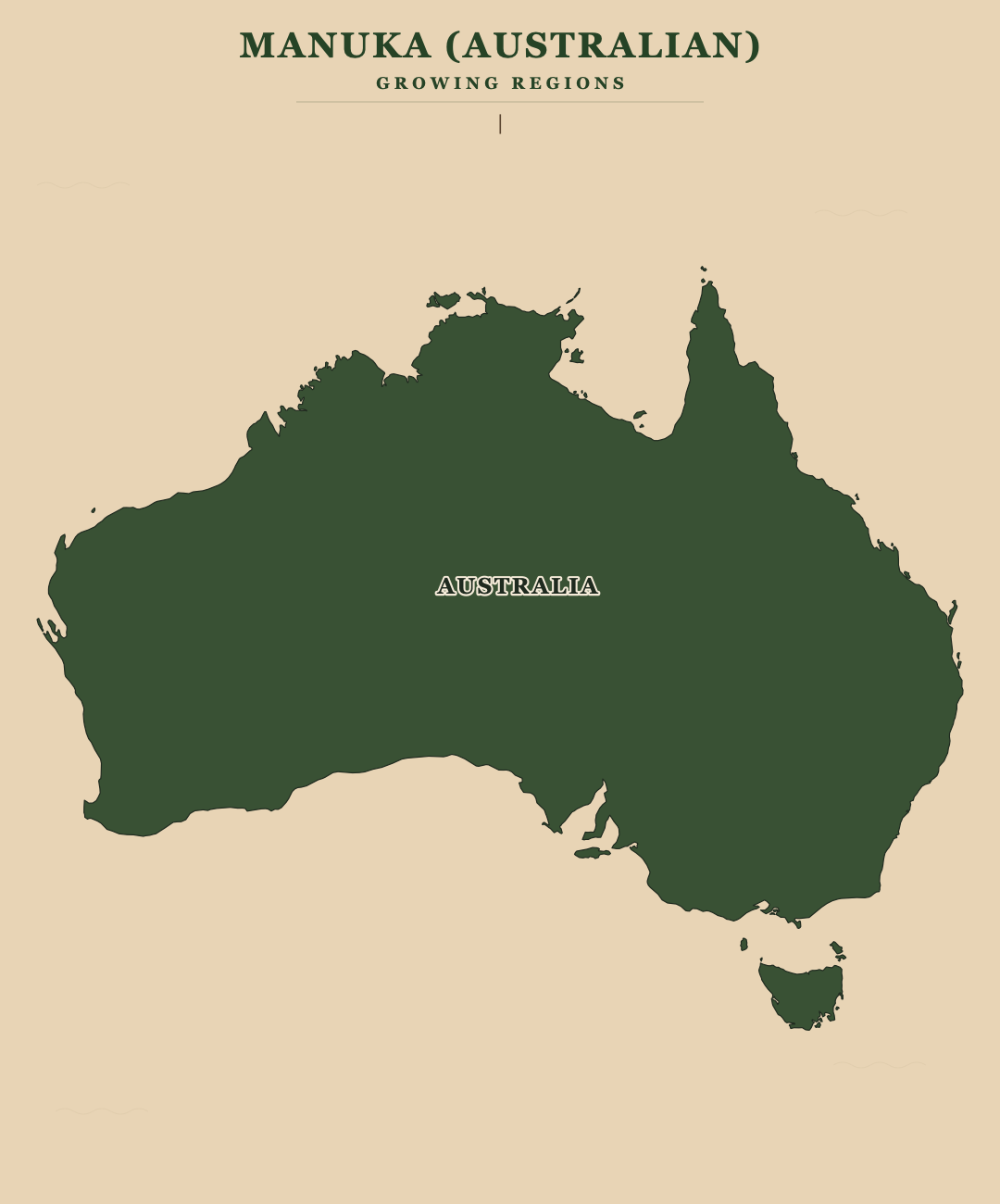
Manuka (Australian) is native to Australia, Australia — Tasmania, Victoria, coastal NSW; New Zealand (different chemotype), with secondary growing regions in Plantation cultivation in subtropical Australia. |
Spice Story
The chemistry difference between Australian and New Zealand manuka matters commercially. New Zealand East Cape manuka contains substantial β-triketones (>20% of the essential oil) — compounds with significant antimicrobial activity that have made New Zealand manuka famous in aromatherapy and natural medicine. Australian and Tasmanian manuka contains essentially no β-triketones, producing a different essential-oil profile dominated by α-pinene, β-caryophyllene and 1,8-cineole. [source] Both are valued — Australian Manuka has a softer, more resinous-floral character; New Zealand Manuka is sharper and more medicinal. In gin, Australian manuka provides a clearly Australian-native resinous aromatic.
Gin Creativity
Australian Manuka brings resinous-floral pine character without the medicinal edge of New Zealand manuka. A full sachet pushes a gin into clearly native-resinous territory; a half-sachet provides quiet bushland depth that integrates with juniper. Pair with Kunzea and Pepperberry for a Tasmanian-native blend, or with Lemon Myrtle for a brighter Australian profile.
Blending Science
Main flavour compounds
 Alpha-Pinenefresh pine, top note
 Beta-Caryophyllenewarm woody, peppery
 1,8-Cineoleeucalyptus, cool
 Calamene—
Pairs well with
Alpha-pinene is the dominant compound — providing the pine-resinous backbone that bridges Australian Manuka naturally to juniper. Beta-caryophyllene layers a warm woody depth. 1,8-Cineole adds a cool eucalypt-edged top. Calamene contributes a sweet woody body. (Note: the New Zealand chemotype additionally contains β-triketones, which are largely absent in Australian material.) Heat-stable; both vapour and warm maceration work cleanly.
Food Partners
- Manuka-honey desserts — natural pairing.
- Smoked meats — manuka's resinous character supports smoke.
- Native spice rubs — manuka with pepperberry and native thyme.
- Dark caramel desserts — manuka and burnt-sugar caramel.
- Aged cheese — manuka-gin reduction.
Cocktails To Try

- Bush Negroni — manuka and pepperberry gin, Campari, vermouth.
- Tasmanian G&T — manuka gin, native tonic, fresh manuka or kunzea garnish.
- Honey Sour — manuka gin, manuka honey syrup, lemon, egg white.
Release The Flavour
- Crumble gently — releases the resinous oils.
- Heat-friendly — both vapour and warm maceration work.
- Time — 24–48 hours for full development.
- Source matters — Tasmanian and Victorian Australian production has the chemotype distinct from New Zealand.
Discover more
From the same region
Pairs well with
Same flavour family
Surprise me

Sources & Citations
- scientific_name (Leptospermum scoparium, Myrtaceae):pmc.ncbi.nlm.nih.gov/articles/PMC7694078/
- regional_chemotype_difference (NZ East Cape vs Australian/Tasmanian):pubmed.ncbi.nlm.nih.gov/15184010/
- NZ_triketones_above_20_percent:pubmed.ncbi.nlm.nih.gov/15184010/
- australian_no_triketones:pubmed.ncbi.nlm.nih.gov/15184010/
- native_to_both_NZ_and_australia:pmc.ncbi.nlm.nih.gov/articles/PMC7694078/
- main_flavour_compounds (CSV-sourced):inputs/source.csv — Manuka (Australian) row
