
KUNZEA

- Botanical name
- Kunzea ambigua
- Also known as
- White Cloud, White Kunzea, Tick Bush
- Main flavour compound
- Alpha-Pinene
- Part used
- Dried leaf and terminal branch
- Method of cultivation
- Small-to-medium evergreen shrub of the Myrtaceae family, native to south-eastern Australia — New South Wales, Victoria and especially the islands of Bass Strait (Flinders Island in particular). Kunzea grows 4–5 metres tall in coastal heathland and open forest country, producing dense masses of small white flowers in spring and summer. Most commercial supply comes from wild-harvest on Flinders Island in north-east Tasmania, where the plant thrives in the cool, windy, high-rainfall conditions of the Bass Strait.
- Commercial preparation
- Fresh twigs and leaves are collected between September and May, then gently steam-distilled (typically in small local stills near the harvest site) to produce the essential oil. For sachet use, the dried leaf and twigs are sold whole or cracked.
- Non-culinary uses
- Foundational Tasmanian essential oil for aromatherapy (the "super oil from Flinders Island"); natural insect repellent; traditional Indigenous use for skin and joint complaints; significant commercial role in the Tasmanian wellness industry.
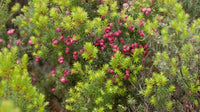
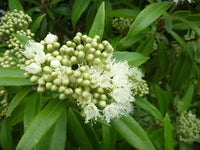
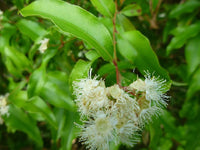
Kunzea — Kunzea ambigua — is a small-to-medium evergreen shrub of the Myrtaceae family, native to the coastal heath and open forest country of south-eastern Australia. The plant grows 4–5 metres tall, producing dense masses of small white flowers (which give it the common name "White Cloud") in spring and summer, and intensely aromatic narrow leaves that release a resinous-cool aroma when crushed. Most commercial production today comes from wild-harvest on Flinders Island in Tasmania's Bass Strait, where the windy, wet conditions produce especially aromatic essential-oil chemotypes. [source]
Whole dried leaf and twig
Crumble lightly to release the resinous oils.
Cracked
Faster extraction.
Region of cultivation
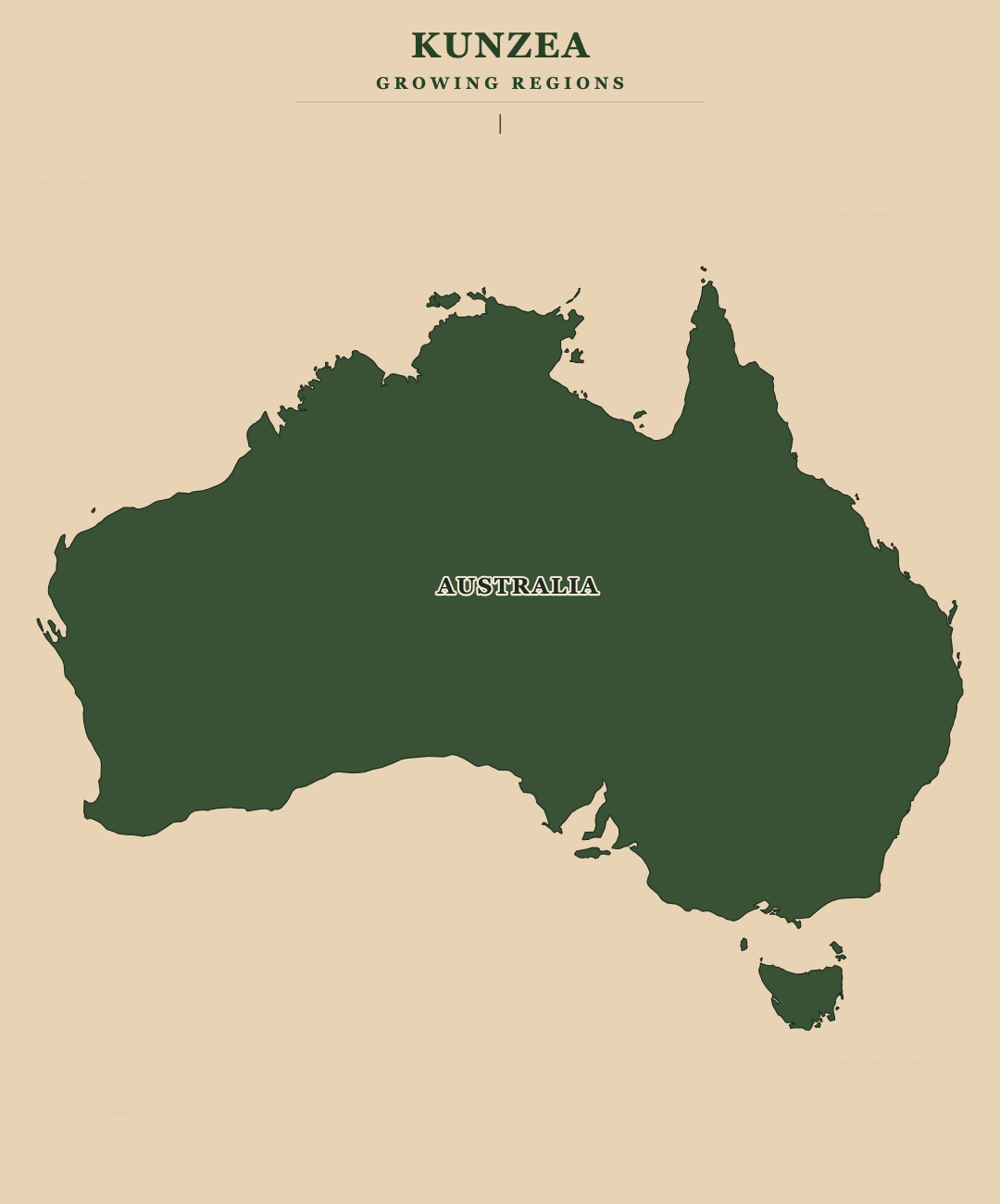
Kunzea is native to Australia, Australia — Tasmania (especially Flinders Island, Bass Strait), NSW, Victoria coastal heath, with secondary growing regions in Wild-harvest on Bass Strait islands; small plantation cultivation. |
Spice Story
Kunzea is one of the great success stories of Tasmanian native-essential-oil cultivation. The plant has long been used by Indigenous Tasmanian peoples for traditional medicine, and the modern commercial industry developed on Flinders Island in the late 20th century, where the wild-growing plant is harvested sustainably and distilled in small local stills. The essential oil is now sold worldwide for aromatherapy, natural cosmetics and (increasingly) craft distilling — providing a distinctly Tasmanian resinous-cool aromatic that no Mediterranean or imported essential oil can match. In gin, Kunzea has emerged as a contemporary Tasmanian native botanical, particularly in expressions that lean into a clearly southern, cool-temperate Australian character.
Gin Creativity
Kunzea brings resinous-cool pine-eucalypt character with a clean, fresh finish. A full sachet pushes a gin into clearly Tasmanian-native territory; a half-sachet provides a quiet resinous depth that integrates beautifully with juniper. Pair with pepperberry and lemon myrtle for a fully native bush-spice profile, or with Blue Cypress for a "Tasmanian wood and bush" gin.
Blending Science
Main flavour compounds
 Alpha-Pinenefresh pine, top note
 Viridiflorol—
 1,8-Cineoleeucalyptus, cool
 Globulol—
Pairs well with
Alpha-pinene is the dominant compound, providing the pine-resinous backbone that bridges Kunzea naturally to juniper (the two share pinene chemistry). Viridiflorol is a sesquiterpene alcohol contributing a sweet woody-floral depth — relatively rare in other essential oils and characteristic of Kunzea. 1,8-Cineole layers a cool eucalypt-edged top. Globulol adds further woody complexity. [source] Heat-stable; both vapour and warm maceration work cleanly.
Food Partners
- Smoked meats — Kunzea's resinous character supports smoke.
- Native spice rubs — pair with pepperberry, lemon myrtle, native thyme.
- Roast lamb — Tasmanian native-spice lamb rub.
- Dark honey desserts — leatherwood honey is particularly good.
- Aged cheese — Kunzea-gin in a cheese reduction.
Cocktails To Try

- Tasmanian G&T — Kunzea gin, native tonic, fresh Kunzea or Pepperberry garnish.
- Bass Strait Negroni — Kunzea-and-pepperberry gin, Campari, vermouth.
- Bush Sour — Kunzea gin, leatherwood honey, lemon, egg white.
Release The Flavour
- Crumble gently — releases the volatile pinene oils.
- Heat-friendly — both vapour and warm maceration work.
- Source matters — Flinders Island wild-harvest is the premium grade.
- Pair with juniper — Kunzea reinforces rather than competes.
Discover more
From the same region
Pairs well with
Same flavour family
Surprise me

Sources & Citations
- scientific_name (Kunzea ambigua, Myrtaceae):resources.austplants.com.au/plant/kunzea-ambigua/
- native_range (NSW, Vic, Tas — especially Bass Strait islands):resources.austplants.com.au/plant/kunzea-ambigua/
- flinders_island_production_centre:www.eotasmania.com.au/kunzea
- oil_chemistry (alpha-pinene, viridiflorol, 1,8-cineole):www.eotasmania.com.au/kunzea
- wind_and_rainfall_conditions:www.sunday.de/en/kunzea-oil-kunzea-ambigua-wild-australia...
- main_flavour_compounds (CSV-sourced):inputs/source.csv — Kunzea row
