
QUANDONG

- Botanical name
- Santalum acuminatum
- Also known as
- Desert Quandong, Native Peach, Wild Peach, Goorti (Pitjantjatjara)
- Main flavour compound
- Citric acid
- Part used
- Dried fruit (the red-skinned flesh)
- Method of cultivation
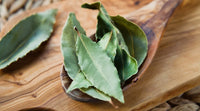
- Hemiparasitic shrub or small tree of the Santalaceae family (the same family as Northern Sandalwood), endemic to the central and southern desert and semi-arid regions of Australia. The plant grows up to 4 metres tall with rough dark bark and light green leathery leaves, and produces bright red ripe fruit. Like other Santalum species, Quandong is hemiparasitic — it uses the root systems of "host" or "brother" trees for water and nutrients, particularly during the establishing years. Commercial cultivation has expanded since Australia's CSIRO began research in 1973 to develop improved cultivars with brighter colour, better texture and balanced flavour.
- Commercial preparation
- Fruit is hand-picked at full red colour, washed, sometimes seeded (the central seed is large and hard), and either freeze-dried, dehydrated or processed into jams and syrups. Most production is small-scale and Indigenous-or-station-managed.
- Non-culinary uses
- Foundational Indigenous bushfood across central Australia — exceptionally high in vitamin C; the kernel was traditionally roasted and eaten; modern Australian native cuisine and cocktail use.
Quandong — Santalum acuminatum, the Desert Quandong — is a small hemiparasitic tree of the Santalaceae family (the sandalwood family), endemic to the arid and semi-arid regions of central and southern Australia. The tree grows to about 4 metres, with rough dark bark and pale green leathery leaves; in spring it produces small cream flowers followed by bright red fruit in summer. [source] Like other Santalum species, Quandong is hemiparasitic: it can photosynthesise on its own but also uses the root systems of "host" or "brother" trees for water and nutrients, particularly during establishment. The fruit is the part of commerce — bright red, about the size of a small plum, with a distinct tart-apricot flavour and a hard central seed.
Dried whole fruit (deseeded)
The standard form — bright red, chewy texture, releases character slowly.
Powdered
Faster extraction.
Region of cultivation
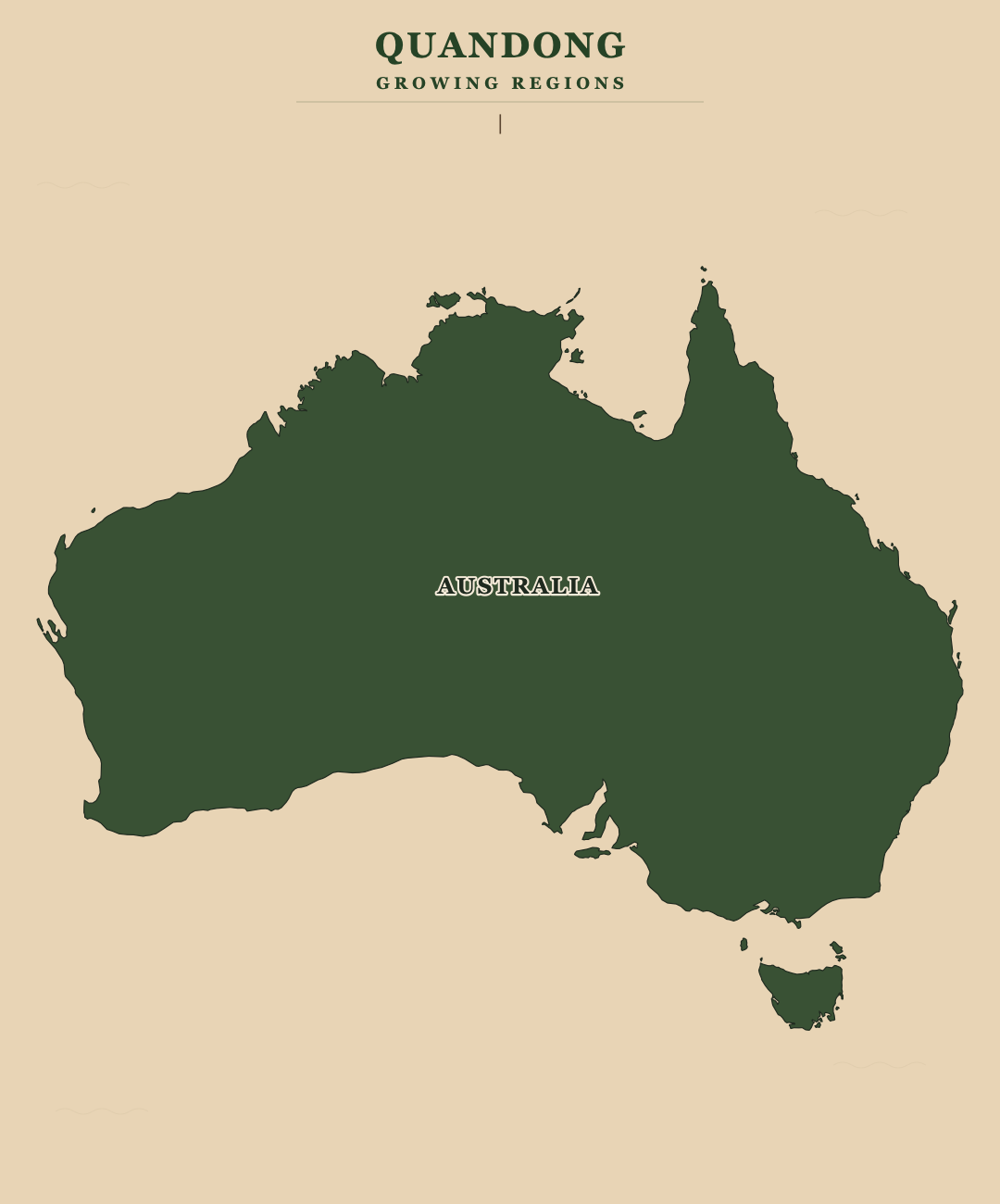
Quandong is native to Australia, Australia — central deserts and southern arid Australia, with secondary growing regions in Cultivated in Western Australia, NSW, South Australia, Victoria. |
Spice Story
Quandong is one of the most important traditional bush foods of arid Australia, eaten by First Nations peoples across the central deserts for tens of thousands of years. The fruit is exceptionally high in vitamin C — a critical seasonal nutrient in arid country — and the roasted kernel was also an important food source. Modern commercial cultivation began in earnest after Australia's CSIRO began breeding research in 1973 to develop fruit with brighter colour, better texture and balanced flavour. [source] Quandong now appears in Australian native cuisine across jams, sauces, desserts, sometimes alongside its Santalaceae cousin Northern Sandalwood. In gin, Quandong provides distinctive tart-fruit character that no imported botanical replicates.
Gin Creativity
Quandong brings tart-bright fruit character with a faint tannic edge. A full sachet pushes a gin firmly into Australian native-fruit territory; a half-sachet provides bright fruit complexity that integrates with juniper. Pair with Lemon Myrtle and Wattle Seed for a fully native profile, or with Pepperberry for fruit-and-spice contrast.
Blending Science
Main flavour compounds
 Citric acid—
 Malic acid—
 Sugars—
 Tannins—
Pairs well with
Citric acid and malic acid provide the tart edge that defines the fruit. Sugars contribute the soft sweetness underneath. Tannins provide the slightly astringent finish. Cool extraction preserves the bright fruit character.
Food Partners
- Native Australian jams — quandong jam is the canonical use.
- Game meat reductions — quandong-gin glaze over kangaroo.
- Stone-fruit desserts — quandong with peach or apricot.
- Cool summer drinks — quandong cordial.
- Cheese boards — quandong with native goat's cheese.
Cocktails To Try

- Native Spritz — quandong gin, prosecco, soda, dried quandong garnish.
- Outback Sour — quandong gin, wattle-seed syrup, lemon.
- Bush Negroni — quandong gin, Campari, vermouth.
Release The Flavour
- Cool extraction — preserves the bright fruit.
- Chop coarsely — exposes the dried flesh.
- Brief contact — 2–6 hours.
- Source matters — sustainable Indigenous-managed Quandong is the ethical premium grade.
Discover more
From the same region
Pairs well with
Same flavour family
Surprise me

Sources & Citations
- scientific_name (Santalum acuminatum, Santalaceae):en.wikipedia.org/wiki/Santalum_acuminatum
- hemiparasitic_growth:en.wikipedia.org/wiki/Santalum_acuminatum
- range (central Australian deserts):anpsa.org.au/plant_profiles/santalum-acuminatum/
- csiro_research_since_1973:en.wikipedia.org/wiki/Santalum_acuminatum
- high_vitamin_c_content:fruitspedia.com/fruits/quandong
- main_flavour_compounds (CSV-sourced):inputs/source.csv — Quandong row
