
LEMON


- Botanical name
- Citrus limon
- Also known as
- Common lemon, Eureka lemon, Femminello (Sicilian), Sorrento lemon
- Main flavour compound
- Limonene
- Part used
- Dried peel (zest, with pith removed)
- Method of cultivation
- Small evergreen tree of the Rutaceae family, native to South or South-East Asia (possibly the Assam region of India, or possibly Burma/Yunnan border). Introduced to the Mediterranean around the 10th century by Arab traders via Sicily. Modern major producers: India, Mexico, China, Argentina, Brazil, Spain. Italian Sicilian and Sorrento lemons (PGI-protected) are considered premium for the spice and perfumery trade.
- Commercial preparation
- Fruit is hand- or mechanically-picked at full colour, the peel removed and dried at low temperature. Quality is graded on peel oil content (higher in winter-harvested fruit), absence of white pith, and uniformity. Some peel is cold-pressed for essential oil.
- Non-culinary uses
- Perfumery (lemon is one of the foundational citrus notes in many fragrances); cleaning products; cosmetics; foundational beverage flavouring (limoncello, cocktails, soft drinks).
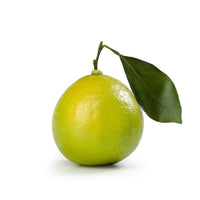
Lemon — Citrus limon — is a small evergreen tree of the Rutaceae family, almost certainly originating in northern South-East Asia (the Assam or Yunnan-Burma region). The tree grows 3–6 metres tall, with glossy dark green leaves, fragrant white-and-pinkish flowers, and the familiar bright yellow fruit. Like most citrus, lemon is a hybrid by origin — most likely between Citrus medica (citron) and Citrus aurantium (bitter orange). The fruit is picked at peak colour; the peel oil (concentrated in the coloured zest, not the white pith) is what we use for distilling. [source]
Dried peel chips
The standard form — adds clean citrus brightness.
Powdered
Faster extraction but loses character within months.
Region of cultivation
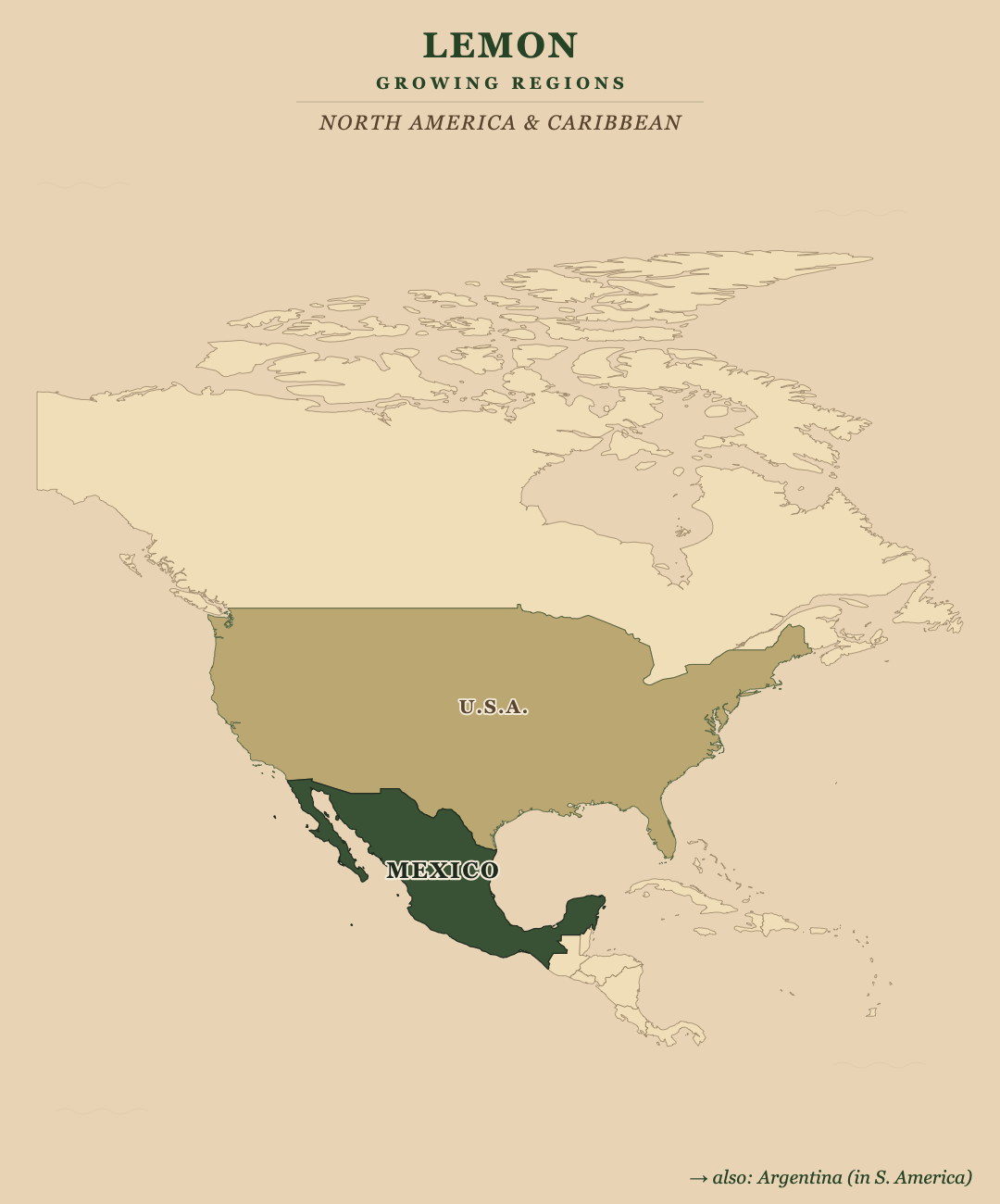
Lemon is primarily cultivated in India (largest producer), Mexico, China, Argentina, with secondary growing regions in Spain, Italy (Sicily PGI), Turkey, USA (California).
Spice Story
Lemons reached Sicily around the 9th–10th century AD, brought from the Middle East by Arab traders during the agricultural revolution that introduced citrus, sugarcane, rice and many other crops to the Mediterranean. The Jesuits — expert agriculturalists — expanded large-scale Syracusan cultivation in the 17th century, and by 1891 Sicilian lemon production had reached 11,500 tonnes annually, becoming a foundational economic crop of the island. [source] Today India produces the largest volume of lemons globally, but Italian Sicilian (Syracuse and Sorrento) lemons remain the premium grade for the perfumery, gin and limoncello trades. Lemon peel is one of the most foundational gin botanicals — present in nearly every classical and contemporary gin recipe.
Gin Creativity
Lemon brings clean, bright citrus character — the universal citrus partner. A full sachet pushes a gin into clearly lemon-led territory; a half-sachet provides citrus brightness that integrates with juniper. Pair with literally any other citrus, with coriander, or with floral botanicals. The classic London Dry quartet is juniper, coriander, angelica and citrus (typically lemon and/or orange).
Blending Science
Main flavour compounds
 Limoneneclean citrus lift
 Beta-Pinenefresh pine, top note
 Gamma-Terpinenefresh pine, top note
 Citrallemon-bright
Pairs well with
Limonene dominates at over 60% of the lemon peel oil — the same compound that defines all citrus, but in lemon paired with beta-pinene (pine-resinous edge), gamma-terpinene (slightly bitter herbaceous depth) and citral (the lemon-bright top note). Cool extraction preserves the bright top; warm extraction emphasises the bitter background.
Food Partners
- Fresh seafood — the universal pairing.
- Lemon-and-honey desserts — Mediterranean classics.
- Mediterranean roast chicken — lemon and rosemary.
- Vinaigrettes and dressings — fresh lemon juice with olive oil.
- Italian limoncello-style confections — lemon peel preserved in alcohol.
Cocktails To Try

- Classic Gin Sour — gin, lemon, sugar, optional egg white.
- Tom Collins — gin, lemon, sugar, soda.
- French 75 — gin, champagne, lemon, sugar.
Release The Flavour
- Cool extraction — preserves the bright top.
- Peel only — avoid pith.
- Brief contact — 2–6 hours captures brightness.
- Source matters — Sicilian and Sorrento lemons (PGI) have a distinctly more aromatic peel than supermarket fruit.
Discover more
From the same region
Pairs well with
Same flavour family
Surprise me

Sources & Citations
- scientific_name (Citrus limon, Rutaceae):www.britannica.com/plant/lemon
- sicily_arrival (Arabs, 9th-10th century):www.sicilyonweb.com/sicilian-lemons/
- 17th_century_jesuit_cultivation_syracuse:www.sicilyonweb.com/sicilian-lemons/
- flavour_compounds (limonene, pinenes, terpinene):www.sciencedirect.com/topics/agricultural-and-biological-...
- main_flavour_compounds (CSV-sourced):inputs/source.csv — Lemon row
