
MARJORAM

- Botanical name
- Origanum majorana
- Also known as
- Sweet marjoram, Knotted marjoram, "Joy of the mountain" (Greek)
- Main flavour compound
- Terpinen-4-ol
- Part used
- Dried leaf and flowering top
- Method of cultivation
- Tender perennial herb of the Lamiaceae (mint) family, native to Cyprus and southern Turkey but cultivated widely across the Mediterranean for over 3,000 years. The plant grows 30–60 cm tall, with small grey-green leaves and tiny white-pink flowers in clusters at the leaf axils. Cultivated continuously in Egypt for over 3,000 years; cultivated in England since the 13th century. Distinct from but closely related to oregano (*Origanum vulgare*) — marjoram is milder, sweeter, more floral.
- Commercial preparation
- Plants are cut at peak bloom in early summer (when essential-oil content is highest), gently dried in shaded conditions, and either sold whole or cracked. Egyptian, French, Polish and Spanish production dominates the European market.
- Non-culinary uses
- Traditional medicine across European, Egyptian and Greek herbal traditions for digestion, nervousness and respiratory complaints; ancient Greek and Roman wedding tradition (newlyweds were crowned with marjoram); foundational ingredient in *herbes de Provence* and many European herb blends.
Marjoram — Origanum majorana — is a tender perennial herb of the mint family, native to Cyprus and southern Turkey, cultivated widely across the Mediterranean. The plant grows 30–60 cm tall, with small grey-green leaves and tiny white-pink flowers clustered at the leaf axils (the species name majorana and the common name share an Arabic etymology meaning "incomparable"). Marjoram is closely related to oregano (Origanum vulgare) but is milder, sweeter, and more floral — the two should not be substituted directly. Marjoram has been cultivated continuously in Egypt for over 3,000 years and in England since the 13th century. [source]
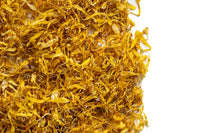
Whole dried leaf
The standard form — crumble lightly to release the oils.
Cracked
Faster extraction.
Region of cultivation
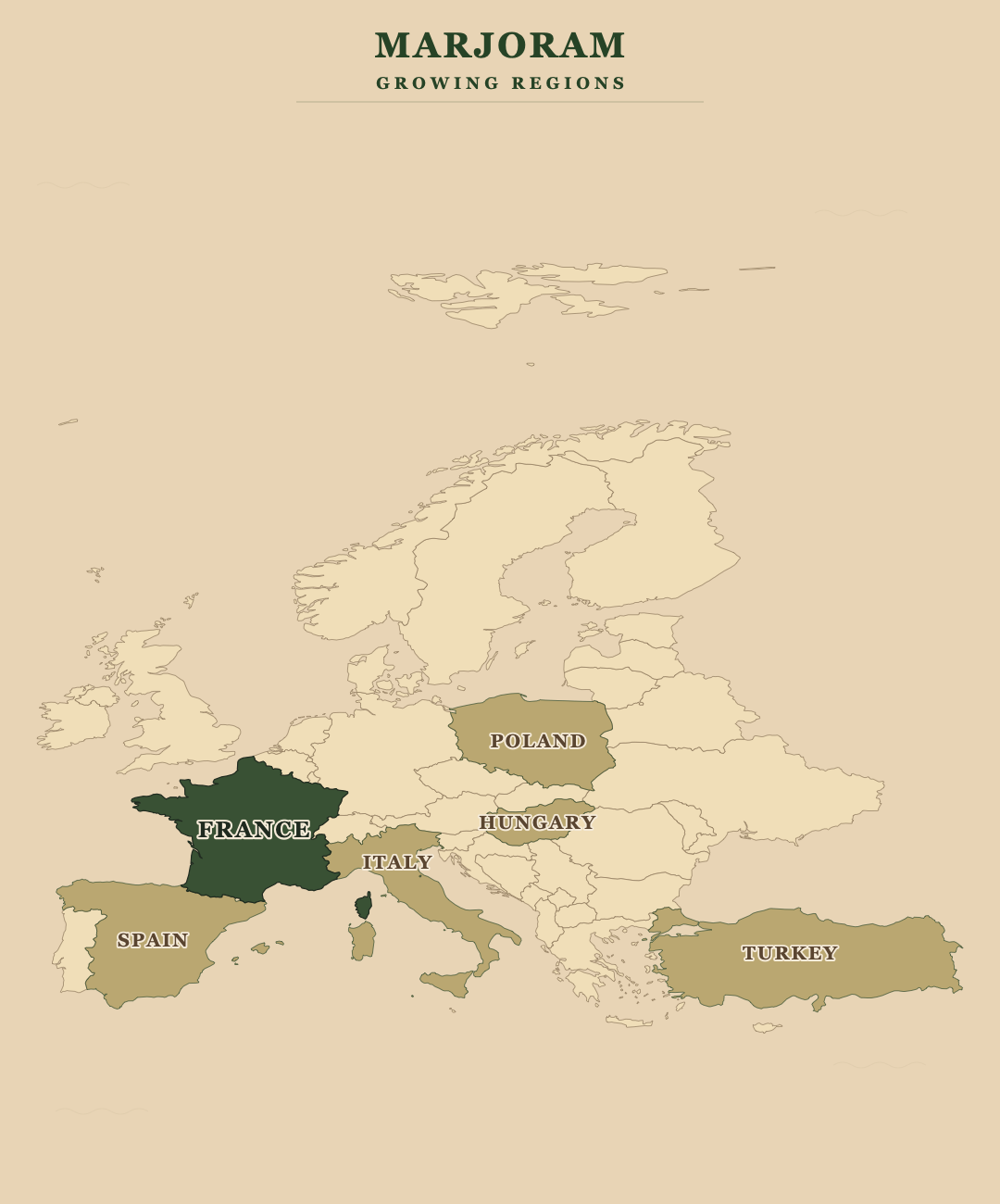
Marjoram is primarily cultivated in Egypt, France, Tunisia, Morocco, with secondary growing regions in Spain, Italy, Poland, Hungary, Cyprus.
Spice Story
Marjoram has accumulated symbolic meaning over centuries. The Greek name Origanum combines oros (mountain) + ganos (joy) — "joy of the mountain," reflecting both the plant's preferred upland habitat and its perceived medicinal benefits. The ancient Greeks and Romans crowned newlyweds with marjoram, believing it would bring happiness to the marriage; if marjoram grew on a grave, it was taken as a sign of the dead person's happiness in the afterlife. [source] Egyptian priests were instructed to use marjoram against migraines and nervousness, and the herb appears in tomb mummification. Today marjoram is foundational to herbes de Provence, Italian sausage seasoning, and Mediterranean cooking. In gin, marjoram is a soft herbaceous botanical providing gentle Mediterranean character.
Gin Creativity
Marjoram brings soft herbaceous-floral character — milder and sweeter than thyme or oregano. A full sachet pushes a gin into clearly Mediterranean-garden territory; a half-sachet provides quiet herbaceous depth that integrates with juniper. Pair with thyme and rosemary for a Provençal herb-garden profile, or with citrus peel and sage for a softer Mediterranean blend.
Blending Science
Main flavour compounds
 Terpinen-4-olwoody, citrus-green
 Sabinene hydratepepper, warming
 Cis-sabinenepepper, warming
 Linaloolfloral, soft
Pairs well with
- Thyme
- Sage
- Rosemary
- Citrus peel
- Lemon balm
Terpinen-4-ol is the dominant compound — the same compound that defines tea tree (Melaleuca alternifolia), responsible for the soft warm-herbaceous character. Sabinene hydrate layers a slightly cool floral note. Cis-sabinene adds a sharp peppery edge. Linalool contributes a soft floral lift familiar from coriander. Cool extraction preserves the bright top; warm extraction develops the deeper body.
Food Partners
- Provençal lamb roasts — marjoram is essential in herbes de Provence.
- Italian sausages and meatballs — marjoram is fundamental to Italian charcuterie.
- Mediterranean vegetable dishes — Greek and Italian summer salads.
- Soft cheese — marjoram-and-honey over chèvre.
- Egg-based dishes — marjoram in omelettes and frittatas.
Cocktails To Try

- Provençal G&T — marjoram gin, tonic, fresh marjoram sprig.
- Mediterranean Sour — marjoram gin, honey, lemon, egg white.
- Garden Negroni — marjoram-and-thyme gin, Campari, vermouth.
Release The Flavour
- Cool to moderate warmth — preserves the bright character.
- Crumble lightly — releases the volatile oils.
- Time — 24–48 hours for full development.
- Whole leaf — holds character longer than ground.
Discover more
From the same region

Same flavour family
Surprise me

Sources & Citations
- scientific_name (Origanum majorana, Lamiaceae):en.wikipedia.org/wiki/Marjoram
- native_range (Cyprus, southern Turkey):en.wikipedia.org/wiki/Marjoram
- 3000_year_cultivation_egypt:www.herbsociety.org/file_download/inline/b30630e2-d0a9-46...
- english_cultivation_since_13th_century:www.herbsociety.org/file_download/inline/b30630e2-d0a9-46...
- greek_roman_wedding_crown_tradition:www.myspicer.com/history-of-marjoram/
- main_flavour_compounds (CSV-sourced):inputs/source.csv — Marjoram row
