
LEMONGRASS

- Botanical name
- Cymbopogon citratus
- Also known as
- West Indian lemongrass, Takhrai (Thai), Sereh (Indonesian)
- Main flavour compound
- Citral (65-85%)
- Part used
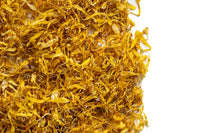
- Dried stem and leaf (the lower bulbous stem is most aromatic, but dried sachet product typically includes both)
- Method of cultivation
- Tall, clumping perennial grass of the Poaceae family, native to South-East Asia and the Indian subcontinent. The plant grows 1–2 metres tall from a clumping base, with long narrow lemon-scented leaves. Cultivated extensively across India (the largest commercial producer and exporter), Thailand, Indonesia, Brazil and parts of Africa. Needs full sun, 25–30°C average temperatures, and high rainfall (2,500–3,000 mm annually) for best growth.
- Commercial preparation
- The lower bulbous stems are cut, sliced, dried, and either packed for the culinary market or steam-distilled for essential oil. The essential oil yields citral at 65–85% of the volatile compounds, comparable to lemon myrtle and the highest single-compound concentrations of any commercial citrus aromatic.
- Non-culinary uses
- Essential oil for perfumery, cosmetics, soap, and insect-repellent products; foundational ingredient in South-East Asian cooking (Thai tom yum, Vietnamese pho, Indonesian curries); traditional medicine across South and South-East Asia for digestive and respiratory complaints.
Lemongrass — Cymbopogon citratus — is a tall clumping perennial grass of the Poaceae family, native to South-East Asia and the Indian subcontinent. The plant grows 1–2 metres tall, with long narrow blade-like leaves and a bulbous, fibrous lower stem (where most of the aromatic oil is concentrated). The leaves and stems release an intense, clean lemon aroma when bruised. India is the largest commercial producer, and Indian commercial cultivation began about a century ago. [source]
Sliced dried stem
The standard form — releases citral slowly across cool maceration.
Ground or powdered
Faster extraction; loses character within months.
Region of cultivation
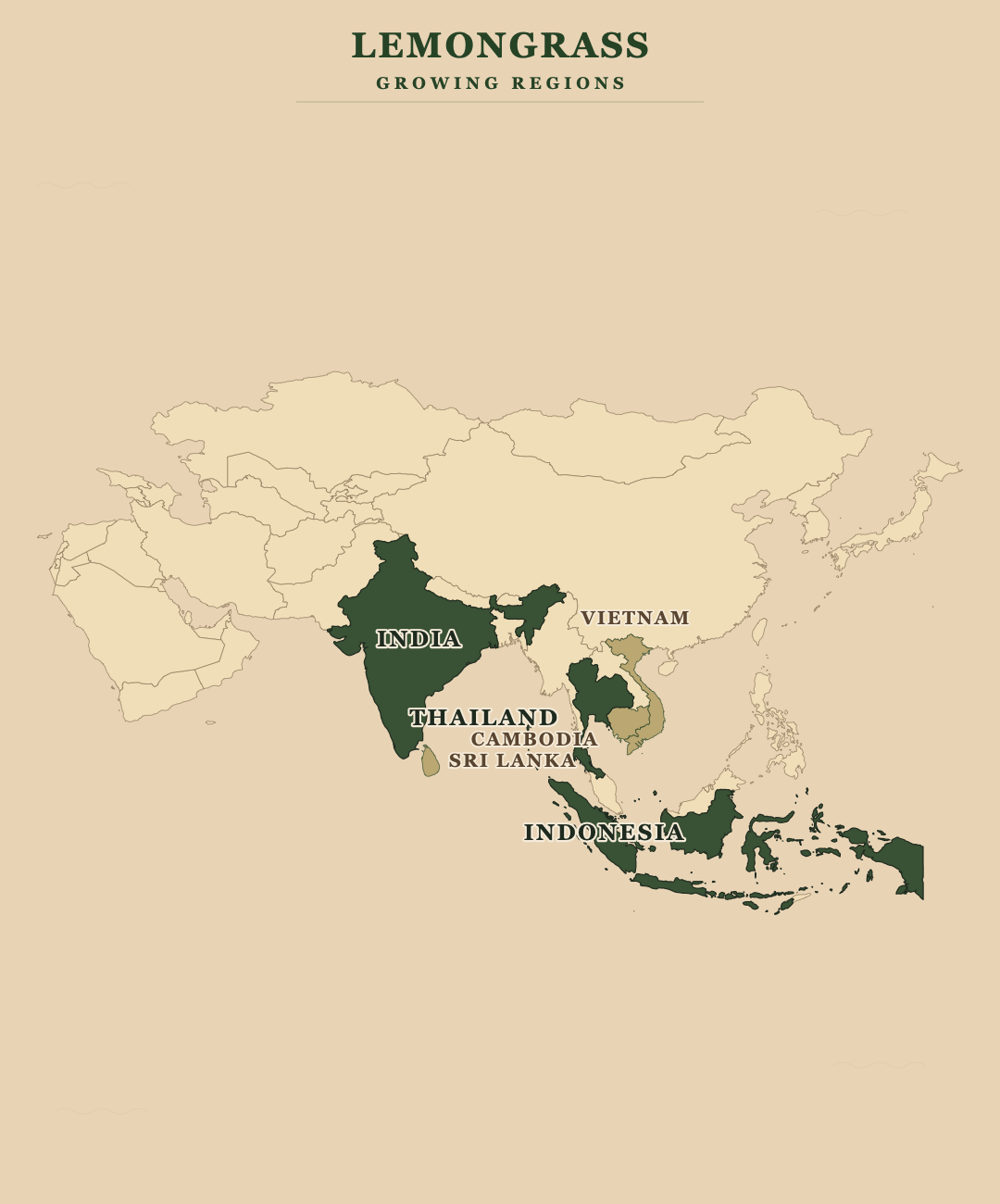
Lemongrass is primarily cultivated in India (largest producer/exporter), Thailand, Indonesia, Brazil, with secondary growing regions in Vietnam, Cambodia, Sri Lanka, Egypt, parts of Africa.
Spice Story
Lemongrass is foundational to the cuisines of Thailand, Vietnam, Indonesia, Malaysia, Cambodia and southern China — defining dishes like Thai tom yum and tom kha, Vietnamese pho, Indonesian rendang, and the broad family of South-East Asian curry pastes. The plant became commercially significant for essential-oil production in the late 19th and 20th centuries, when its high citral content made it the cheapest commercial source of lemon-citral aromatic compound (a role it still holds — lemongrass oil is significantly cheaper than lemon myrtle or lemon verbena). In gin, lemongrass is a foundational South-East Asian botanical, providing the cleanest grassy-lemon character available.
Gin Creativity
Lemongrass brings bright clean lemon-grass character. A full sachet pushes a gin firmly into South-East Asian territory; a half-sachet provides a quiet citrus-grass lift that integrates with juniper. Pair with kaffir lime leaf and galangal for a Thai-style profile, or with coriander seed and ginger for a contemporary blend.
Blending Science
Main flavour compounds
 Citral (65-85%)lemon-bright
 Myrcenegreen, hoppy body
 Citronellallemon-rosy
 Geraniolrose, soft floral
Pairs well with
Citral dominates at 65–85% of the essential oil — putting lemongrass in the same league as lemon myrtle and honey myrtle for citral concentration. [source] Myrcene layers a green-herbaceous body that gives lemongrass its characteristic grassy edge. Citronellal adds a rose-citrus note. Geraniol contributes a soft floral lift. Cool extraction preserves the citral; warm extraction develops the grassy depth.
Food Partners
- Thai tom yum and tom kha soups — the canonical pairing.
- Vietnamese pho — lemongrass in the broth.
- Indonesian curries — rendang, gulai, lemongrass-coconut curries.
- Citrus-poached fish — Asian-style with lemongrass and ginger.
- Asian-style marinades — chicken, beef, fish.
Cocktails To Try

- Thai Mule — lemongrass gin, lime, ginger beer.
- Tom Kha Sour — lemongrass and galangal gin, coconut, lime.
- Asian G&T — lemongrass gin, light tonic, fresh lemongrass garnish.
Release The Flavour
- Cool extraction — preserves citral.
- Slice thinly — increases surface area on the fibrous stem.
- Brief contact — 2–6 hours captures brightness.
- Pair with kaffir lime — they share citral chemistry and reinforce each other.
Discover more
From the same region

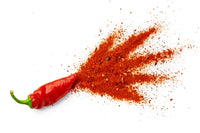
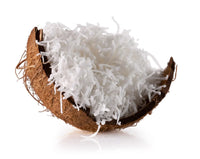
Pairs well with
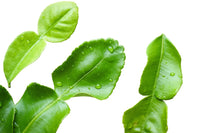
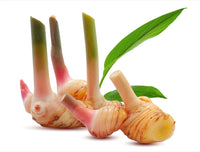
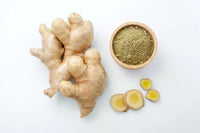
Same flavour family
Surprise me

Sources & Citations
- scientific_name (Cymbopogon citratus, Poaceae):en.wikipedia.org/wiki/Cymbopogon_citratus
- india_largest_producer_exporter:nhb.gov.in/model-project-reports/Horticulture%20Crops/Lem...
- thailand_takhrai_culinary_significance:en.wikipedia.org/wiki/Cymbopogon_citratus
- citral_content_65-85_percent:pmc.ncbi.nlm.nih.gov/articles/PMC3217679/
- cultivation_temperature_and_rainfall_needs:nhb.gov.in/model-project-reports/Horticulture%20Crops/Lem...
- main_flavour_compounds (CSV-sourced):inputs/source.csv — Lemongrass row
