
INCA BERRY

- Botanical name
- Physalis peruviana
- Also known as
- Cape Gooseberry, Golden Berry, Peruvian Cherry, Aguaymanto (Spanish)
- Main flavour compound
- Volatile esters (pineapple-like)
- Part used
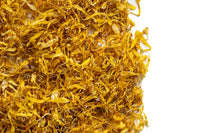
- Dried whole fruit (the small orange berry, removed from its papery husk)
- Method of cultivation
- Tender perennial of the Solanaceae family (the tomato/potato/pepper family), originally from Peru and the Andes. The plant grows 1–2 metres tall, with broad heart-shaped leaves and small yellow flowers with chocolate-brown centres. Each fruit develops inside a delicate "Chinese lantern" papery husk (the calyx) that turns tan as the fruit ripens to bright orange. The name "Cape Gooseberry" reflects its 19th-century commercial introduction to South Africa, from where it spread globally.
- Commercial preparation
- Fruit is hand-picked when the husk is tan and papery (the fruit can keep up to a month in its husk), removed from the husk, and either freeze-dried or low-temperature dehydrated to preserve the bright orange colour and tropical aromatic compounds.
- Non-culinary uses
- "Superfood" health food sales (the fruit is high in vitamin A, vitamin C and certain antioxidants); decorative use of the papery husk for restaurant dessert garnishes; traditional Andean medicine for digestion and inflammation.
Inca Berry — Physalis peruviana — is a tender perennial of the Solanaceae family, originally from the Andean highlands of Peru and Colombia. The plant grows 1–2 metres tall, with broad heart-shaped leaves and small yellow flowers with chocolate-brown centres. Each fruit develops inside a delicate papery husk (the calyx) that turns from green to tan as the fruit ripens — the "Chinese lantern" effect that makes the fruit so distinctive. Inside the husk is a small orange berry, marble-sized, with a flavour that combines pineapple, mango, vanilla and a tomato-citrus brightness all at once. [source]
Whole dried berry
The standard form — chop coarsely before use to release the oils.
Powdered
Faster extraction but loses character within months.
Region of cultivation
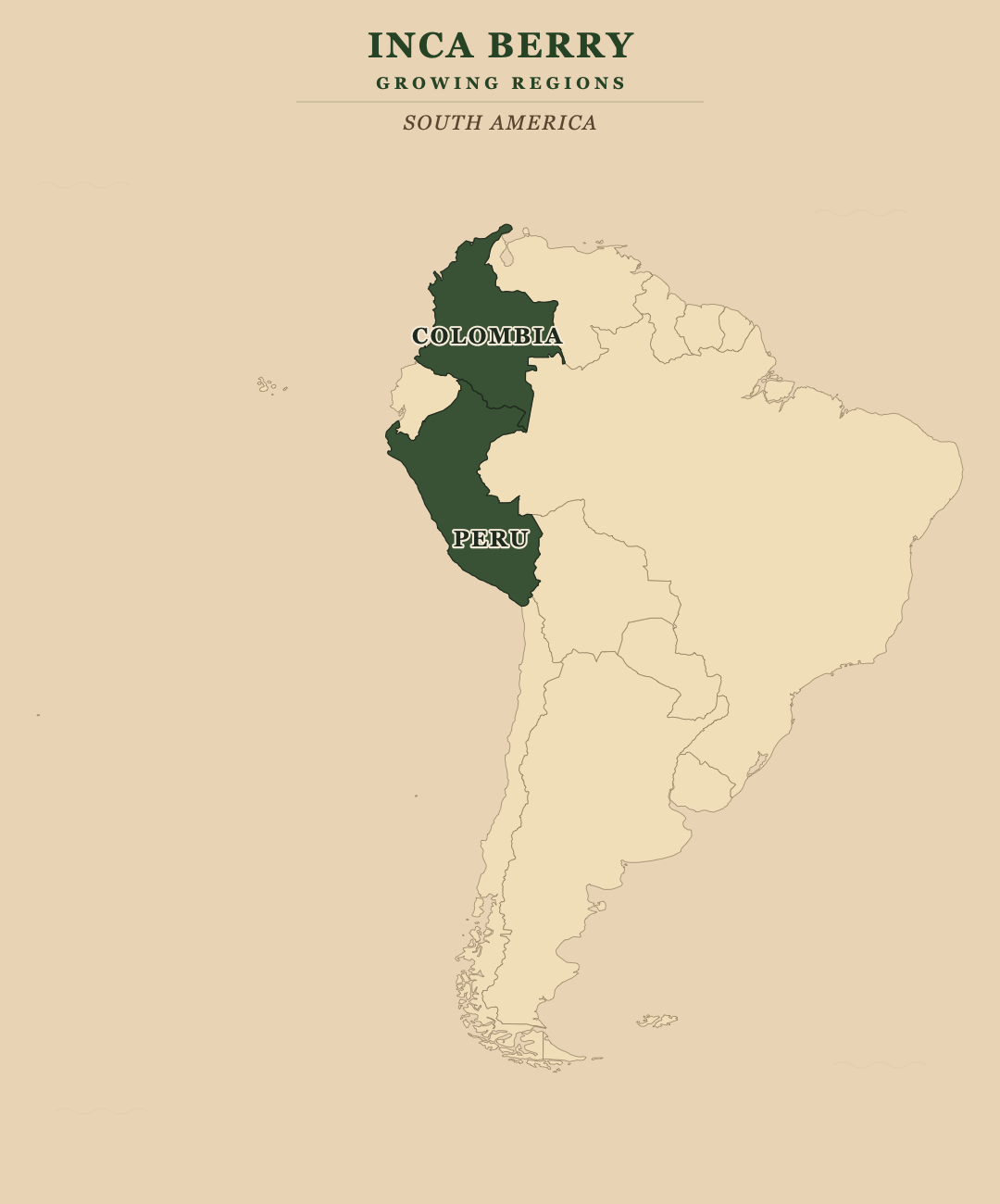
Inca Berry is primarily cultivated in Peru, Colombia (commercial cultivation centres), with secondary growing regions in South Africa, Madhya Pradesh (India), Australia (small commercial growers).
Spice Story
Inca Berry has been cultivated in the Andean highlands for hundreds of years, where it is known as aguaymanto. The plant was introduced to South Africa in the 19th century — hence the name "Cape Gooseberry" — and from there spread to Australia, the UK and parts of Asia. Madhya Pradesh in India is now a significant secondary commercial centre. The "superfood" health-food positioning of the late 2000s brought the dried form into Western health-food and craft markets, where the chefs and cocktail bartenders have embraced its remarkable flavour profile. In gin, Inca Berry is an unusual contemporary botanical providing genuinely tropical aromatic character.
Gin Creativity
Inca Berry brings a tropical-tart character with pineapple, vanilla and citrus notes. A full sachet pushes a gin firmly into tropical territory; a half-sachet adds quiet exotic fruit complexity. Pair with vanilla and lemon peel for a soft tropical profile, or with pink peppercorn and cardamom for a contemporary spice-meets-tropics blend.
Blending Science
Main flavour compounds
 Volatile esters (pineapple-like)—
 Beta-Ionone—
 Vanillin tracevanilla, sweet-creamy
 Citric and malic acids—
Pairs well with
The character comes from a complex mix of volatile esters (similar to those that define pineapple aroma) plus carotenoid-derived beta-ionone (contributing the slightly violet-floral note), trace vanillin (the source of the vanilla character), and citric and malic acids providing the tart edge. Cool extraction preserves the bright tropical top; warm extraction develops a more cooked-fruit register.
Food Partners
- Cool stone-fruit desserts — Inca Berry over peach and apricot.
- Cheese boards — fresh ricotta, chèvre, burrata.
- Tropical fruit salads — Inca Berry over mango, papaya and lime.
- Sparkling wine garnishes — Inca Berry in a champagne cocktail.
- Spiced poaching liquid for pears — Inca Berry as a tropical twist.
Cocktails To Try

- Andean Spritz — Inca Berry gin, prosecco, soda, dried berry garnish.
- Pisco-style Sour (with gin) — Inca Berry gin, lime, egg white, sugar.
- Inca Berry Negroni — Inca Berry gin, Campari, vermouth.
Release The Flavour
- Cool extraction — preserves the bright tropical character.
- Chop coarsely — exposes the aromatic compounds.
- Brief contact — 2–6 hours captures fruit; longer extractions emphasise tartness.
- Source matters — Peruvian and Colombian origin produces the most intensely aromatic fruit.
Discover more
From the same region

Pairs well with
Same flavour family
Surprise me

Sources & Citations
- scientific_name (Physalis peruviana, Solanaceae):en.wikipedia.org/wiki/Physalis_peruviana
- peruvian_origin:www.gardeningexpress.co.uk/physalis-peruviana-inca-berry-...
- cape_gooseberry_naming_19th_century_south_africa:www.gardeningexpress.co.uk/physalis-peruviana-inca-berry-...
- flavour_profile (pineapple, vanilla, tropical):www.gardeningexpress.co.uk/physalis-peruviana-inca-berry-...
- chinese_lantern_papery_husk:www.gardeningexpress.co.uk/physalis-peruviana-inca-berry-...
- main_flavour_compounds (CSV-sourced):inputs/source.csv — Inca Berry row
