
HYSSOP

- Botanical name
- Hyssopus officinalis
- Also known as
- Common hyssop, Biblical hyssop (debated)
- Main flavour compound
- Pinocamphone
- Part used
- Dried leaf and flowering top
- Method of cultivation
- Hardy semi-evergreen perennial herb of the Lamiaceae (mint) family, native to southern Europe and the temperate zones of Asia, growing wild around the Mediterranean. Cultivated commercially in Europe (especially southern France) for essential oil. Plants grow 30–60 cm tall, with narrow lance-shaped leaves and spikes of small purple-blue flowers in summer. Drought-tolerant; harvested twice yearly under good conditions (late spring and early autumn).
- Commercial preparation
- Cut foliage with flowering tops is dried gently to preserve the volatile pinocamphone-and-cineole-based oil. Air-drying produces the most aromatic product; high-heat drying flattens the character.
- Non-culinary uses
- Traditional ingredient in European herbal liqueurs — Chartreuse, Bénédictine, some absinthes (hyssop is sometimes the source of the green colouring in absinthe); traditional medicine for respiratory and digestive complaints across European and Middle Eastern herbalism; biblical references (though the "hyssop" of the Bible may have been a different plant, possibly Syrian oregano or marjoram).
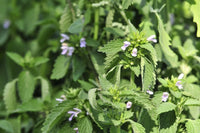
Hyssop — Hyssopus officinalis — is a hardy semi-evergreen perennial of the mint family, native to southern Europe and the temperate zones of Asia. The plant grows 30–60 cm tall, with narrow lance-shaped leaves and spikes of small purple-blue flowers in mid-to-late summer. It thrives in full sun and chalky-to-sandy well-drained soils — conditions abundant across the Mediterranean. Hyssop has been cultivated in Europe since at least the medieval period and is one of the foundational herbs of monastic medicine and liqueur production. [source]
Whole dried leaf and flower
The standard form — crumble lightly to release the oils.
Cracked
Faster extraction.
Region of cultivation
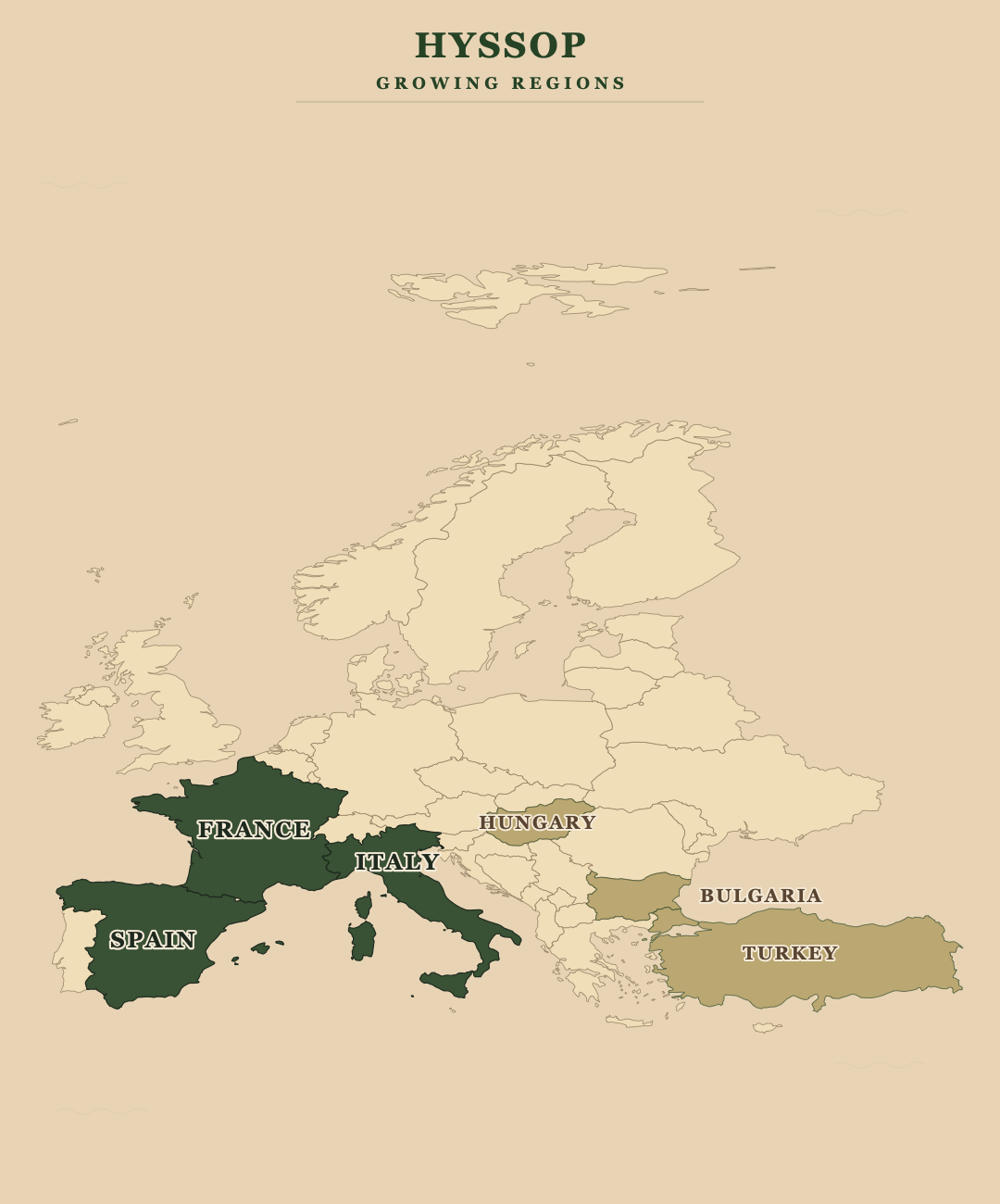
Hyssop is primarily cultivated in France (Provence), Spain, Italy, with secondary growing regions in Bulgaria, Hungary, Turkey, Iran.
Spice Story
Hyssop is one of the great European monastic herbs. The medieval Carthusian, Benedictine and Trappist orders all cultivated hyssop in their abbey gardens, and it appears in the original recipes for Chartreuse and Bénédictine — two of the most famous monastic liqueurs still made today. Hyssop is also one of the herbs that historically provided the green colouring in some absinthes. The plant has biblical associations as well, though the "hyssop" of the Bible (ezob) was probably not Hyssopus officinalis — most scholars now believe the biblical herb was Syrian oregano (Origanum syriacum) or a related marjoram, since H. officinalis doesn't grow in Israel/Palestine. [source] In gin, hyssop is an uncommon but historically authentic botanical, particularly in liqueur-style and Chartreuse-influenced craft gins.
Gin Creativity
Hyssop brings minty-bitter-herbaceous character with an anise-edged finish. A full sachet pushes a gin firmly into liqueur-territory; a half-sachet adds quiet medicinal-herbaceous depth that pairs naturally with juniper. Pair with angelica root and coriander for a classic genever-leaning blend, or with sage and lemon balm for a herbal-monastic profile.
Blending Science
Main flavour compounds
 Pinocamphone—
 Iso-pinocamphone—
 1,8-Cineoleeucalyptus, cool
 Thujone—
Pairs well with
The dominant compounds are pinocamphone and its isomer iso-pinocamphone — bicyclic monoterpene ketones contributing the characteristic minty-bitter character. 1,8-Cineole adds a cool eucalypt edge. Thujone is present in small amounts (the same compound that has driven absinthe's reputation; regulated in some jurisdictions but normally well below safety thresholds in food-grade hyssop). Cool extraction preserves the bright top; warm extraction develops the deeper herbal body.
Food Partners
- Fatty meats — duck, pork belly, goose; hyssop cuts richness.
- Strong cheese — aged sheep's-milk and goat's-milk cheeses.
- Bitter salads — chicory, endive, dandelion.
- Stone-fruit chutneys — hyssop and apricot, hyssop and plum.
- Lentil and bean stews — hyssop and pulses are a traditional Levantine pairing.
Cocktails To Try

- Chartreuse-leaning Negroni — hyssop gin, Campari, sweet vermouth.
- Bénédictine Sour — hyssop gin, lemon, sugar, egg white.
- Hyssop Gimlet — hyssop gin, lime cordial, mint sprig.
Release The Flavour
- Crumble gently — releases the volatile pinocamphone.
- Time — 24–48 hours for full development.
- Heat is friendly — survives both vapour and warm maceration.
- Use thoughtfully — hyssop's bitter-anise character can dominate.
Discover more

Pairs well with
Same flavour family
Surprise me

Sources & Citations
- scientific_name (Hyssopus officinalis, Lamiaceae):en.wikipedia.org/wiki/Hyssopus_officinalis
- mediterranean_native_southern_europe_asia:en.wikipedia.org/wiki/Hyssopus_officinalis
- chartreuse_absinthe_use:en.wikipedia.org/wiki/Hyssopus_officinalis
- twice_yearly_harvest:en.wikipedia.org/wiki/Hyssopus_officinalis
- provence_commercial_cultivation:en.wikipedia.org/wiki/Hyssopus_officinalis
- main_flavour_compounds (CSV-sourced):inputs/source.csv — Hyssop row
