
HIBISCUS

- Botanical name
- Hibiscus sabdariffa
- Also known as
- Roselle, Sorrel, Jamaica flower, Bissap (West Africa), Karkadeh (Arabic)
- Main flavour compound
- Hibiscus acid
- Part used
- Dried calyx (the fleshy red sepals that surround the seed pod after flowering, not the flower petals themselves)
- Method of cultivation
- Annual or biennial flowering plant of the Malvaceae family (the mallow/hibiscus/cotton family), probably native to West Africa, now cultivated across tropical and subtropical zones worldwide — Sudan, Egypt, Mexico, India, Thailand, China and the Caribbean. The plant grows 1–2 metres tall, with deeply-lobed leaves and cream-coloured flowers that open briefly each morning. After flowering, the calyx swells into the bright-red fleshy structure that is harvested for tea, spice and culinary use.
- Commercial preparation
- Calyces are hand-picked at peak red colour, separated from the seed pod, and air-dried or low-temperature dehydrated. Quality is graded on colour intensity, absence of mould and undamaged calyx structure.
- Non-culinary uses
- Globally significant tea ingredient (karkadeh, agua de jamaica, sorrel drink); natural food colourant (the anthocyanin produces brilliant magenta-red); traditional medicine across Africa, the Caribbean and Latin America for cardiovascular and digestive support; cosmetics.
The "hibiscus" used in spice and beverage trade is Hibiscus sabdariffa — also called roselle, sorrel, or Jamaica flower — a tall annual of the mallow family. What's actually used is not the flower petal but the calyx: the fleshy red structure that develops around the seed pod after the actual flower has faded. Each calyx is bright crimson, about the size of a small fig, with a tart cranberry-like flavour that comes from a high concentration of organic acids. The plant probably originated in West Africa and was distributed by African slavery and Atlantic trade across the tropical Americas and the wider tropical world. [source]
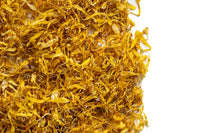
Whole dried calyx
The standard form — large, visually striking, slow extraction.
Loose dried pieces
Faster extraction; common in tea blends.
Region of cultivation
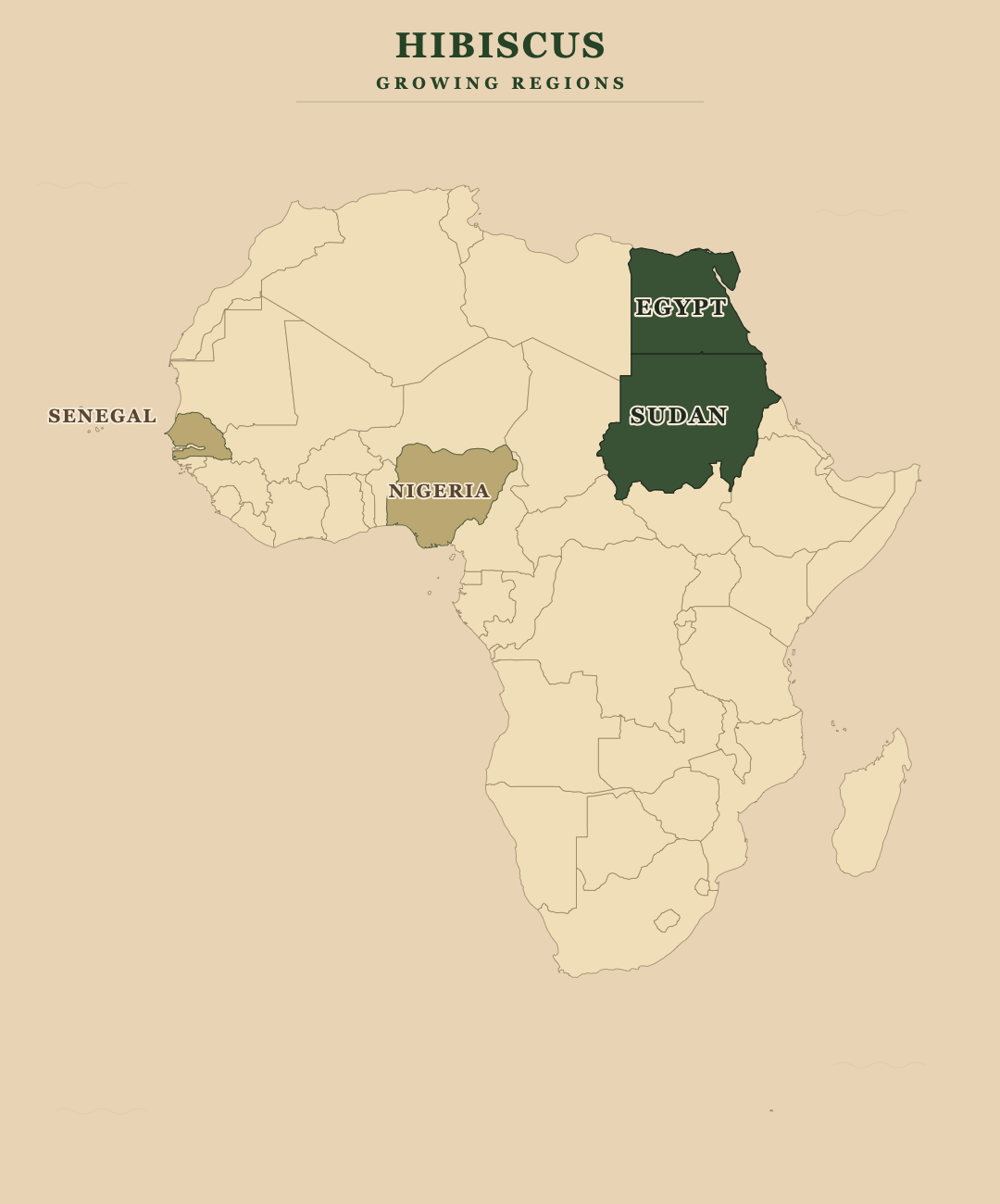
Hibiscus is primarily cultivated in Sudan, Egypt, Mexico, Thailand, with secondary growing regions in Nigeria, India, Senegal, Jamaica, China.
Spice Story
Hibiscus has multiple cultural lineages: West African bissap, Sudanese karkadeh, Egyptian wedding tea, Mexican agua de jamaica, Caribbean sorrel (a Christmas drink), and the modern global craft-cocktail garnish are all the same calyx, made into a tart, brilliantly-coloured infusion. The plant's anthocyanin pigments — primarily delphinidin-3-sambubioside, contributing about 85% of the colour — give hibiscus infusions their characteristic magenta-red and have been studied for cardiovascular benefits. [source] In gin, hibiscus is one of the most visually striking contemporary botanicals — adding a brilliant pink-to-red colour in cold maceration alongside the tart-cranberry flavour — and has become a signature ingredient in pink gins worldwide.
Gin Creativity
Hibiscus brings tart-cranberry brightness and a brilliant pink colour to a gin. A full sachet produces a clearly-tinted pink gin with prominent hibiscus flavour; a half-sachet adds tart fruit complexity with a softer colour. Pair with rose petal for a doubled floral, or with lime peel and ginger for a Mexican-inspired profile. The colour is part of the appeal — but it is also temperature-sensitive and fades in warm extraction.
Blending Science
Main flavour compounds
 Hibiscus acid—
 Citric acid—
 Malic acid—
 Anthocyanins (delphinidin-3-sambubioside primary)—
Pairs well with
The character comes from a combination of organic acids and pigments. Hibiscus acid (a specific organic acid named after this plant) and citric acid and malic acid contribute the tart cranberry-like flavour. Anthocyanins — especially delphinidin-3-sambubioside — provide the brilliant red colour but are temperature-sensitive and fade above ~60°C. Cool extraction is essential to preserve both flavour and colour. The pigments are also pH-sensitive — more acidic environments are redder; alkaline environments tip toward blue.
Food Partners
- Hibiscus drinks — agua de jamaica, karkadeh, sorrel.
- Cranberry-and-pomegranate desserts — tart-on-tart layering.
- Cool summer salads — hibiscus syrup over watermelon and feta.
- Lime-spiked Caribbean dishes — hibiscus-gin glaze on jerk meat.
- Soft fresh cheeses — chèvre with hibiscus syrup.
Cocktails To Try

- Hibiscus Gin Spritz — hibiscus-infused gin, prosecco, soda, lime.
- Pink Negroni — hibiscus gin, Aperol, Lillet Rosé.
- Sorrel Sour — hibiscus gin, lime, sugar, egg white — Caribbean Christmas in a glass.
Release The Flavour
- Cool only — heat fades both colour and flavour.
- Brief contact — 1–3 hours captures bright colour and tart fruit.
- Strain finely — calyx fragments leach in storage.
- Bottle in dark glass — light fades the pigment over weeks.
Discover more
From the same region

Same flavour family
Surprise me

Sources & Citations
- scientific_name (Hibiscus sabdariffa, Malvaceae):www.alveus.eu/blog/hibiscus-roselle-flower/
- native_range (probably West Africa):www.alveus.eu/blog/hibiscus-roselle-flower/
- anthocyanins (delphinidin-3-sambubioside 85% of pigment):www.researchgate.net/publication/230358057_Anthocyanins_o...
- tart_flavour_from_organic_acids:www.gardenia.net/plant/hibiscus-sabdariffa-roselle-grow-c...
- 4-6_month_lifecycle:www.gardenia.net/plant/hibiscus-sabdariffa-roselle-grow-c...
- main_flavour_compounds (CSV-sourced):inputs/source.csv — Hibiscus row
