
BLACK CARDAMOM

- Botanical name
- Amomum subulatum
- Also known as
- Greater cardamom, Nepal cardamom, Bengal cardamom, Hill cardamom, Brown cardamom
- Main flavour compound
- 1,8-Cineole (eucalyptol)
- Part used
- Dried, smoked seed pod (whole)
- Method of cultivation
- Perennial herb of the Zingiberaceae family (ginger family), endemic to the moist mountain forests of the Eastern Himalayas — Sikkim, eastern Nepal, Bhutan and parts of north-east India. Plants prefer partial shade, deep organic soils and humidity; once established, a planting remains productive for 8–10 years, with yields peaking between years 3 and 6.
- Commercial preparation
- Pods are picked at full size but before they split, then smoke-cured over open wood fires for 3–5 days. This traditional smoking process is the defining step — it both preserves the pods and produces the characteristic resinous-smoky character that distinguishes black cardamom from its more familiar green cousin. After smoking, pods are sun-dried for uniformity and sold whole.
- Non-culinary uses
- Traditional Ayurvedic medicine for digestive and respiratory complaints; the essential oil is used in fragrance and aromatherapy. The smoke-cured pods are sometimes burned as incense in Himalayan religious ceremony.
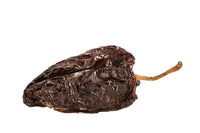
Black cardamom — Amomum subulatum — is a tall, leafy perennial of the ginger family, growing 1–2 metres high from a thick rhizome. It is endemic to the cool, wet middle altitudes of the Eastern Himalayas — Sikkim, eastern Nepal, Bhutan and adjoining parts of north-east India — where mountain forests provide the partial shade and constant humidity the plant needs. [source] The pods grow at ground level in clusters at the base of the stems and are about three times the size of common green cardamom: large, fibrous, ridged seed capsules with the consistency of dried bamboo and the colour of bittersweet chocolate.
Whole pod
The standard form — crush gently to expose the seeds before use; remove the whole pod after extraction.
Loose seeds (decorticated)
Less common but more efficient — extracts faster but loses character within months.
Region of cultivation
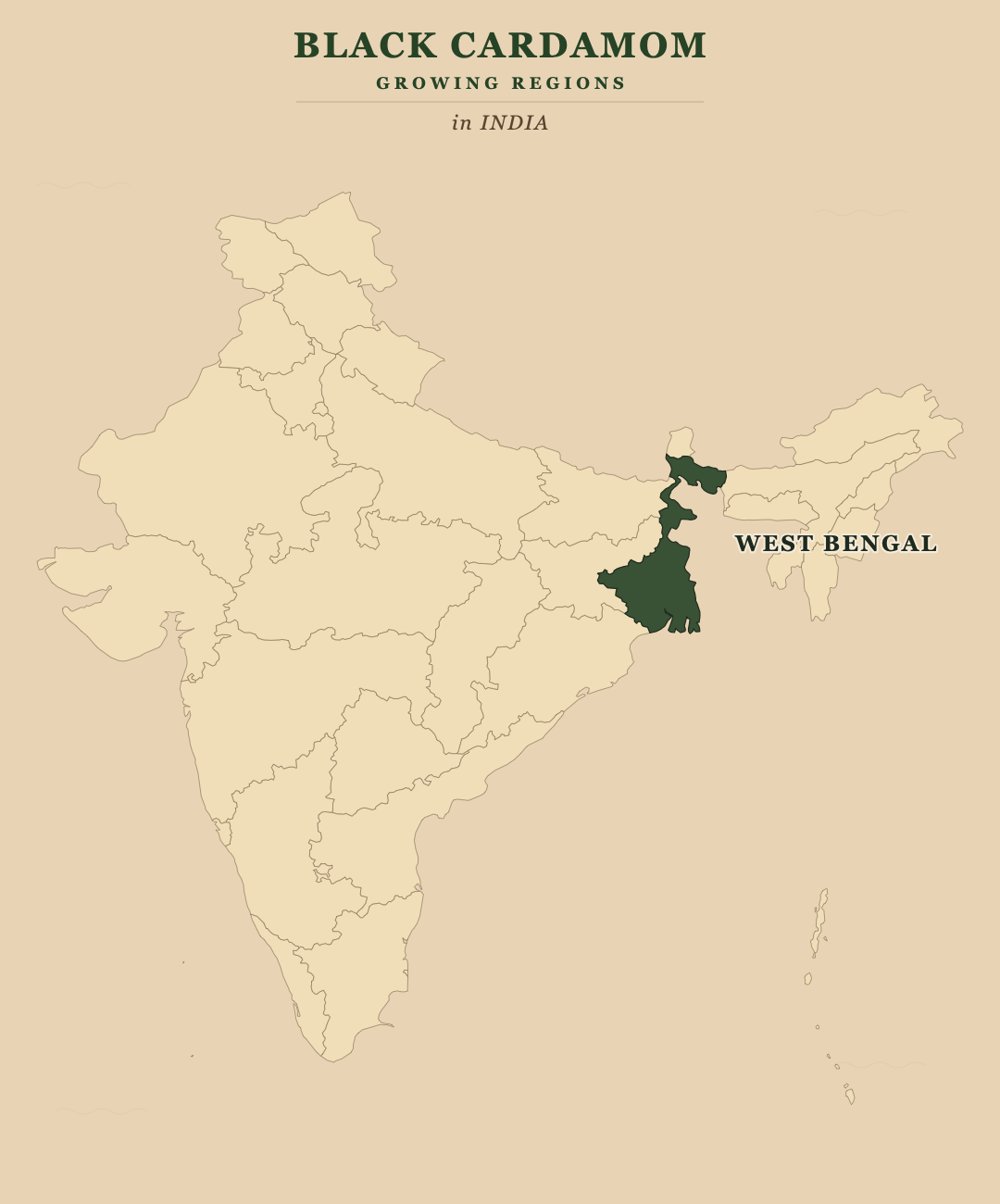
Black Cardamom is primarily cultivated in Nepal, India (Sikkim, West Bengal Darjeeling), Bhutan, with secondary growing regions in Vietnam, China (Yunnan).
Spice Story
Black cardamom is not a smokier version of green cardamom — they are different species (Amomum subulatum vs Elettaria cardamomum) producing genuinely different flavours, and they are not interchangeable. Black cardamom has been used in the cuisines of Nepal, Sikkim, Bhutan and Kashmir for many centuries, where its resinous depth defines dishes like Kashmiri rogan josh and Himalayan dal. The defining feature is the traditional drying process: pods are cured over open wood fires for several days, [source] which both preserves them in the wet monsoon climate and develops the smoky, almost campfire-like character that distinguishes them. The spice is a fixture of garam masala and Mughlai cuisine, and has begun to appear in craft gin as distillers look for complex, smoky botanicals that don't rely on peated whisky cask finishing.
Gin Creativity
Black cardamom is a powerful, distinctive botanical — use it carefully. A full sachet pushes a gin firmly into smoky territory and pairs naturally with other warming spices for a winter or chai-inspired profile. A half-sachet adds a quiet smoky-resinous depth that's hard to identify but completely transforms a botanical bill — think of it like Lapsang souchong tea in a blend. It pairs particularly well with star anise, cinnamon and ginger for a chai gin, or with juniper and black pepper for a smoky London Dry alternative.
Blending Science
Main flavour compounds
 1,8-Cineole (eucalyptol)eucalyptus, cool
 Alpha-Terpineol—
 Sabinenepepper, warming
Pairs well with
The chemistry is dominated by 1,8-cineole (eucalyptol) — the same compound that gives eucalyptus and bay leaf their cool, camphor-like note — but in black cardamom it sits alongside the smoke-derived phenolics from the curing process to produce a unique resinous-smoky lift. Alpha-terpineol layers a lilac-floral note that's surprising given the smokiness. Sabinene adds a sharp peppery edge that bridges the spice to black pepper and juniper. The smoky character itself comes from guaiacol and other phenolic compounds absorbed during the wood-fire curing — these are heat-stable and survive both vapour infusion and traditional maceration, but cool extraction emphasises the eucalyptus brightness while warm extraction emphasises the smoke.
Food Partners
- Kashmiri rogan josh: The defining dish — black cardamom is essential, not optional.
- Smoked-tea desserts: Lapsang-souchong creams and ice creams take black cardamom beautifully.
- Pho-style broths: A traditional Vietnamese use — black cardamom alongside star anise and cinnamon.
- Dark chocolate: Smoky and bitter find each other.
- Aged hard cheese: Manchego or aged Gouda with a sprinkle of crushed black cardamom seed.
Cocktails To Try

- Smoky Negroni: Black-cardamom-infused gin, Campari, vermouth — a deep, brooding variant.
- Chai Gin Sour: Gin infused with black cardamom, cinnamon and cloves; lemon, honey, egg white.
- Smoky Old Fashioned (gin): Black-cardamom gin, brown sugar syrup, orange bitters, lemon peel.
Release The Flavour
- Crush, don't crack open fully: A gentle squeeze splits the pod and exposes the seeds without releasing too much smoke at once.
- Heat: Black cardamom survives warm extraction; the smoky phenolics are heat-stable.
- Time: A long, slow extraction develops the deep smokiness; short extractions emphasise the cool eucalyptus top.
- Don't overdo it: A whole pod is plenty for a small batch. Black cardamom can dominate a blend in minutes.
Discover more
From the same region
Pairs well with
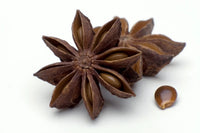
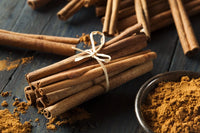
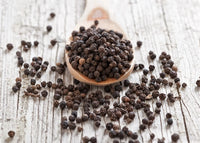
Same flavour family
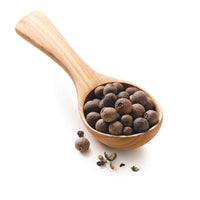
Surprise me

Sources & Citations
- scientific_name (Amomum subulatum, Zingiberaceae):en.wikipedia.org/wiki/Black_cardamom
- native range (Eastern Himalayas):en.wikipedia.org/wiki/Black_cardamom
- cultivation (8-10 year productive life):easyscape.com/species/Amomum-subulatum(Black-Cardamom)
- smoke-curing process (3-5 days over open wood fire):en.wikipedia.org/wiki/Black_cardamom
- flavour_profile (smoky, resinous, camphor-mint):en.wikipedia.org/wiki/Black_cardamom
- main_flavour_compounds (CSV-sourced):inputs/source.csv — Black Cardamom row
