
TONKA

- Botanical name
- Dipteryx odorata
- Also known as
- Tonka bean, Cumaru, Tonco bean, Sarrapia
- Main flavour compound
- Coumarin (1-3% typically)
- Part used
- Dried seed (the small dark wrinkled bean from inside the fruit)
- Method of cultivation
- Large tropical tree of the Fabaceae family (the legume/bean family), native to South America (Venezuela, Guyana, Brazil and adjoining countries). Trees grow up to 30 metres tall and produce small single-seeded fruits about 3–5 cm long. The seeds — the actual tonka beans — are the part of commerce. Most commercial production comes from Venezuela and Brazil.
- Commercial preparation
- Fruits are gathered (often from the ground), seeds extracted, soaked in alcohol (which extracts and concentrates the coumarin), and dried. The dried beans develop the characteristic dark, wrinkled, intensely aromatic surface and contain typically 1–3% coumarin (rarely up to 10%).
- Non-culinary uses
- Premium fine-dining flavouring (especially in modernist cuisine — Heston Blumenthal and the chef-foraging movement of the 2000s reintroduced tonka to high-end Western kitchens); perfumery (a foundational sweet-warm base note); historically a vanilla substitute. **Important regulatory note:** Tonka has been BANNED for food use in the United States since 1954 by the FDA because of coumarin toxicity concerns; the EU permits limited use; jurisdictions vary widely. Verify local regulations before commercial gin use.
Tonka — Dipteryx odorata, the tonka bean tree — is a large tropical tree of the Fabaceae (legume) family, native to South America. Trees grow up to 30 metres tall, producing small single-seeded fruits about 3–5 cm long. Inside each fruit is the seed — the tonka bean — which is dried, soaked in alcohol (to concentrate the coumarin content), and re-dried, producing the dark wrinkled intensely aromatic beans of commerce. [source]
Whole dried bean
The standard form — grate as you would nutmeg.
Powdered
Faster extraction; loses character within months.
Region of cultivation
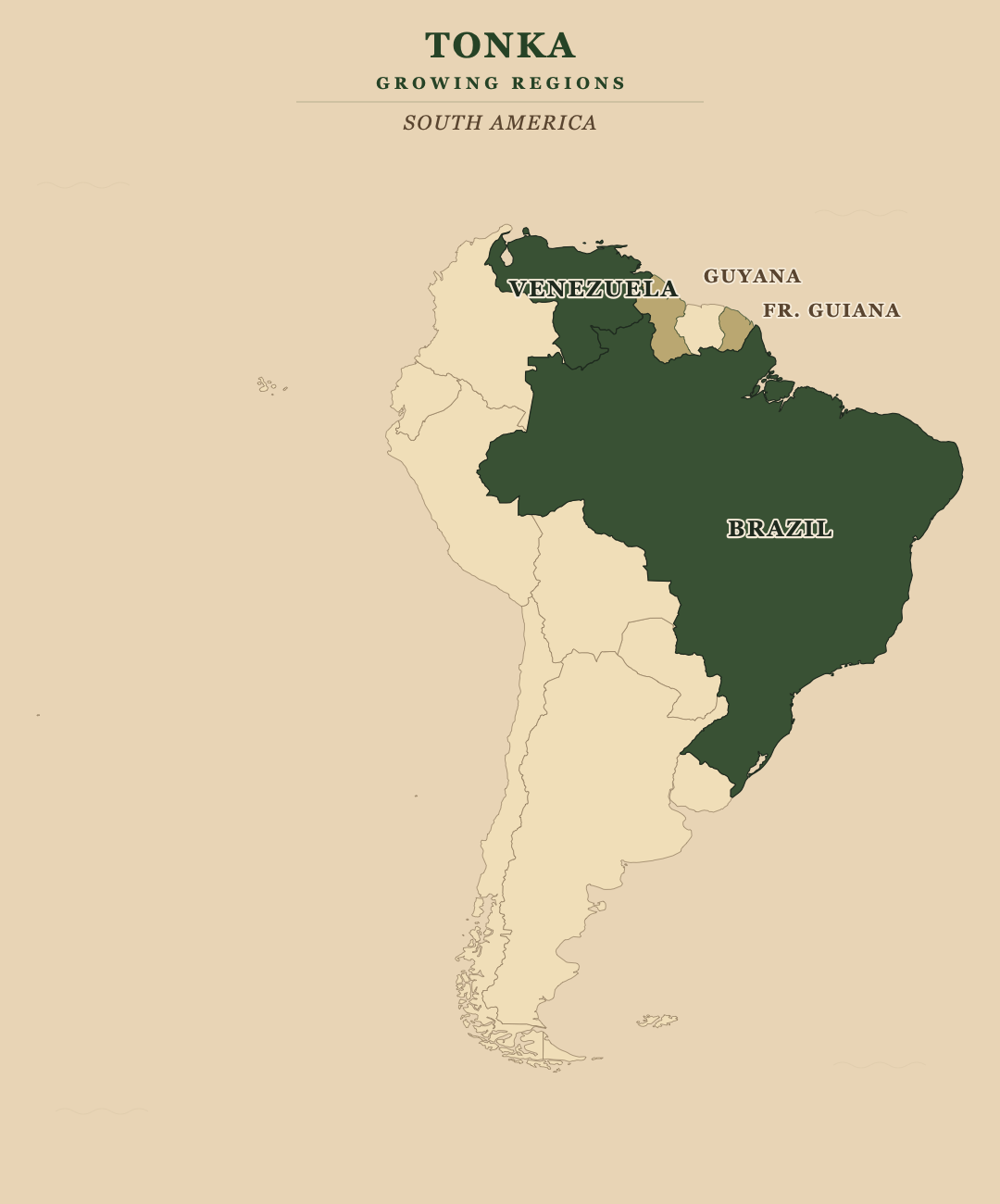
Tonka is primarily cultivated in Venezuela, Brazil, with secondary growing regions in Guyana, French Guiana, Surinam, Trinidad.
Spice Story
Gin Creativity
Tonka brings vanilla-cinnamon-almond-hay character that no single spice replicates. A quarter sachet or less is plenty given the coumarin content. Pair with vanilla and cinnamon for a layered warming-dessert profile; or with cacao and coffee for an after-dinner blend. Verify legal status before commercial production.
Blending Science
Main flavour compounds
 Coumarin (1-3% typically)—
 Vanillinvanilla, sweet-creamy
Pairs well with
Coumarin is the dominant compound — present at 1–3% typically (rarely up to 10%). [source] Coumarin has a vanilla-hay-cinnamon aromatic character and is the foundational compound in the fougère perfumery family. Vanillin is present in smaller amounts. Both extract readily into alcohol. Long warm extraction develops the full character.
Food Partners
- Modernist cuisine desserts — tonka pannacotta, tonka custards.
- Cinnamon-and-vanilla pastry — tonka as the third dimension.
- Chocolate-and-tonka ganache — chef's classic.
- Coffee-based desserts — tonka in tiramisu and similar.
- Aged spirits — tonka as a warming infusion (where legal).
Cocktails To Try

- Tonka Old Fashioned — tiny amount of tonka gin, demerara, orange bitters (where legal).
- Vanilla-Tonka Sour — tonka-vanilla gin, lemon, honey (limit volumes).
- Modernist Negroni — tonka gin (small concentration), Campari, vermouth.
Release The Flavour
- Grate fresh — like nutmeg, tonka loses character ground.
- Verify legal status — FDA banned for food in USA since 1954; EU regulates limits.
- Less is more — coumarin concentration matters for both safety and flavour.
- Long extraction — develops the full vanilla-cinnamon-hay character.
Discover more
From the same region
Same flavour family
Surprise me

Sources & Citations
- scientific_name (Dipteryx odorata, Fabaceae):en.wikipedia.org/wiki/Dipteryx_odorata
- south_american_native (Venezuela, Guyana, Brazil):en.wikipedia.org/wiki/Dipteryx_odorata
- coumarin_content_1-3_percent_typical:link.springer.com/article/10.1007/s00217-024-04648-z
- FDA_banned_for_food_use_since_1954:www.drugs.com/npp/tonka-bean.html
- coumarin_safety_concerns_liver_toxicity:www.drugs.com/npp/tonka-bean.html
- main_flavour_compounds (CSV-sourced):inputs/source.csv — Tonka row
