
SARSAPARILLA

- Botanical name
- Smilax ornata
- Also known as
- Jamaican sarsaparilla, Honduras sarsaparilla, Zarzaparrilla (Spanish)
- Main flavour compound
- Sarsapogenin (saponin)
- Part used
- Dried root and rhizome
- Method of cultivation
- Perennial trailing or climbing vine of the Smilacaceae family, native to Mexico, Central America, the Caribbean, Honduras and the West Indies. The plants have short thick underground stems (rhizomes) from which springy prickly aboveground stems extend; the stems are supported by tendrils that emerge from the bases of large alternate leaves. The root system is what's harvested for the spice and beverage trade.
- Commercial preparation
- Mature roots are dug (often wild-harvested rather than plantation-cultivated), washed, cut into short lengths, and dried. Mexico, Honduras and Jamaica are the main commercial sources.
- Non-culinary uses
- Foundational flavouring for root beer (a North American soft drink, especially when combined with wintergreen, vanilla and sassafras); traditional Latin American medicine; traditional sarsaparilla-style soft drinks across Central America, the Caribbean and parts of South-East Asia (where it's called *sarsi*).
Sarsaparilla — Smilax ornata — is a perennial trailing or climbing vine of the Smilacaceae family, native to Mexico, Central America, Honduras, Jamaica and the broader Caribbean. The plant has short thick underground rhizomes from which springy prickly aboveground stems extend, supported by tendrils. [source] The root is what's commercially harvested — and traditional preparation simmers the root in water to extract the distinctive earthy-bittersweet flavour that became foundational to North American root beer.
Dried sliced root
The standard form — slow-extracting.
Cut and sifted
Faster extraction; standard for root beer brewing.
Region of cultivation
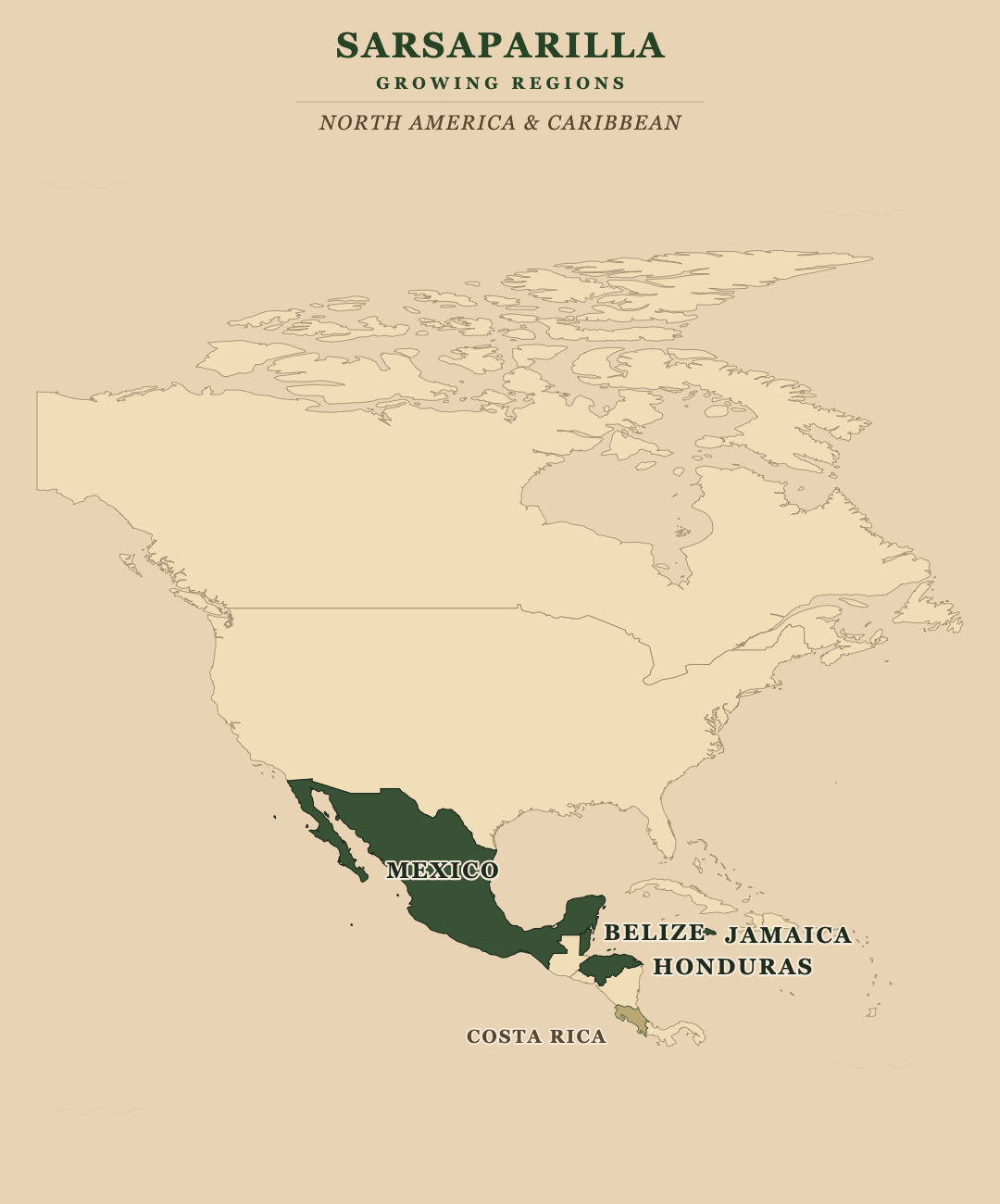
Sarsaparilla is primarily cultivated in Mexico, Honduras, Jamaica, Belize, with secondary growing regions in Guatemala, Costa Rica, Caribbean islands.
Spice Story
Sarsaparilla is one of the foundational flavouring botanicals of the Americas. Indigenous Latin American medicinal traditions used the root for centuries; the Spanish introduced sarsaparilla to Europe in the 16th century as a medicinal herb. The plant became massively important to 19th and 20th-century American beverage culture as a foundational ingredient (alongside wintergreen, vanilla, and historically sassafras) in root beer — the American soft drink. Modern sarsaparilla-style soft drinks remain popular across Central America, the Caribbean, and South-East Asia (where they're called sarsi). In gin, sarsaparilla is an unusual contemporary botanical providing genuine root-beer-style character.
Gin Creativity
Sarsaparilla brings root-beer character with earthy-vanilla-liquorice depth. A full sachet pushes a gin firmly into clearly root-beer-leaning territory; a half-sachet provides quiet earthy-sweet depth that integrates with juniper. Pair with vanilla and wintergreen for an explicitly root-beer profile, or with liquorice root and cinnamon for a softer earthy blend.
Blending Science
Main flavour compounds
 Sarsapogenin (saponin)—
 Smilagenin—
 Sterols—
Pairs well with
- Vanilla
- Wintergreen
- Liquorice root
- Cinnamon
- Sassafras (where legal)
The character comes from saponin glycosides rather than volatile aromatics. Sarsapogenin and smilagenin are the dominant compounds — steroidal saponins that contribute the characteristic earthy-bittersweet flavour. Various sterols add background depth. Long warm extraction develops the full character.
Food Partners
- Root beer and sarsaparilla soft drinks — the canonical American use.
- Spiced caramel desserts — sarsaparilla and caramel.
- Vanilla ice cream floats — sarsaparilla float is an American classic.
- Slow-braised meats — sarsaparilla in marinades.
- Aged spirits — sarsaparilla bitters.
Cocktails To Try

- Root Beer Float (gin) — sarsaparilla gin, vanilla ice cream, soda.
- Bitters Old Fashioned — sarsaparilla gin, demerara, classic bitters.
- Sarsi Highball — sarsaparilla gin, ginger beer, lemon.
Release The Flavour
- Long warm extraction — slow-extracting saponins.
- Chop coarsely — exposes the root.
- Pair with vanilla — sarsaparilla and vanilla are inseparable.
- Source matters — Honduran and Jamaican sarsaparilla are traditional premium grades.
Discover more
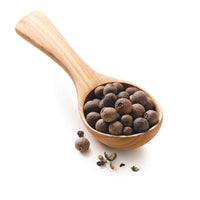
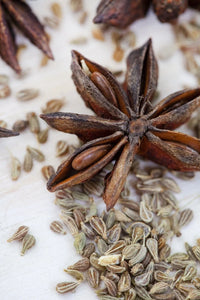

Pairs well with
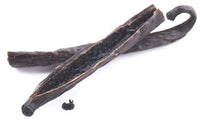


Same flavour family
Surprise me

Sources & Citations
- scientific_name (Smilax ornata, Smilacaceae):en.wikipedia.org/wiki/Sarsaparilla_(drink)
- native_range (Mexico, Central America, Caribbean):en.wikipedia.org/wiki/Sarsaparilla_(drink)
- foundational_root_beer_ingredient:cysoda.com/article/does-root-beer-taste-like-sarsaparilla
- bittersweet_earthy_liquorice_flavour:cysoda.com/article/what-flavor-is-sarsaparilla
- main_flavour_compounds (CSV-sourced):inputs/source.csv — Sarsaparilla row
