
POMEGRANATE

- Botanical name
- Punica granatum
- Also known as
- Anar (Hindi), Rumman (Arabic), Granada (Spanish)
- Main flavour compound
- Punicalagin
- Part used
- Dried arils (seed sacs) or dried peel
- Method of cultivation
- Deciduous shrub or small tree of the Lythraceae family, native to the region between Iran (Persia) and northern India. Domesticated in the Iranian plateau approximately 5,000 years ago, making pomegranate one of the oldest cultivated fruits in human history. The tree grows 5–10 metres tall and produces large rounded fruits with a leathery red skin and hundreds of seeds enclosed in juicy crimson arils. Worldwide, about 300,000 hectares of pomegranate are cultivated, with Iran, India, Turkey, China, Spain, USA and Egypt as the main commercial producers.
- Commercial preparation
- Fruit is hand-picked at full colour, the arils extracted from inside the leathery rind, and either freeze-dried or low-temperature dehydrated. Dried peel is also sold separately as a tart-astringent gin botanical.
- Non-culinary uses
- Foundational ingredient across Persian, Indian, Turkish and Middle Eastern cooking — pomegranate molasses, *fesenjan*, salads; significant religious and cultural symbolism across Greek mythology (Persephone), Judaism (the fruit's many seeds), Islam, Hinduism and Christianity; foundational ornamental tree in Mediterranean and Persian gardens.
Pomegranate — Punica granatum — is a deciduous shrub or small tree of the Lythraceae family, native to the region between Iran and northern India and domesticated in the Iranian plateau approximately 5,000 years ago. [source] The tree grows 5–10 metres tall, with bright orange-red bell-shaped flowers in late spring and large rounded fruits in autumn. Each fruit has a thick leathery red rind and a complex internal structure of pale membranes separating chambers of hundreds of seeds — each seed enclosed in a juicy crimson aril. The Latin name combines punicum (Carthage, from which Romans imported the fruit) + granatum (many seeds).
Freeze-dried arils
The standard form — distinctive crimson colour, easy to portion.
Dried peel
More tart-astringent, less sweet; useful for bittering.
Region of cultivation
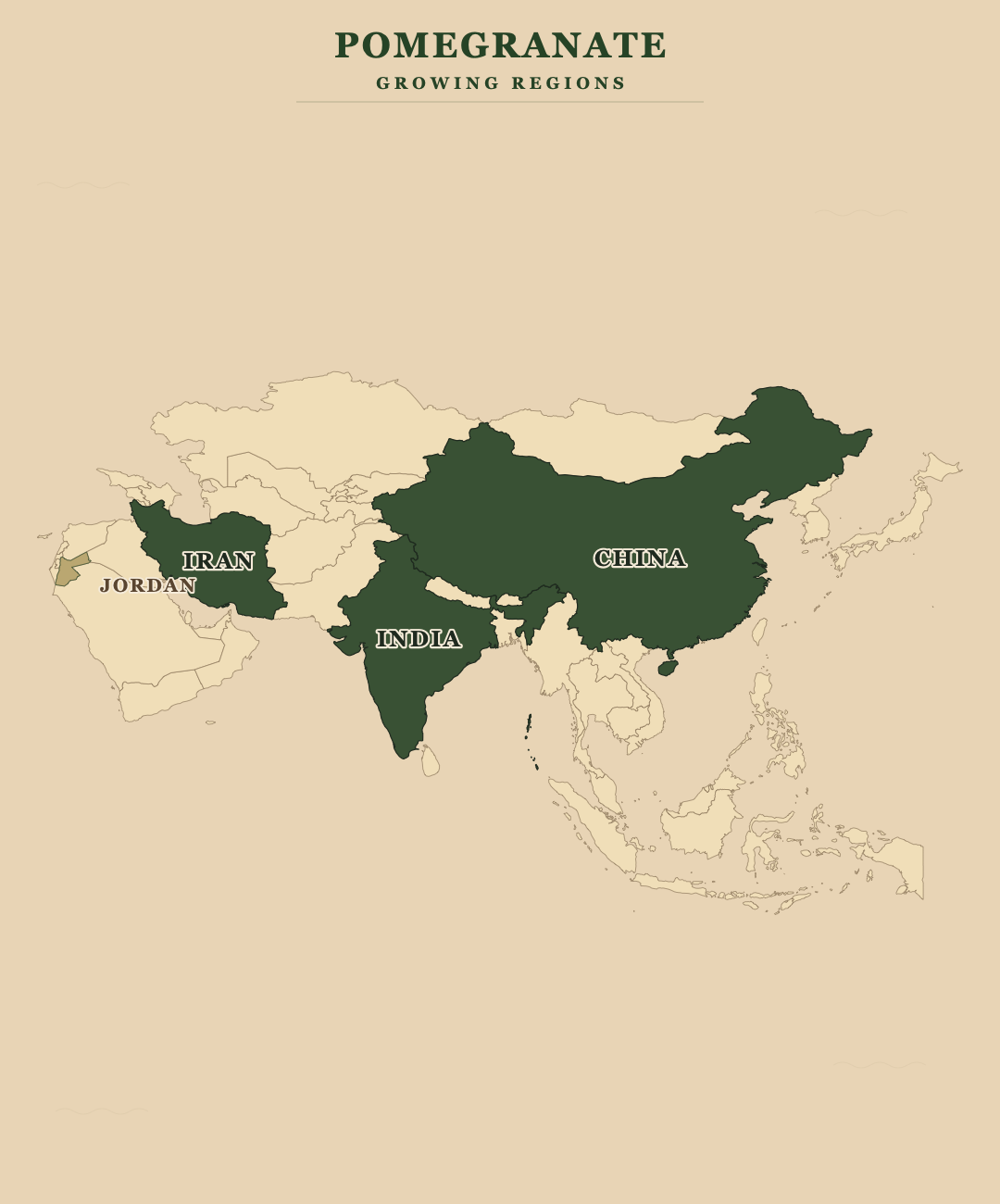
Pomegranate is primarily cultivated in Iran, India, Turkey, China, with secondary growing regions in Spain, USA (California), Egypt, Israel, Morocco.
Spice Story
Pomegranate is one of the most culturally significant fruits in human history — appearing in Greek mythology (the seeds Persephone ate in the Underworld), Hebrew tradition (the 613 seeds symbolising the 613 commandments of the Torah), Quranic references, Christian iconography, Hindu wedding traditions, and as a foundational ingredient in Persian, Middle Eastern, Indian, Turkish and Mediterranean cooking. The Persian dish fesenjan (chicken in pomegranate-walnut sauce) dates back at least 2,500 years. Modern commercial production is dominated by Iran, India and Turkey. In gin, pomegranate provides tart-sweet fruity character with a brilliant pink visual signal.
Gin Creativity
Pomegranate brings tart-sweet fruit character with floral notes and a deep pink colour in cold maceration. A full sachet pushes a gin into clearly fruity territory; a half-sachet provides bright fruit complexity. Pair with rose petal and cardamom for a Persian-leaning profile, or with cinnamon and orange peel for a Middle Eastern winter blend.
Blending Science
Main flavour compounds
 Punicalagin—
 Anthocyanins (delphinidin, cyanidin)—
 Citric acid—
 Tannins—
Pairs well with
- Rose petal
- Cardamom
- Saffron
- Cinnamon
- Citrus peel
The character is built from a complex mix of acids and pigments. Punicalagin is a distinctive ellagitannin responsible for the deep colour and significant antioxidant activity. Anthocyanins (delphinidin and cyanidin glucosides) provide the brilliant red-pink colour. [source] Citric acid contributes the tart edge. Tannins provide astringent depth. Cool extraction preserves the colour and freshness; warm extraction can degrade the pigment.
Food Partners
- Persian fesenjan — pomegranate-walnut chicken.
- Middle Eastern salads — fattoush with pomegranate.
- Pomegranate molasses dishes — Levantine cooking.
- Stone-fruit desserts — pomegranate over peach and apricot.
- Soft fresh cheese — chèvre with pomegranate seeds.
Cocktails To Try

- Pomegranate Spritz — pomegranate gin, prosecco, soda.
- Persian Gin Sour — pomegranate gin, rose syrup, lemon, egg white.
- Pink Negroni — pomegranate gin, Aperol, Lillet Rosé.
Release The Flavour
- Cool extraction — preserves colour and fresh fruit character.
- Brief contact — 1–4 hours captures brightness.
- Strain finely — aril fragments cloud the spirit.
- Source matters — Iranian pomegranates are the historic premium grade.
Discover more
From the same region
Pairs well with
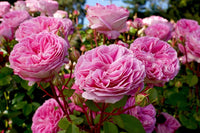
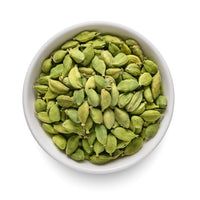
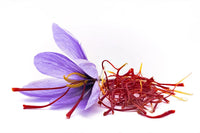
Same flavour family
Surprise me

Sources & Citations
- scientific_name (Punica granatum, Lythraceae):en.wikipedia.org/wiki/Pomegranate
- iranian_plateau_5000_year_domestication:en.wikipedia.org/wiki/Pomegranate
- 300k_ha_world_cultivation:en.wikipedia.org/wiki/Pomegranate
- anthocyanins_and_punicalagin_active_compounds:www.frontiersin.org/journals/plant-science/articles/10.33...
- main_flavour_compounds (CSV-sourced):inputs/source.csv — Pomegranate row
