
ROSELLA

- Botanical name
- Hibiscus sabdariffa
- Also known as
- Roselle, Rosella fruit, Sorrel, Karkade, Bissap, Agua de Jamaica, Zobo
- Main flavour compound
- Hibiscus acid
- Part used
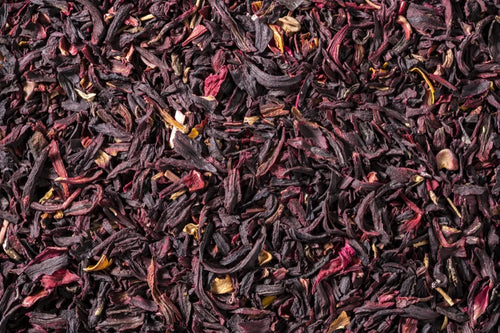
- Calyx (the fleshy deep-crimson sepal-cup), used fresh or dried
- Method of cultivation
- An annual or short-lived perennial herb or woody-based subshrub of the mallow family (Malvaceae), growing to around 2–2.5 metres tall with deeply lobed leaves and yellow flowers marked by a dark-red spot at the base of each petal. It is a plant of the warm tropics and subtropics, native to West Africa and now grown pantropically — including across northern Australia, where it is known as "rosella" to set it apart from the parrot of the same name.
- Commercial preparation
- After the flower drops, the calyx swells to about 3–3.5 cm, turning fleshy and deep crimson — this is the harvested part. The calyces are picked by hand and used fresh, or sun-dried to concentrate their tart, cranberry-like character for syrups, jams, teas and drinks. For gin, dried or fresh rosella calyx is most often steeped (macerated) in the spirit to draw out both the sour bite and the natural red pigment.
- Non-culinary uses
- A close relative (Hibiscus sabdariffa var. altissima) is grown not for the calyx but for its bast fibre, used historically for cordage and sacking; the calyx itself is also valued as a natural red food and drink colourant.
Rosella — Hibiscus sabdariffa — is a tall annual or short-lived perennial of the mallow family, a herb or woody-based subshrub that climbs to around 2–2.5 metres, with deeply lobed leaves and pale yellow flowers each marked by a dark-red spot at the base of the petals. [source] But the flower is not the prize. Once the bloom drops, the calyx — the cup of sepals beneath it — swells to about 3–3.5 centimetres, turning fleshy and a deep, glowing crimson. [source] That swollen red calyx is what the cook and the distiller are after: tart, juicy, and astonishingly coloured. In Australia it is called "rosella" — the same name as the parrot — and is grown right across the tropical north. [source]
Dried calyx
The year-round form — steep in spirit to pull tartness and a deep-red colour; the everyday distiller's choice.
Fresh calyx
Seasonal and perishable; gives the brightest, juiciest tartness and the most vivid pigment, but must be used soon after picking.
Region of cultivation
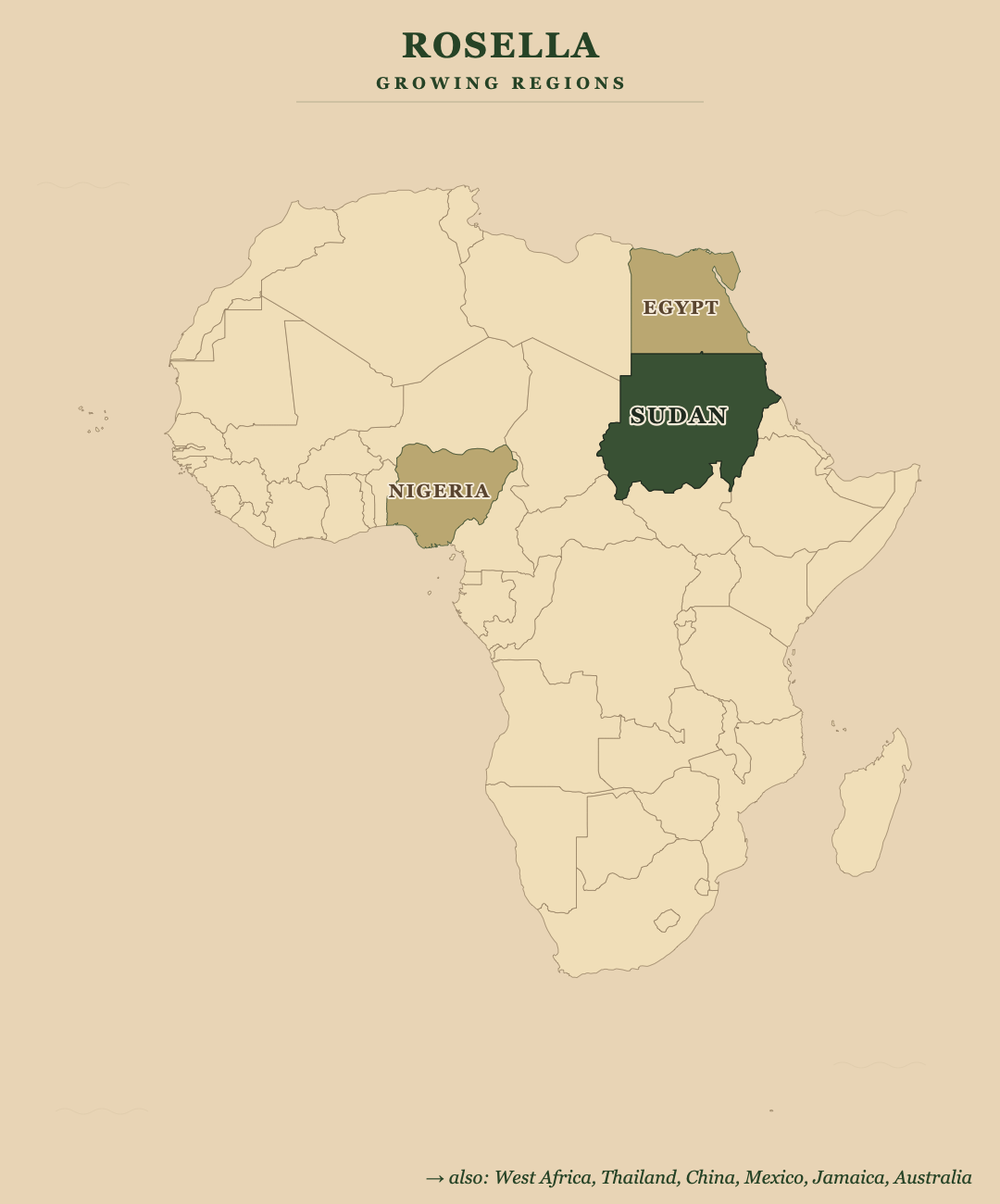
Rosella is primarily cultivated in West Africa, Sudan, with secondary growing regions in Nigeria, Thailand, China, Mexico, Egypt, Caribbean, Northern Australia. Grown across tropical northern Australia (Top End / north Queensland); locally called 'rosella' to distinguish it from the rosella parrot.
Spice Story
Rosella is a true traveller. It is probably native to West Africa — Sudan, in the Kordofan and Darfur country, is often named as its centre of origin — and from there it spread to Asia and the West Indies across the sixteenth and seventeenth centuries until it grew right around the tropical belt. [source] [source] Today it carries a different name in almost every place it lands: karkade in Sudan and Egypt, bissap in West Africa, agua de Jamaica in Mexico, sorrel in the Caribbean. [source] One branch of the species — the variety altissima — was even grown not for its calyx at all but for its strong bast fibre, used for cordage and sacking, while the variety we drink, sabdariffa, was bred for that edible red cup. [source] Wherever it goes, it brings the same gift: a deep crimson colour and a clean, cranberry-sharp sourness.
Gin Creativity
Rosella is a colour-and-acid botanical first, an aroma botanical second — and that is exactly what makes it such fun to distil with. It will not so much perfume your gin as tint and sharpen it: steep the dried or fresh calyx and you pull a vivid pink-to-ruby blush into the spirit along with a tart, cranberry-like bite that makes the whole drink feel fresher and more alive. Because it leans sour rather than sweet, it loves a little sugar to round it, and it sits beautifully alongside other native Australian botanicals — lemon myrtle for citrus lift, lilly pilly and strawberry gum for berry depth. Use it when you want a gin that announces itself by sight as much as by taste.
For a sense of how it behaves in a real botanical bill, Bunker Distillery describe their rosella contributing a slight tartness and a deep, berry-like richness, layered against lemon myrtle, lilly pilly and juniper — a useful map of where rosella sits: sharp red fruit up front, native citrus and a juniper spine holding it together. [source]
Blending Science
Main flavour compounds
 Hibiscus acid—
 Citric acid—
 Malic acid—
 Delphinidin-3-O-sambubioside—
Pairs well with
Rosella's signature is built from acids, not a single fragrant oil. The dominant one is hibiscus acid, the most abundant organic acid in the calyx at around 13–24%, followed by citric acid at 12–20% for that bright, clean, lemony edge, and softer malic acid at 2–9% rounding the sourness like green apple. [source] The famous deep-red colour is a separate story, carried by anthocyanin pigments — chiefly delphinidin-3-O-sambubioside, which makes up roughly 85% of the total anthocyanins, with cyanidin-3-O-sambubioside the runner-up. [source] These pigments are water-loving and heat-sensitive, so the practical lesson is plain: macerate cool and steep gently to keep both the tartness and the colour, because hard heat dulls the red and flattens the fresh acidity first.
Food Partners
- Sparkling wine and Champagne: a dried rosella calyx dropped into a flute is a classic — it stains the bubbles pink and adds a tart lift.
- Goat's cheese: rosella's sharp acidity cuts the cheese's creamy tang beautifully.
- Dark berries and cranberry: echoes rosella's own cranberry-like sourness and deepens the red-fruit register.
- Ginger and spice: warm spice against rosella's cool tartness is a natural tension.
- Citrus desserts: the acid bridge makes rosella a quiet partner to lemon and lime puddings.
Cocktails To Try

- Rosella Spritz: a rosella gin lengthened with prosecco and soda over ice, a whole dried calyx dropped into the glass — it stains the bubbles a glowing ruby and brings a tart, cranberry-sharp lift to the easy-going spritz.
- Rosella Gin Sour: the silky classic of gin, lemon, sugar and egg white, built on a rosella gin — the calyx's deep crimson and clean sourness give the foam a vivid blush and a refreshing red-fruit bite.
- Crimson Corpse Reviver No.2: the equal-parts gin, lemon, triple sec and Lillet classic, tinted and sharpened with a rosella infusion — the tart calyx cuts cleanly through the orange and herbal notes and turns the whole thing a celebratory ruby.
Release The Flavour
- Heat: keep it low — the anthocyanin colour and the fresh acids are both heat-sensitive; cool maceration protects the ruby tint and the sharp bite.
- Alcohol: spirit draws out both the pigment and the organic acids well; steep dried or fresh calyx directly in your base.
- Time: give it a real soak — colour and tartness build over hours to days, not minutes.
- Balance: rosella leans sour; a small amount of sugar lets the fruit character bloom without turning the gin into a sweet.
Discover more

Pairs well with
Same flavour family
Surprise me

Sources & Citations
- scientific_name (Hibiscus sabdariffa L., Malvaceae):GBIF Backbone Taxonomy, usageKey 3152582 (Hibiscus sabdar...
- plant_form (annual/perennial herb or woody subshrub to 2–2.5 m; lobed leaves; dark-red spot at petal base; Malvaceae):en.wikipedia.org/wiki/Roselle_(plant)
- calyx (enlarges to 3–3.5 cm, fleshy deep-crimson; steeped for infusions; cranberry-tasting):en.wikipedia.org/wiki/Roselle_(plant)
- native_range_and_spread (native West Africa; spread to Asia and West Indies 16th–17th c.; pantropical — Sudan, Nigeria, Thailand, China, Mexico, Egypt, Caribbean):en.wikipedia.org/wiki/Roselle_(plant)
- australian_name (known in Australia as "rosella fruit" to distinguish it from the rosella bird):en.wikipedia.org/wiki/Roselle_(plant)
- origin_west_africa_sudan (probably native to West Africa; Sudan/Kordofan-Darfur cited as origin):www.britannica.com/plant/roselle-plant
- variety_altissima_fibre (var. altissima grown for fibre; var. sabdariffa cultivated for edible calyx):www.britannica.com/plant/roselle-plant
- organic_acids (hibiscus acid 13–24% most abundant; citric 12–20%; malic 2–9%; tartaric ~8%; acid taste of roselle):Organic Acids from Roselle (Hibiscus sabdariffa L.) — A B...
- anthocyanins (delphinidin-3-O-sambubioside major, ~85% of total anthocyanins; cyanidin-3-O-sambubioside second; source of red colour + antioxidant capacity):www.mdpi.com/2076-2615/11/10/2827
- gin_bunker (Bunker Distillery Rosella Hibiscus Gin — rosella brings slight tartness + berry-like richness; lemon myrtle, lilly pilly, juniper):bunkerdistillery.com.au/products/rosella-hibiscus-gin/
- gin_willing (Willing Distillery — rosella/native hibiscus flowers steeped in dry gin with 5% sugar):www.willingdistillery.com.au/shop/p/rosella-sloe-gin
- compound_cids (PubChem):PubChem CIDs — hibiscus acid 9856782, citric acid 311, malic acid 525, delphinidin-3-O-sambubioside 74977035, cyanidin-3-O-sambubioside 3084569
- hero_image:iStock royalty-free licence (asset 2179900475)
