
LEMON THYME

- Botanical name
- Thymus citriodorus (also written Thymus × citriodorus)
- Also known as
- Citrus thyme
- Main flavour compound
- Geraniol
- Part used
- Dried leaf
- Method of cultivation
- Lemon-scented evergreen mat-forming perennial of the Lamiaceae (mint) family. Mediterranean origin. Recent DNA work recognises it as a distinct species, though it has historically been considered a hybrid. The plant grows 15–30 cm tall, with small narrow leaves and clusters of pink flowers in summer. It prefers poor, well-drained soil, full sun, and dislikes waterlogging — classic Mediterranean conditions.
- Commercial preparation
- Leaves are picked at peak season, gently dried, and either sold whole or steam-distilled for essential oil. Air-drying produces the most aromatic product.
- Non-culinary uses
- Aromatherapy (the combined antimicrobial-thymol and citral chemistry makes lemon thyme oil useful in natural cosmetics); herbal medicine for respiratory and digestive complaints; foundational kitchen herb across Mediterranean cuisine.
Lemon Thyme — Thymus citriodorus — is a small mat-forming evergreen perennial of the mint family, native to the Mediterranean. The plant grows 15–30 cm tall, with small narrow leaves and pink-purple flowers in summer; the leaves carry a clean lemon scent that sets it apart from common thyme's earthy-herbal character. It prefers poor, well-drained soil and full sun — classic Mediterranean conditions. [source]
Whole dried leaf
The standard form — crumble lightly to release the oils.
Cracked
Faster extraction.
Region of cultivation
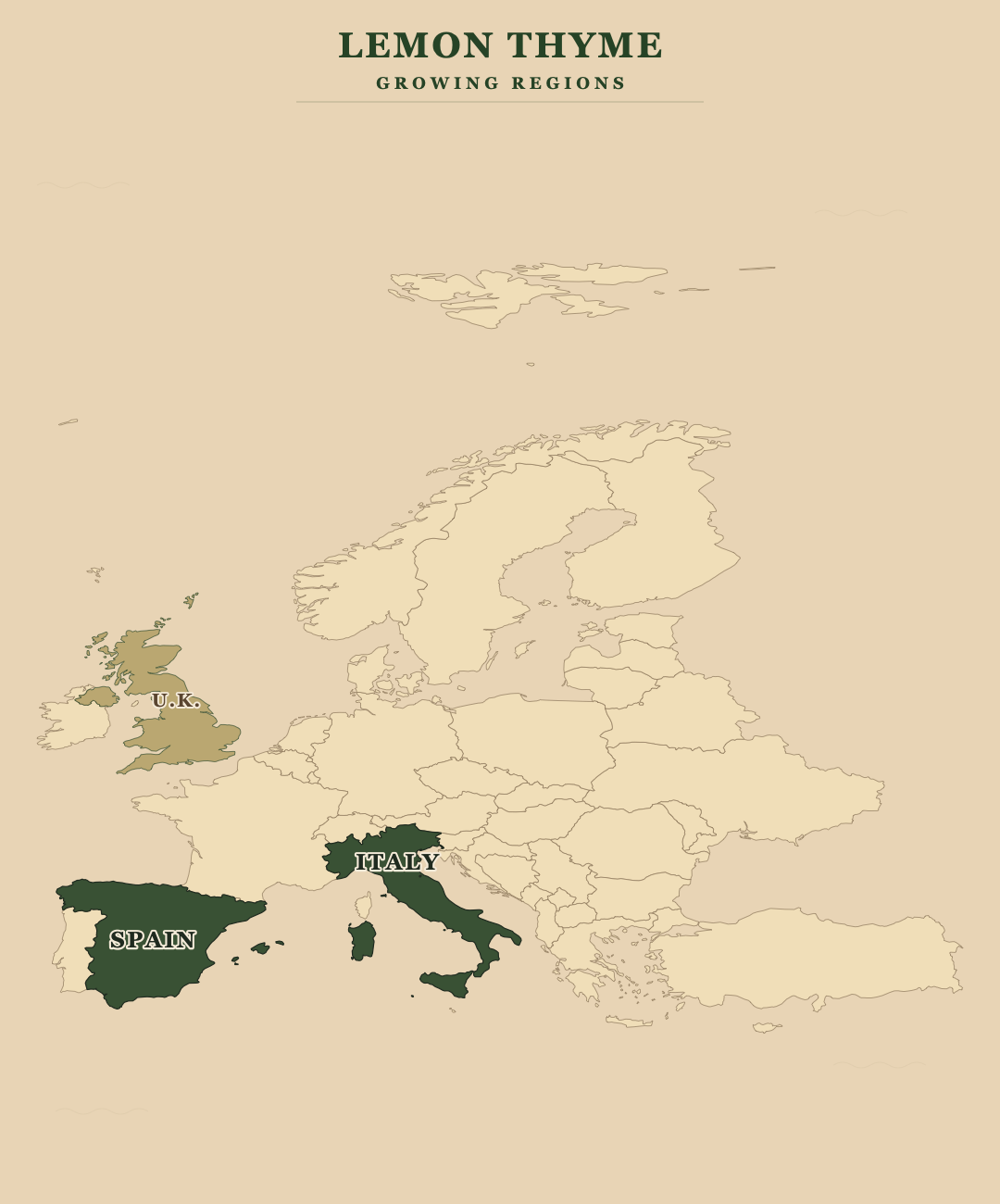
Lemon Thyme is primarily cultivated in Mediterranean — France, Spain, Italy, with secondary growing regions in USA, UK, Australia, Mexico.
Spice Story
Lemon Thyme has been cultivated across the Mediterranean for hundreds of years, used widely in Provençal, Italian and Greek cooking — particularly with roast chicken, lamb, fish and honey-glazed dishes. Its dual chemistry (combining thyme's signature thymol with the citral characteristic of lemon-aromatic plants) makes it distinctive in the kitchen and increasingly popular in craft gin. Scottish craft distilleries have made particular use of lemon thyme, where it provides a clean citrus lift to gins without resorting to imported citrus peel. [source]
Gin Creativity
Lemon Thyme brings savoury-thyme depth alongside clean lemon brightness. A full sachet pushes a gin firmly into herbaceous-lemon territory; a half-sachet provides quiet aromatic complexity that integrates with juniper. Pair with rosemary and sage for a Mediterranean herb-garden profile, or with lemon balm and citrus peel for a lighter lemon-leaning blend.
Blending Science
Main flavour compounds
 Geraniolrose, soft floral
 Citrallemon-bright
 Nerolfresh rose, sweet
 Thymolthyme, antiseptic
Pairs well with
- Thyme
- Rosemary
- Sage
- Lemon balm
- Citrus peel
Geraniol is dominant — providing both the lemon-floral character and significant antimicrobial activity. Citral layers a bright lemon note. Nerol contributes a softer rose-citrus depth. Thymol — the defining thyme compound — adds the savoury-medicinal undertone that gives lemon thyme its herbaceous backbone. [source] Cool extraction preserves the bright citrus; warm extraction develops the thyme savouriness.
Food Partners
- Roast chicken with lemon — the canonical pairing.
- Mediterranean fish dishes — grilled white fish with lemon thyme.
- Honey-and-thyme glazes — lemon thyme in glazes for pork or lamb.
- Roast vegetables — Mediterranean root vegetables with lemon thyme.
- Soft fresh cheese — chèvre with lemon thyme honey.
Cocktails To Try

- Scottish Gin & Tonic — Lemon Thyme gin, tonic, fresh thyme sprig.
- Mediterranean Sour — Lemon Thyme gin, lemon, honey, egg white.
- Garden Spritz — Lemon Thyme gin, prosecco, soda.
Release The Flavour
- Cool to moderate warmth — preserves both citrus and thyme.
- Crumble lightly — releases the volatile oils.
- Time — 24–48 hours for full development.
- Whole leaf — holds character much longer than ground.
Discover more
From the same region

Same flavour family
Surprise me

Sources & Citations
- scientific_name and family:en.wikipedia.org/wiki/Thymus_citriodorus
- mediterranean_origin_and_cultivation:www.botanicalrealm.com/plant-identification/lemon-thyme-t...
- thymol_citral_dual_chemistry:www.botanicalrealm.com/plant-identification/lemon-thyme-t...
- scottish_gin_use:www.wildfiregin.com/logbook/lemon-thyme-the-zesty-botanic...
- main_flavour_compounds (CSV-sourced):inputs/source.csv — Lemon Thyme row
