
FENNEL

- Botanical name
- Foeniculum vulgare
- Also known as
- Sweet fennel, Florence fennel (bulb form), Common fennel
- Main flavour compound
- Trans-anethole
- Part used
- Dried fronds and stems (the bulb is a separate culinary product); this CSV entry typically refers to the dried whole-plant form used in distilling
- Method of cultivation
- Hardy biennial or perennial herb of the Apiaceae family, native to the Mediterranean basin and now naturalised worldwide. The plant grows to 2.5 metres tall, with feathery bright-green leaves and umbels of small yellow flowers that mature into ridged seeds. There are two main forms: sweet fennel (the everyday culinary kind) and bitter fennel (with higher fenchone, sharper character). India is the main global producer of fennel seeds.
- Commercial preparation
- Whole-plant or stem-and-frond fennel is harvested and gently dried for the distilling and herbal trade. Florence fennel (the bulb-vegetable form) is harvested fresh; the seed (see Fennel Seed entry) is a separate commercial product.
- Non-culinary uses
- Traditional medicine across Mediterranean, Indian and Middle Eastern systems for digestion; the bulb form is eaten as a vegetable across southern Italy and the Mediterranean; *Anise Hyssop*–style herbal teas; perfumery (anise-floral accord).
Fennel — Foeniculum vulgare — is a tall, hardy herb of the carrot/parsley family, growing up to 2.5 metres with feathery bright-green leaves and umbels of small yellow flowers. The plant is native to the Mediterranean basin and has been cultivated continuously across southern Europe, North Africa and Western Asia for thousands of years. There are two main commercial forms: sweet fennel (the everyday culinary kind, with trans-anethole dominant) and bitter fennel (with higher fenchone, sharper character). [source] India is the dominant global producer of fennel today.
Whole dried fronds and stems
Add to a botanical bill cleanly; releases sweet-anise character across a slow cool maceration.
Cracked
Faster extraction; loses character within months.
Region of cultivation
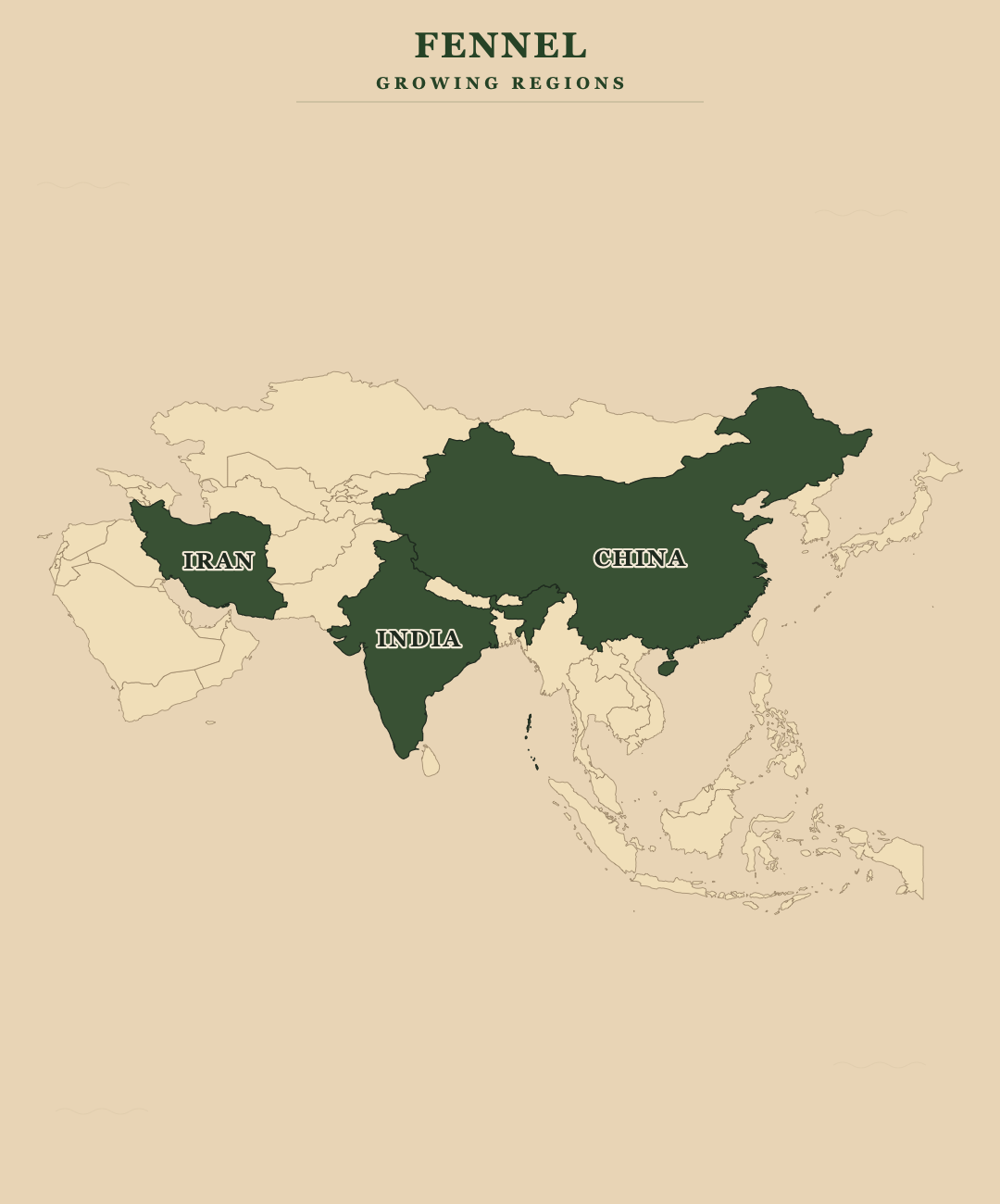
Fennel is primarily cultivated in India (main global producer), Egypt, China, Iran, with secondary growing regions in Mediterranean — Italy, Spain, Greece.
Spice Story
Fennel has been used since antiquity — Greeks and Romans used it widely, and the Battle of Marathon is named after the fennel-rich plain where it was fought (marathon is Greek for fennel). Medieval European herbalism considered fennel essential to a properly stocked kitchen and apothecary; medieval gardens often included a "fennel walk" where the strongly-aromatic stems could be brushed against. Today fennel is foundational to Italian, Greek, Provençal, North African, Indian and Middle Eastern cooking — sausages, fish marinades, after-dinner digestive sweets, masala tea blends. In gin, fennel (both the leaf-stem form and the seed — see separate Fennel Seed entry) appears across Mediterranean, contemporary craft and bitters-style expressions where the goal is a clearly anise-aromatic profile.
Gin Creativity
Fennel brings sweet-anise brightness with a softer body than aniseed itself. A full sachet pushes a gin firmly into anise territory; a half-sachet adds sweet aromatic depth that integrates with juniper and coriander. Pairs naturally with aniseed and star anise for a layered anise blend, or with citrus peel and cardamom for a Mediterranean profile. Like all anise botanicals, avoid combining with very subtle florals.
Blending Science
Main flavour compounds
 Trans-anetholeanise, sweet
 Estragoletarragon, anise-sweet
 Fenchone—
 Limoneneclean citrus lift
Pairs well with
- Aniseed
- Coriander seed
- Citrus peel
- Star anise
- Cardamom
Trans-anethole dominates (50–90% depending on chemotype), carrying the sweet-anise character. Estragole is a related compound (in some chemotypes) contributing a basil-leaning note. Fenchone provides a sharper, slightly camphor-edged depth — higher in bitter fennel than in sweet. Limonene adds citrus brightness. [source] Trans-anethole is heat-stable and survives both vapour and warm maceration.
Food Partners
- Italian sausages and roasts — Fennel pork is the canonical Italian dish.
- Fish marinades — Mediterranean fish dishes with fennel and citrus.
- Cool summer salads — Sicilian fennel-and-orange salad.
- Mediterranean roast vegetables — fennel-gin in a roasting glaze.
- Liquorice and aniseed desserts — fennel layered into licorice ice cream.
Cocktails To Try

- Pastis-style highball — fennel-gin, cold water, sugar.
- Fennel Negroni — fennel-and-orange gin, Campari, sweet vermouth.
- Mediterranean Sour — fennel-gin, lemon, honey, egg white.
Release The Flavour
- Cool extraction — preserves bright anise top.
- Whole stems and fronds — release character slowly across a long extraction.
- Heat is friendly — trans-anethole survives.
- Pair generously — fennel layers well with other anise botanicals.
Discover more
From the same region

Pairs well with
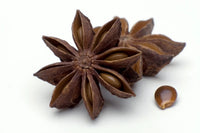
Same flavour family
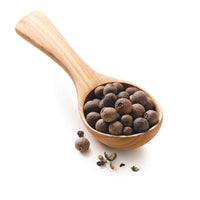
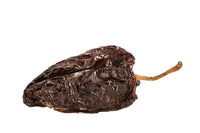
Surprise me

Sources & Citations
- scientific_name (Foeniculum vulgare, Apiaceae):pmc.ncbi.nlm.nih.gov/articles/PMC4137549/
- native_range (Mediterranean basin):arabjchem.org/the-medicinal-umbelliferae-plant-fennel-foe...
- india_main_producer:arabjchem.org/the-medicinal-umbelliferae-plant-fennel-foe...
- trans-anethole_50-90_percent:pmc.ncbi.nlm.nih.gov/articles/PMC4137549/
- sweet_vs_bitter_chemotypes:pmc.ncbi.nlm.nih.gov/articles/PMC6041299/
- main_flavour_compounds (CSV-sourced):inputs/source.csv — Fennel row
