
MARSHMALLOW LEAVES

- Botanical name
- Althaea officinalis
- Also known as
- Marsh mallow, White mallow, Common marshmallow
- Main flavour compound
- Mucilage (polysaccharides)
- Part used
- Dried leaf (the root is also used but is a separate commercial product)
- Method of cultivation
- Perennial herb of the Malvaceae family (the same family as cotton and hibiscus), indigenous to Europe, Western Asia and North Africa. The plant grows up to 1.8 metres tall, naturally in marshes, wetlands and along riverbanks where soil remains consistently moist (which is what gave the plant its common name). The plant has soft star-shaped silvery-hairy leaves and pale pink flowers. Cold-hardy across most of the temperate zone.
- Commercial preparation
- Leaves are harvested in summer when the plant is in active growth, gently dried at low temperature, and either sold whole or cracked for the herbal-tea trade. Quality is graded on freshness and absence of brown spots.
- Non-culinary uses
- Foundational herbal-medicine ingredient across European, Greek and Arabic herbal traditions — the European Medicines Agency formally recognises *Althaea officinalis* as a traditional herbal medicine for sore throat and dry cough; the original marshmallow confection (now made with corn syrup and gelatin) was historically made from the root sap.
Marshmallow — Althaea officinalis — is a tall perennial herb of the Malvaceae (mallow) family, native to Europe, Western Asia and North Africa. The plant grows up to 1.8 metres tall in marshes, wetlands and riverbanks (the common name comes directly from "marsh mallow"), with soft silvery-hairy star-shaped leaves and pale pink flowers in summer. [source] The whole plant is rich in mucilage — a soft polysaccharide that gives marshmallow its distinctive soothing-soft character when infused in water or alcohol.
Whole dried leaf
The standard form — soft, slow-extracting in cool maceration.
Cracked or tea-cut
Faster extraction.
Region of cultivation
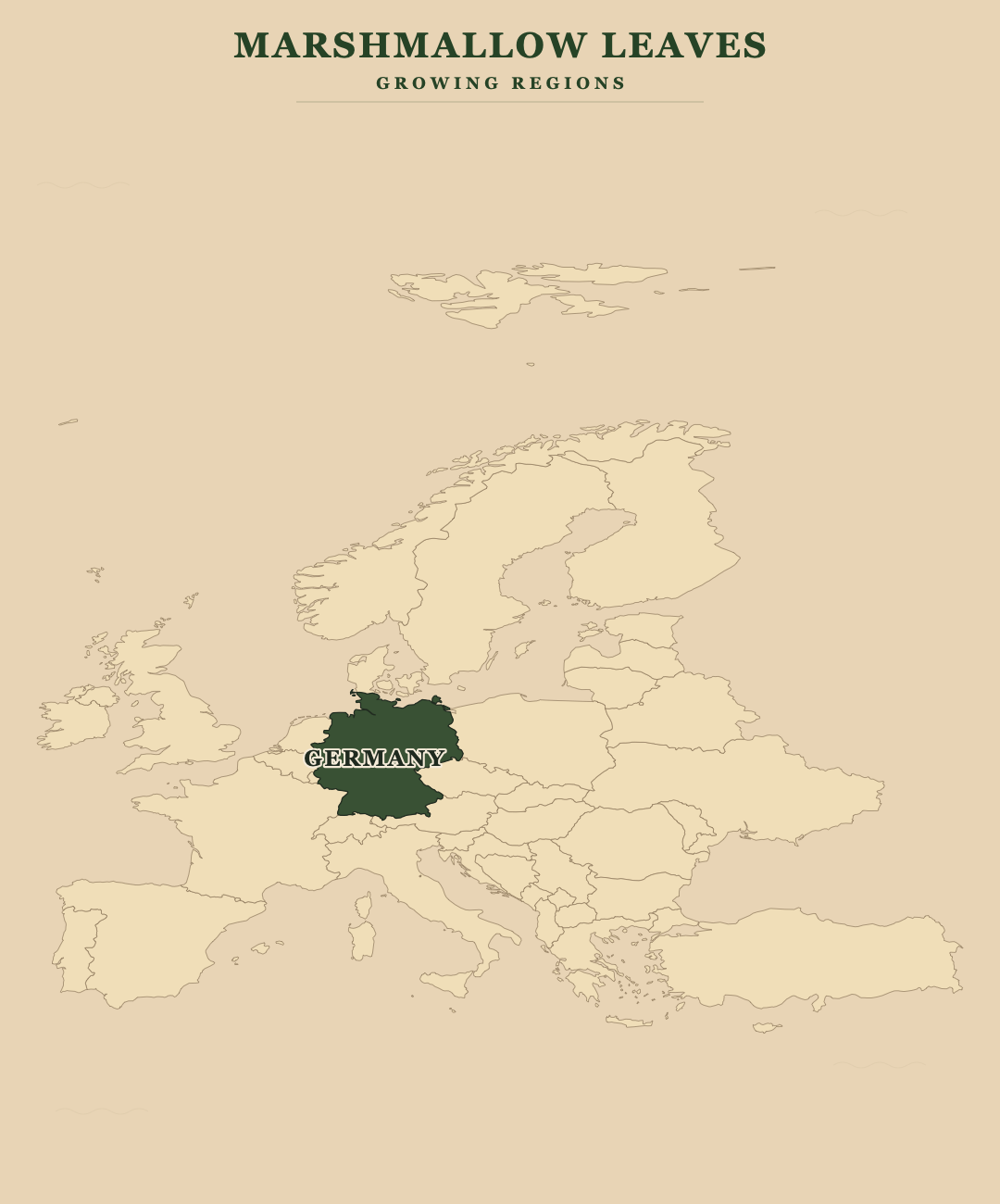
Marshmallow Leaves is primarily cultivated in Europe (especially Eastern), Western Asia, North Africa, with secondary growing regions in USA, Australia (small-scale herbal cultivation).
Spice Story
Marshmallow has been used in European, Greek, Arabic and Egyptian herbal medicine for thousands of years — primarily as a soothing, slightly cooling remedy for sore throats, dry coughs and digestive complaints. The European Medicines Agency formally recognises Althaea officinalis as a traditional herbal medicine. The original marshmallow confection (the white pillowy sweet) was made from the sap of marshmallow root by Egyptian, Greek and Roman confectioners over 2,000 years ago; the modern confection has lost the marshmallow ingredient entirely and is now made with corn syrup and gelatin, but the name remains. In gin, marshmallow leaves are a relatively uncommon contemporary botanical, providing soft mucilaginous body and a quietly sweet-herbaceous character.
Gin Creativity
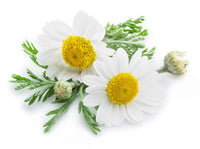
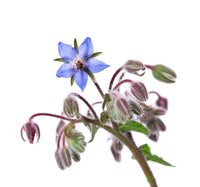
Marshmallow Leaves bring soft body and a quietly sweet-herbaceous character — never a headline botanical, but useful for textural roundness. A full sachet produces a slightly viscous gin with mild herbaceous depth; a half-sachet adds quiet body. Pair with chamomile and honey for a wellness-leaning blend, or with lemon balm and borage for a Pimm's-style garden gin.
Blending Science
Main flavour compounds
 Mucilage (polysaccharides)—
 Asparagine—
 Phenolic acids—
 Flavonoids—
Pairs well with
The chemistry is dominated by non-volatile compounds. Mucilage (polysaccharides) provides the characteristic soothing-soft body and slight viscosity; it is the same class of compound that makes okra slimy and makes psyllium husk a thickening agent. Asparagine contributes a subtle amino-acid sweetness. Phenolic acids and flavonoids provide gentle astringent depth. The compounds extract slowly into alcohol; long warm extraction develops the full character.
Food Partners
- Traditional herbal tisanes — marshmallow leaves in calming bedtime tea blends.
- Soft sweet desserts — modern marshmallow-confection-themed cocktails.
- Soft cheese — marshmallow-gin reduction with chèvre.
- Cool summer dressings — marshmallow as textural agent.
- Egyptian and Levantine cooking — marshmallow leaves in traditional soups.
Cocktails To Try

- Soft Sour — marshmallow gin, honey, lemon, egg white — particularly silky texture.
- Wellness G&T — marshmallow-and-chamomile gin, tonic.
- Garden Spritz — marshmallow gin, prosecco, fresh borage garnish.
Release The Flavour
- Long warm extraction — mucilage extracts slowly.
- Strain finely — leaf fragments leach in storage.
- Pair with sweet partners — marshmallow benefits from honey or fruit syrups.
- Use as textural support — marshmallow rarely leads a botanical bill.
Discover more
From the same region
Pairs well with
Same flavour family
Surprise me

Sources & Citations
- scientific_name (Althaea officinalis, Malvaceae):en.wikipedia.org/wiki/Althaea_officinalis
- european_western_asian_native_range:en.wikipedia.org/wiki/Althaea_officinalis
- ema_traditional_herbal_medicine_recognition:www.ema.europa.eu/en/medicines/herbal/althaeae-radix
- mucilage_active_compound:en.wikipedia.org/wiki/Althaea_officinalis
- original_marshmallow_confection_history:en.wikipedia.org/wiki/Althaea_officinalis
- main_flavour_compounds (CSV-sourced):inputs/source.csv — Marshmallow Leaves row
