
PEPPERMINT

- Botanical name
- Mentha × piperita
- Also known as
- English peppermint, Black peppermint, Mitcham mint
- Main flavour compound
- Menthol (~41%)
- Part used
- Dried leaf
- Method of cultivation
- Aromatic perennial herb of the Lamiaceae (mint) family — a natural hybrid of water mint (*M. aquatica*) and spearmint (*M. spicata*). The plant grows about 60 cm tall, with creeping stolons that allow it to spread rapidly. Cultivated worldwide; Morocco is now the dominant world producer (78% of global supply in 2023), with Argentina (~20%) and the USA (Oregon, Washington) accounting for most of the remainder. "Mitcham" black peppermint (with purplish stems) is the traditional English cultivar with the deepest character.
- Commercial preparation
- Leaves are harvested at peak season (typically just before flowering), gently dried, and either sold whole or cracked for the herbal/distilling trade. Most commercial production is steam-distilled for menthol-rich essential oil (used in confectionery, dental products and pharmaceuticals).
- Non-culinary uses
- Foundational ingredient in confectionery (peppermint candy, gum); dental products (toothpaste, mouthwash); pharmaceuticals; aromatherapy; traditional medicine across European and Mediterranean systems for digestion, headaches and respiratory complaints.
Peppermint — Mentha × piperita — is a natural hybrid of water mint (M. aquatica) and spearmint (M. spicata), in the mint family (Lamiaceae). The plant grows about 60 cm tall, spreading aggressively via creeping stolons (which is why mint should always be planted in a pot — left in open ground it takes over). [source] Two main cultivars dominate commerce: English peppermint (Mitcham black peppermint, with purplish stems and the deepest menthol character) and white peppermint (less assertive, more delicate). Morocco produces 78% of the world's commercial peppermint, with Argentina and the USA making up most of the rest.
Whole dried leaf
The standard form — crumble lightly to release the menthol.
Cracked tea-cut
Faster extraction.
Region of cultivation
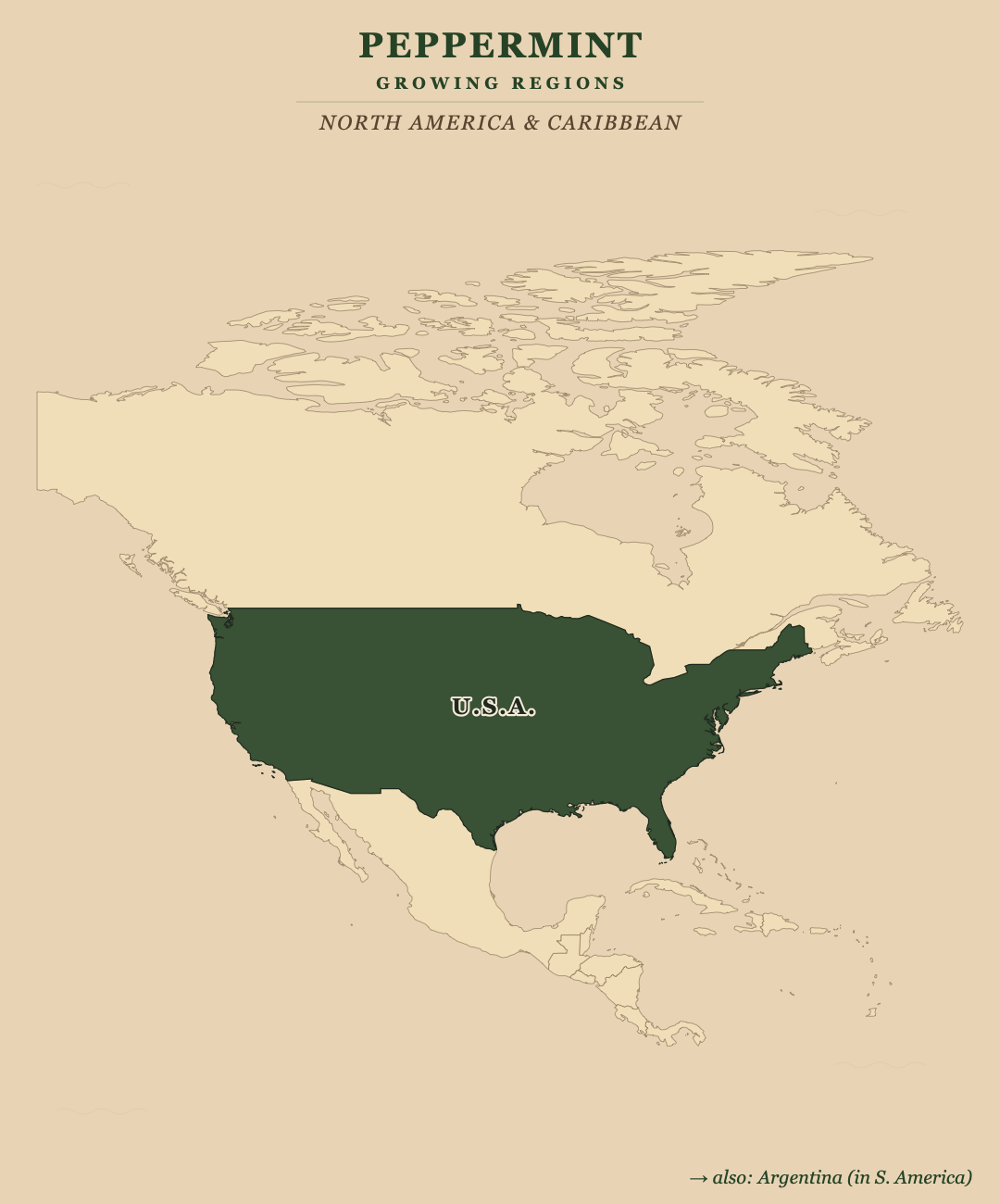
Peppermint is primarily cultivated in Morocco (78% world production), Argentina (20%), USA (Oregon, Washington), with secondary growing regions in UK (Mitcham), Bulgaria, Russia, China.
Spice Story
Peppermint has been used as a culinary and medicinal herb across the Mediterranean since at least Roman times — and likely much earlier; Egyptian tombs have yielded peppermint remains. The Mitcham strain was developed in 18th-century Surrey, England, and became the global standard for premium peppermint until commercial production migrated to America and (more recently) Morocco. The defining compound, menthol, is so distinctive that it has become a near-synonym for "cool" in everyday speech — peppermint is the only natural source of menthol in significant commercial quantities. In gin, peppermint is a contemporary herbaceous botanical providing clean cool character.
Gin Creativity
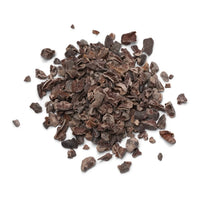
Peppermint brings cool menthol freshness with a sweet mint background. A full sachet pushes a gin firmly into clearly minty territory; a half-sachet provides quiet cool depth that integrates with juniper. Pair with chocolate (cacao nibs) for an after-dinner profile, or with lemon balm and citrus peel for a Pimm's-style summer blend.
Blending Science
Main flavour compounds
 Menthol (~41%)cooling mint
 Menthone (~23%)—
 Menthyl Acetate—
 1,8-Cineoleeucalyptus, cool
Pairs well with
- Chocolate
- Honey
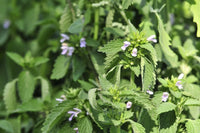
- Lemon balm
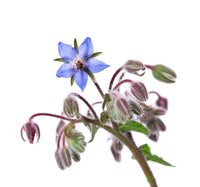
- Borage
- Citrus peel
Menthol dominates at ~41% of the essential oil — the defining cooling compound that triggers cold-receptor neurons in the mouth without actually lowering temperature. Menthone (~23%) adds the warmer mint body that distinguishes peppermint from spearmint (which is dominated by carvone instead). Menthyl acetate layers a sweeter floral note. 1,8-Cineole contributes a faint eucalypt edge. [source] Cool extraction preserves the bright menthol; warm extraction develops a softer body.
Food Partners
- Mojitos and Pimm's-style summer drinks — natural cocktail pairing.
- Lamb with mint sauce — the classic British use.
- Cool chocolate desserts — peppermint and chocolate.
- Yoghurt and cucumber dips — Greek tzatziki, Indian raita.
- Pea-and-mint summer soup — English summer kitchen classic.
Cocktails To Try

- Mojito (gin) — peppermint gin, lime, sugar, soda.
- Garden Spritz — peppermint gin, prosecco, soda, fresh mint.
- Mint Julep (gin) — peppermint gin, demerara, fresh mint.
Release The Flavour
- Cool extraction — preserves the bright menthol.
- Crumble gently — releases the volatile compounds.
- Brief contact — 1–4 hours captures freshness.
- Source matters — Mitcham English peppermint has the deepest character.
Discover more
From the same region
Pairs well with
Same flavour family
Surprise me

Sources & Citations
- scientific_name (Mentha × piperita, Lamiaceae):en.wikipedia.org/wiki/Peppermint
- natural_hybrid (M. aquatica × M. spicata):en.wikipedia.org/wiki/Peppermint
- morocco_dominant_producer:en.wikipedia.org/wiki/Peppermint
- oil_chemistry (menthol 41%, menthone 23%):www.sciencedirect.com/topics/agricultural-and-biological-...
- mitcham_english_traditional_cultivar:en.wikipedia.org/wiki/Peppermint
- main_flavour_compounds (CSV-sourced):inputs/source.csv — Peppermint row
