
CHIPOTLE

- Botanical name
- Capsicum annuum (jalapeño cultivar, smoke-dried)
- Also known as
- Smoked jalapeño, Chile chipotle, Chipotle meco (large smoky variety), Chipotle morita (small mulberry-coloured)
- Main flavour compound
- Capsaicin
- Part used
- Smoke-dried ripe jalapeño pepper (whole or ground)
- Method of cultivation
- Cultivated *Capsicum annuum* (the jalapeño cultivar specifically), grown mainly in Mexico — particularly the states of Chihuahua, Veracruz and Puebla. Only fully ripe red jalapeños are used; underripe green ones become standard jalapeños, not chipotles. The plant is a low bushy annual producing the familiar plump dark-green fruit that turns deep red on ripening.
- Commercial preparation
- Ripe red jalapeños are picked when their water content has dropped naturally on the plant, then moved to closed smoking chambers where firewood smoke is fed in over six days. The peppers are stirred every few hours to ensure even smoke uptake. The smoking simultaneously preserves the pepper, removes moisture, and develops the deep smoky-chocolate character that distinguishes chipotle from any other dried chilli. Two main grades exist: *chipotle morita* (small, dark, mulberry-coloured) and *chipotle meco* (larger, lighter, more leathery).
- Non-culinary uses
- Largely culinary; chipotle is the foundation of *adobo* sauce in Mexican cuisine and appears in commercial chipotle-flavoured products (mayo, hot sauce, marinades) worldwide.
Chipotle is not its own species — it is a ripe jalapeño that has been smoke-cured. The plant is the standard jalapeño cultivar of Capsicum annuum, grown widely in Mexico (particularly the states of Chihuahua, Veracruz and Puebla) where the smoking tradition is most established. What turns a jalapeño into a chipotle is the smoking process: ripe red jalapeños — never green ones — are smoke-dried in closed chambers over firewood for several days, slowly losing moisture and absorbing the smoke phenolic compounds that define the resulting spice. [source]
Whole dried pepper
The most aromatic form — crush gently to release the smoky oils.
Ground or flakes
Convenient but loses smoke character over months.
Region of cultivation
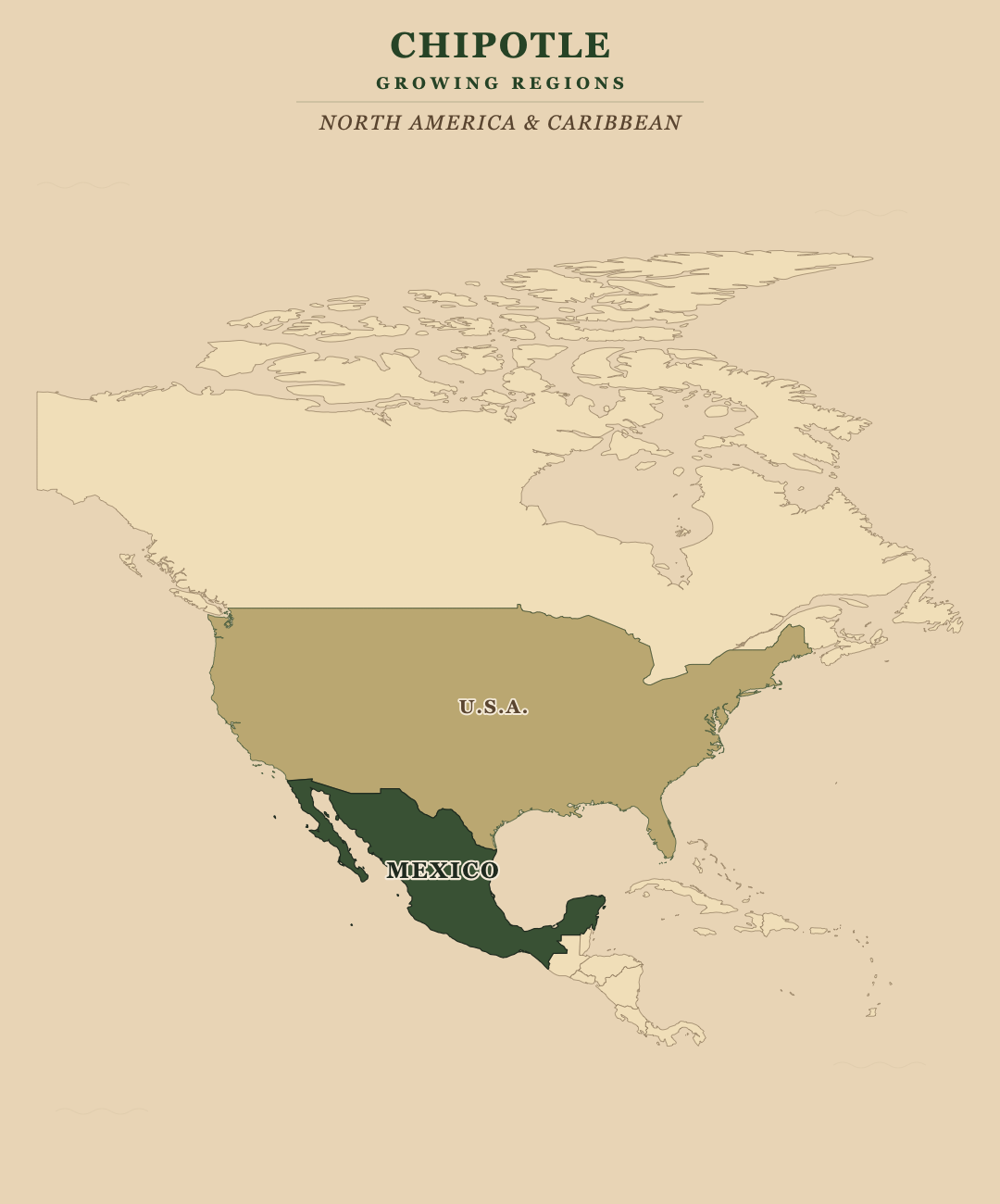
Chipotle is primarily cultivated in Mexico (Chihuahua, Veracruz, Puebla), with secondary growing regions in Limited production in USA Southwest.
Spice Story
The practice of smoke-curing chillies in Mesoamerica predates Spanish contact by centuries — the Aztecs developed the technique as a way of preserving ripe peppers through the wet season, and the word chipotle itself comes from the Nahuatl chīlpoctli, meaning "smoked chili". [source] Two main commercial grades exist today: the smaller, darker, mulberry-coloured chipotle morita (the more common export grade, particularly in the United States) and the larger, lighter, more leathery chipotle meco (preferred in Mexican domestic cuisine for slow-cooked dishes). [source] Chipotle is foundational to Mexican adobo sauce, to slow-braised pork (carnitas, cochinita pibil) and to the broad family of mole sauces. In craft gin, chipotle has emerged as a contemporary smoky botanical — a way to add smokiness without the peated-whisky character that some distillers want to avoid.
Gin Creativity
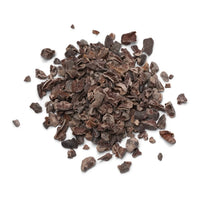
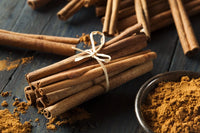
Chipotle is heat and smoke together. A full sachet pushes a gin firmly into smoked-pepper territory and pairs beautifully with cacao nibs and cinnamon for a Mexican mole-leaning blend; a half-sachet adds quiet smokiness that integrates with juniper as a contemporary supporting note. Pair with lime peel for a Mexican cocktail register, or with orange peel and cardamom for something more spice-route. Avoid combining with very heavy florals — chipotle's smoke buries them.
Blending Science
Main flavour compounds
 Capsaicin—
 Guaiacol (smoke phenolic)—
 Furanones (sweet-roasted)caramel, sweet
 Beta-Carotene—
Pairs well with
Chipotle is unique among dried chillies because its character is built from two parallel chemistries: the capsaicin family of heat alkaloids (same as cayenne and chilli) plus the guaiacol family of smoke phenolics absorbed during the six-day smoke cure. Guaiacol is the same compound that gives smoked whisky its character — its presence in chipotle is what gives the spice that whisky-adjacent smokiness that no other chilli matches. Furanones develop from sugar caramelisation during the slow smoke, contributing the dried-fruit and raisin-chocolate notes. Beta-carotene provides the deep red colour. Long warm extraction develops the smoky-sweet body; short cool extraction emphasises the brighter pepper character.
Food Partners
- Mole sauces: The defining use — chipotle is essential in many mole blends.
- Slow-braised pork: Carnitas, cochinita pibil, slow-roasted pork shoulder.
- Smoked beans: Mexican-style black or pinto beans with chipotle.
- Chocolate-chilli desserts: Chipotle in dark-chocolate ganache.
- Cheddar with chipotle: A modern classic — smoky cheese, smoky pepper.
Cocktails To Try

- Smoky Margarita: Chipotle-gin in place of mezcal — smoky without the agave character.
- Mole Negroni: Chipotle and cacao gin, Campari, vermouth.
- Smoked Old Fashioned: Chipotle-gin, demerara, orange bitters.
Release The Flavour
- Time: The smoky phenolics extract slowly; 24–48 hours minimum.
- Heat-friendly: Both vapour infusion and warm maceration work; the smoke compounds are stable.
- Toast first: A quick dry-toast wakes up the aromatic oils.
- Less is more: Chipotle is potent; a small amount adds noticeable smoke and warmth.
Discover more
Pairs well with
Same flavour family
Surprise me

Sources & Citations
- scientific_name (Capsicum annuum, jalapeño cultivar):en.wikipedia.org/wiki/Chipotle
- smoke_curing_process (closed chamber, 6 days, firewood):spice.alibaba.com/spice-basics/are-chipotle-peppers-dried...
- name_etymology (Nahuatl chīlpoctli = "smoked chili"):en.wikipedia.org/wiki/Chipotle
- aztec_smoke_preservation_history:en.wikipedia.org/wiki/Chipotle
- chipotle_meco_vs_morita_varieties:spicesinc.com/blogs/what-are-chipotle-meco-chiles
- regional_production_chihuahua:en.wikipedia.org/wiki/Chipotle
- main_flavour_compounds (CSV-sourced):inputs/source.csv — Chipotle row
