
GERALDTON WAX

- Botanical name
- Chamelaucium uncinatum
- Also known as
- Geraldton waxflower, Waxflower, Geraldton-wax
- Main flavour compound
- alpha-Pinene
- Part used
- Leaf and flowering foliage (fresh or dried)
- Method of cultivation
- An erect Myrtaceae shrub 0.5–4 metres high, endemic to Western Australia and naturally restricted to the coastal Quindalup dunes between Perth and Geraldton. It is hardy in dry, sandy, well-drained ground and is one of Australia's most widely cultivated native shrubs, grown both as a garden plant and as a commercial crop.
- Commercial preparation
- Grown principally as a cut-flower crop — it is Australia's leading commercial wildflower export, cultivated for the trade in Australia, the USA and Israel. For culinary and distilling use the needle-like aromatic leaves and waxy flowers are taken fresh, or dried, and the foliage can be steam-distilled for its essential oil.
- Non-culinary uses
- By far its largest use is ornamental — as a long-lasting cut flower it is Australia's most important wildflower export crop, with major breeding programmes behind it.
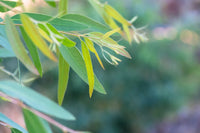
Geraldton Wax — Chamelaucium uncinatum — is an erect Myrtaceae shrub, 0.5 to 4 metres high, with fine needle-like leaves and waxy five-petalled flowers in white to pink that open from around June to November. [source] It is endemic to Western Australia, growing wild only on the coastal Quindalup dunes between Perth and the midwest port of Geraldton. [source] Brush against it and the foliage releases an oily perfume of citrus and pine.
Fresh foliage
Strip a few needle-like leaves and bruise them to release the citrus-pine oil.
Dried leaf
Holds well; use like a native rosemary or lemongrass.
Region of cultivation
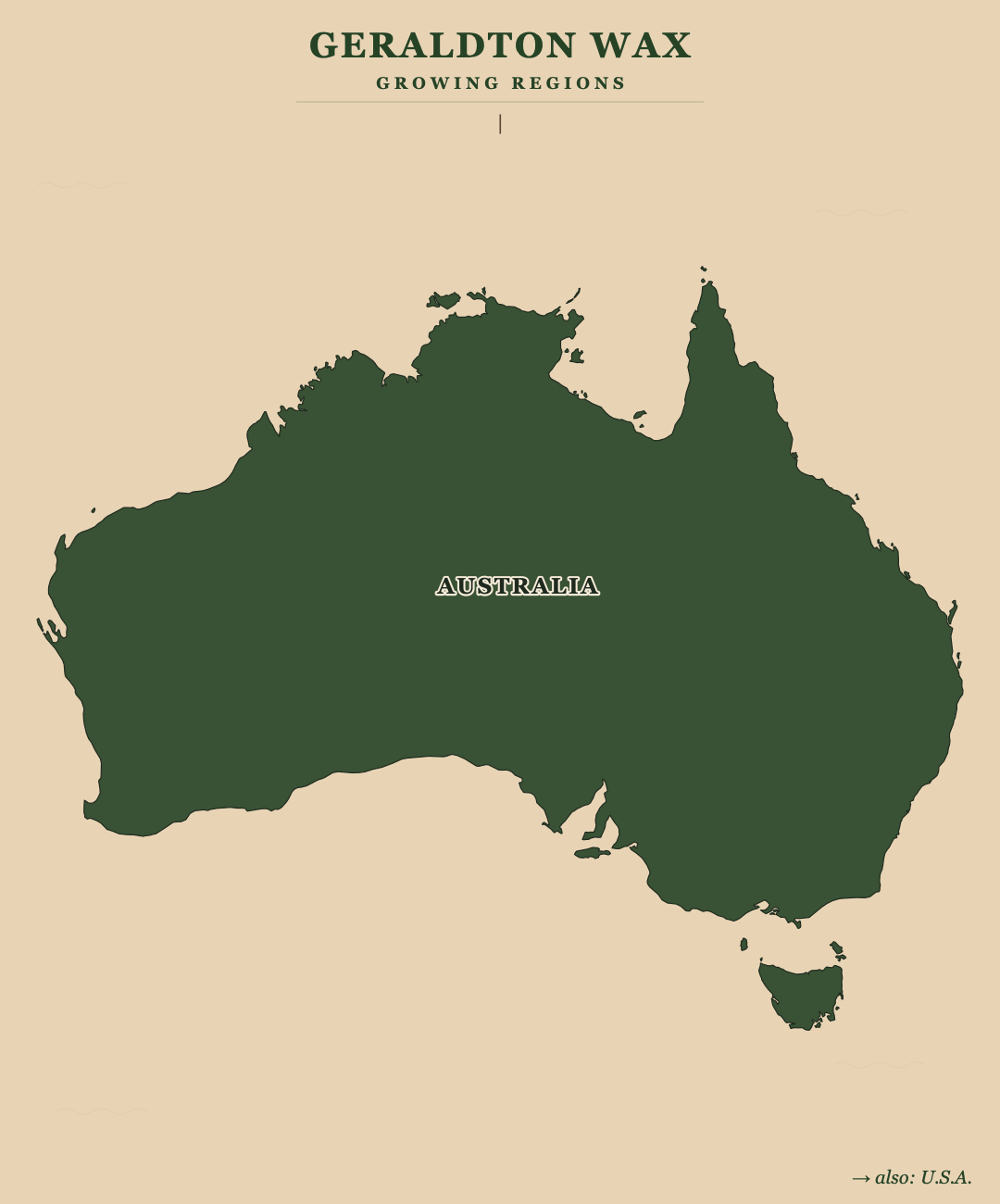
Geraldton Wax is native to Australia, Australia — coastal sandplains of midwest Western Australia, with secondary growing regions in Cultivated for the cut-flower trade in Australia, the USA and Israel. |
Spice Story
This is a plant the world knows first as a flower. Take its name from the WA port of Geraldton, near its wild coastal range, and add the species word uncinatum — Latin for "hooked", after the tiny hooked tips of its leaves — and you have a shrub that botanist Johannes Conrad Schauer first described from the sandplains of the west. [source] From those dunes it has travelled extraordinarily far: bred and cultivated as a cut flower, Geraldton Wax has become Australia's leading commercial wildflower, grown for the florist trade not only at home but in the USA and Israel, where its waxy blooms last well over a week in the vase. [source] The kitchen and the still came later: cooks now treat the aromatic leaf like a native rosemary or lemongrass, its flavour likened to lemon myrtle and kaffir lime. [source] It is, in the truest sense, Western Australia distilled — a roadside shrub turned export icon turned gin botanical.
Gin Creativity
Geraldton Wax brings a fresh citrus-and-pine character that sits naturally beside juniper — a way to fold Western Australia's coast into a gin. A full sachet makes it a clear, resinous citrus lead; a partial amount keeps it supporting, lifting and freshening the spirit behind the juniper. Pair it with Desert Lime or Lemon Myrtle to amplify the citrus, or with Pepperberry and Sea Parsley for a savoury native botanical build.
Blending Science
Main flavour compounds
 alpha-Pinenefresh pine, top note
 Limoneneclean citrus lift
 Citronellallemon-rosy
 1,8-Cineoleeucalyptus, cool
Pairs well with
Geraldton Wax leaf oil is genuinely aromatic but chemotype-variable — three distinct chemotypes are defined by whether alpha-pinene, citronellal or limonene dominates, so no single fixed recipe applies. [source] alpha-Pinene (the most common dominant type) carries the fresh pine-resin note; Limonene brings bright citrus zest; Citronellal gives the lemongrass, rose-citrus edge that has it compared to lemon myrtle; and a little 1,8-cineole adds eucalyptus lift — all among the nine compounds that statistically define the oil's variation. [source] Because the pine terpenes are volatile, cool, brief extraction keeps the spirit fresh; long, hot maceration pushes it resinous.
Food Partners
- Grilled white fish: the citrus-pine leaf works like a native lemongrass alongside delicate seafood.
- Roast chicken and pork: use the foliage as you would rosemary, tucked under the skin.
- Citrus and herb salads: a few bruised leaves echo and lift fresh citrus.
- Lemongrass-style Asian dishes: stands in for lemongrass or kaffir lime with a comparable zest. [source]
- Native herb teas: the dried leaf brews into a clean citrus infusion.
Cocktails To Try

- Old Young's Six Seasons Gin: a Swan Valley gin built on six native botanicals — including Geraldton wax for its citrus note — paired with juniper. [source]
- Western Australian G&T: a WA native gin over ice with a good tonic and a sprig of waxflower foliage as garnish.
- Coastal Gimlet: a citrus-forward gin and lime, leaning on the waxflower's lemongrass-citrus lift.
Release The Flavour
- Heat: keep it cool and brief — the pine terpenes are volatile and turn resinous with long, hot contact.
- Alcohol: the citrus and pine oils are alcohol-soluble, so a short maceration draws them cleanly.
- Time: a few hours is plenty; over-steeping muddies the fresh top notes.
- Water: bruise the needle-like leaves first so the oils release as soon as they hit the liquid.
Discover more
Pairs well with
Same flavour family
Surprise me

Sources & Citations
- scientific_name (Chamelaucium uncinatum Schauer, Myrtaceae):GBIF Backbone Taxonomy, usageKey 3188340 (Chamelaucium un...
- shrub_form_height_flower_colour_months (0.5–4 m, white/pink, June–Nov):en.wikipedia.org/wiki/Chamelaucium_uncinatum
- endemism_quindalup_dunes_perth_to_geraldton:straighttothesource.com.au/news/geraldton-waxflower
- named_after_geraldton / uncinatum_means_hooked / described_by_Schauer:en.wikipedia.org/wiki/Chamelaucium_uncinatum
- cut_flower_australias_leading_commercial_wildflower_export (grown AU, USA, Israel):en.wikipedia.org/wiki/Chamelaucium_uncinatum
- culinary_use_like_rosemary_citrus_lemongrass_lemon_myrtle_kaffir_lime:straighttothesource.com.au/news/geraldton-waxflower
- leaf_oil_major_compounds_and_chemotypes (alpha-pinene, citronellal, limonene, linalool, alpha-terpinyl acetate; three chemotypes):Egerton-Warburton & Ghisalberti, 'Essential oil compositi...
- leaf_oil_pca_nine_compounds_incl_1_8_cineole (alpha- & beta-pinene, limonene, citronellal, geraniol, 1,8-cineole, linalool, globulol, alpha-terpinyl acetate):Egerton-Warburton, Ghisalberti & Considine, 'Infraspecifi...
- pubchem_cids (alpha-pinene 6654, limonene 22311, citronellal 7794, 1,8-cineole/eucalyptol 2758):PubChem — pubchem.ncbi.nlm.nih.gov/compound/6654 ; /22311...
- named_gin_old_youngs_six_seasons (uses Geraldton wax as one of six native botanicals):oldyoungs.com.au/products/six-seasons-gin
- hero_image (GBIF/iNaturalist CC-BY, credit Rob Beattie):GBIF usageKey 3188340 — inaturalist-open-data.s3.amazonaw...
